

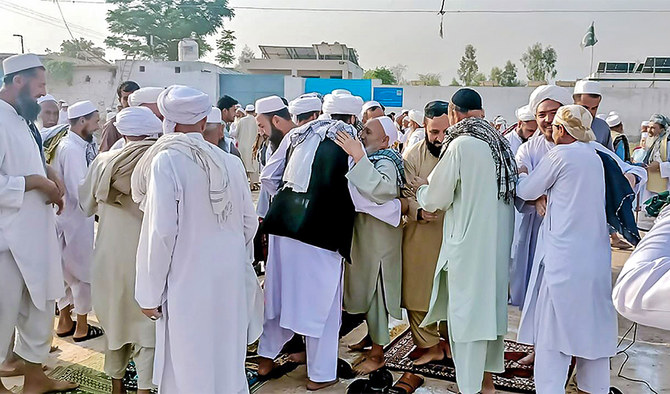

PESHAWAR: For Khan Olas Babar, among hundreds of thousands of Afghan refugees living in Pakistan, Eid Al-Fitr this year was bittersweet at best: though he was able to pray and enjoy a meal with his family in relative peace, he also suffered the agony of being away from loved ones left behind in war-ravaged Afghanistan.
Eid Al-Fitr marks the end of the Islamic fasting month of Ramadan, when Muslims arrange elaborate feasts, and meet and greet family and friends during three-day celebrations. But for most of Pakistan’s Afghan refugees who live in camps in the northwestern Khyber Pakhtunkhwa province, there was little chance this year of scraping together the meals that are traditionally the centerpiece of the festival.
In some parts of Khyber Pakhtunkhwa, such as Nowshera, authorities also imposed a restriction on the nighttime movement of Afghan refugees for 48 hours of Eid, citing security reasons.
Pakistan was already home to over 1.4 million registered Afghan refugees until last year, when at least 100,000 more Afghans arrived after the withdrawal of the United States-led forces from Afghanistan. The number of undocumented Afghans is much higher.
“For me, Eid only reopens old wounds, Eid without relatives is meaningless for me,” said Babar, who runs a medical store in a refugee camp in Nowshera. “Though we observed fasts, offered Eid prayers and enjoyed food, we celebrated it half-heartedly, remembering relatives in our home province of Jowzjan.”
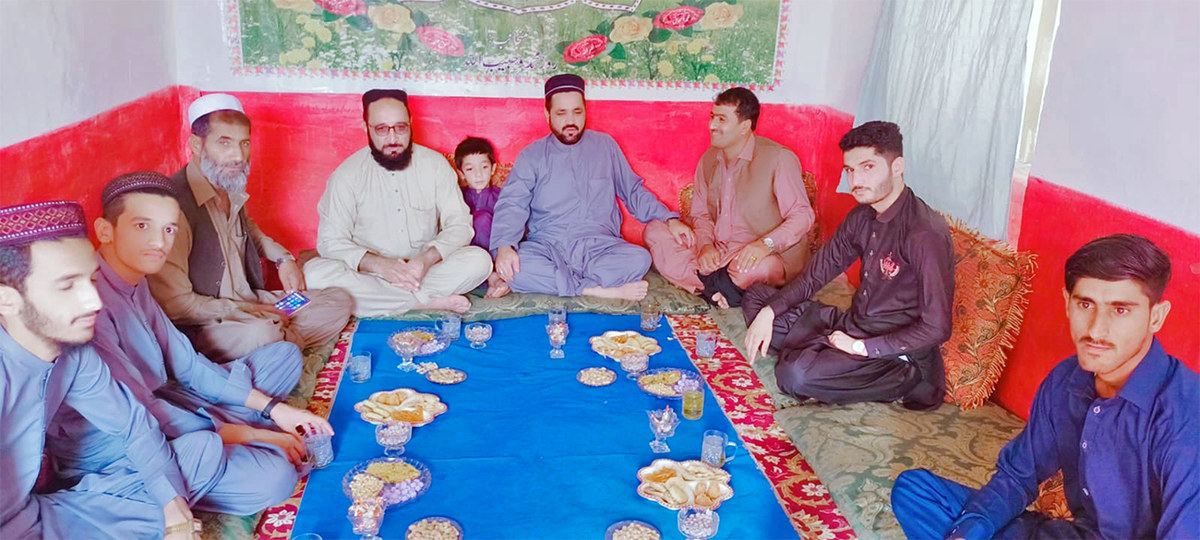
Afghan refugees are to about to have food on Eid outside their camp in Nowshera, Pakistan on May 2, 2022. (AN Photo)
Rehmatullah Safi, 49, a refugee who owns a clothing store in Tank district, said Eid held “no meaning” without the friends and friends left behind in Afghanistan.
“Which Eid! We celebrate it with endless trial, grief and sorrow because every family has relatives lost or left behind,” he said. “For me, Eid has no meaning at all. Every year, I hope this Eid will be my last in Pakistan.”
“I often think Afghans are meant for suffering, not for celebrating Eids or other festivals,” Safi added.
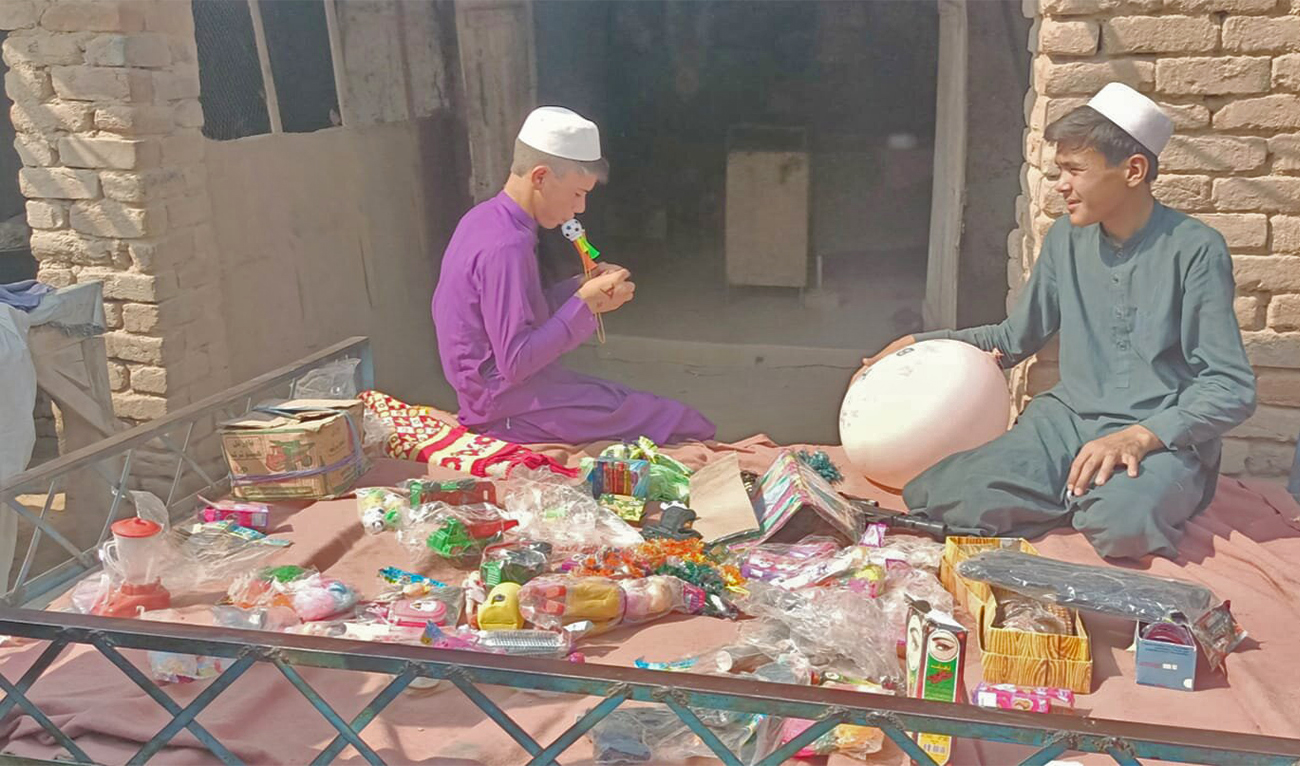
Afghan children sell toys on Eid Al-Fitr at a makeshift shop at the Afghan refugee camp in Nowshera, Pakistan, on May 2, 2022. (AN Photo)
Eid Al-Fitr also brought little joy for Irfanullah Noori, a 46-year-old Afghan daily-wager in Tank, who said he preferred the fasting month of Ramadan over Eid because his family couldn’t afford to serve Eid guests.
“We would exchange food the whole day and enjoy attan (traditional Pashtun dance) at night,” he said about Eid back in his hometown in the southwestern Afghan province of Paktika. “We live in hope that good days will come again, that we will go back.”
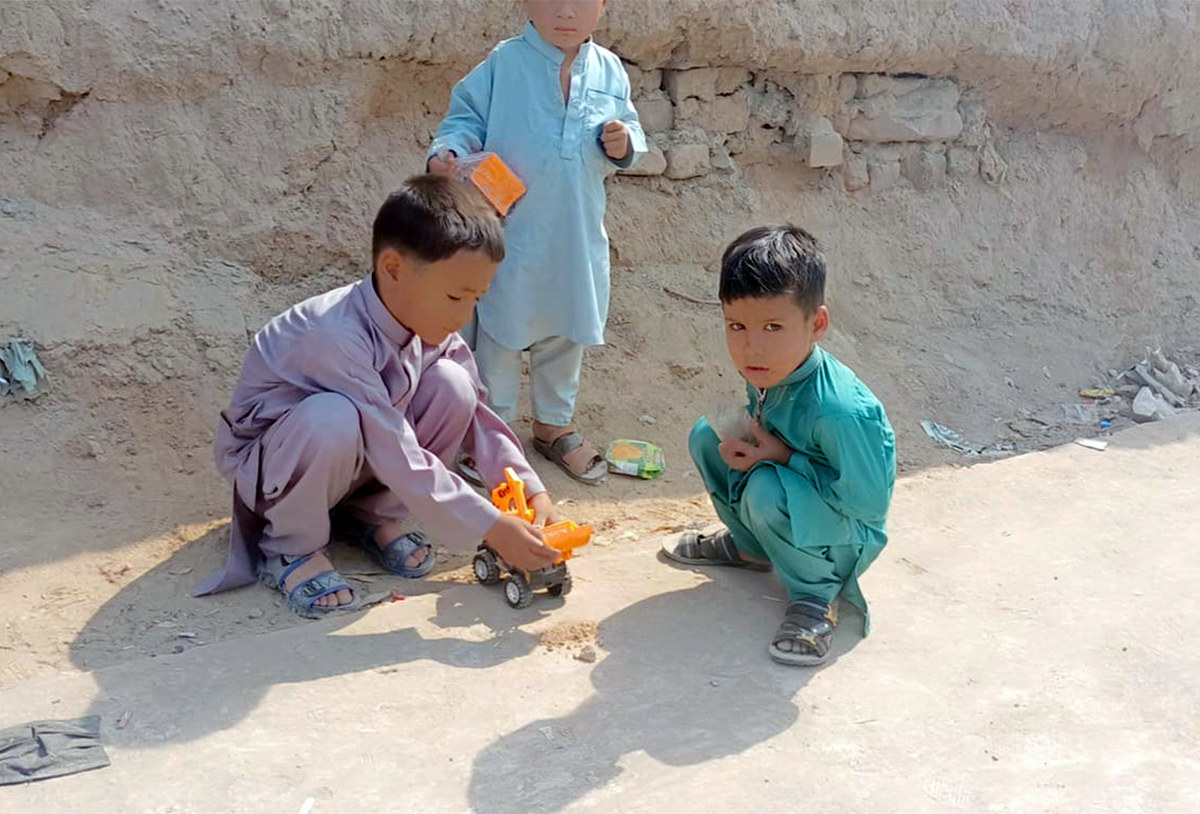
Afghan children play outside their camp on Eid Al-Fitr at the Afghan refugee camp in Nowshera, Pakistan, on May 2, 2022. (AN Photo)
Hazrat Khan Ahmadzai, a refugee from Afghanistan’s Balkh province, said Eid was a “rare occasion” to get together with family and friends but refugees had to observe it far from their loved ones.
Still, he was grateful for a peaceful Eid in Pakistan, which he said was “better than an uncertain one in Afghanistan.”
A powerful explosion ripped through a mosque in the Afghan capital of Kabul last week, killing at least 10 people, the latest in a series of blasts amid relentless attacks across the country.
Similar attacks on mosques have recently targeted the country’s minority Shiite Muslims and were claimed by the Daesh group’s regional affiliate, known as IS-K, which has stepped up its attacks across Afghanistan to become the primary enemy of the Taliban since their takeover of the country last August.
Despite Taliban claims to have routed Daesh from its headquarters in eastern Afghanistan’s Nangarhar province, the militant group’s renewed assaults on mosques, schools and buses underscore the intransigent threat it poses.
“You enjoy Eid when there is peace and I think Eid in Pakistan is far better than in Afghanistan because there is uncertainty and insecurity there,” Ahmadzai said. “What will you do if there is no peace?”


