

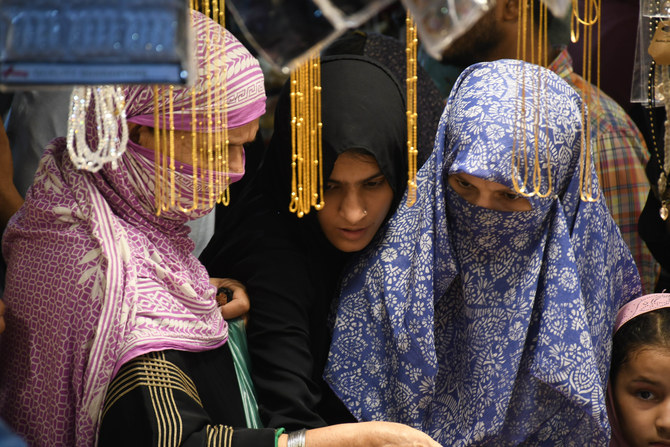

KARACHI: Rising inflation and political uncertainty have dampened the festive spirit of shopping in Pakistan ahead of the Muslim holiday season of Eid Al-Fitr, traders say, as their sales this year are even lower than during pandemic lockdowns.
Eid is the biggest holiday of the year in Pakistan, when families get together and relatives and friends exchange gifts and dress up in new clothes. In the run-up to celebrations, markets traditionally observe a surge in shopping, with people buying jewelry, clothing, and shoes.
While last year a rise in coronavirus cases and related restrictions led to a drop in trade activity ahead of Eid, with businesses saying their profits had fallen by half, this time their sales have plunged even further.
“The sales are below when compared with the last year’s sales when the traders were facing COVID-19 related restrictions,” Kashif Chaudhry, president of Markazi Tanzeem-e-Tajran Pakistan (Central Organization of Pakistani Traders), told Arab News.
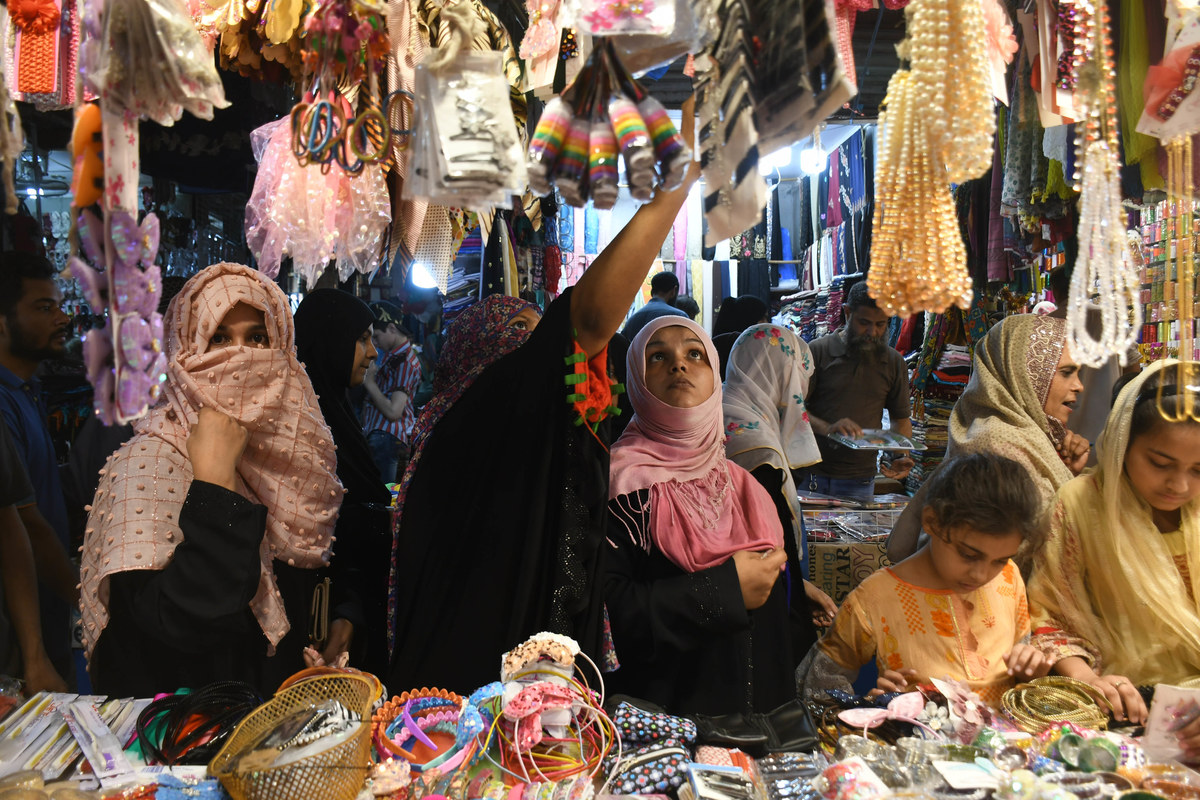
Women and girls buy jewelry at a shop in Karachi, Pakistan, on April 27, 2022. (AN Photo)
“We expect that the sales volume would remain below as compared to Rs30 billion ($162 million) worth of sales last year in Karachi,” he said, adding that in the commercial hub of Pakistan half of shoppers who visit markets are only “window shopping.”
Atiq Mir, chairman of All Karachi Tajir Ittehad, an umbrella organization of major business centers in the city, expects that this year the sales volume would be between Rs20 million and Rs25 million.
He added that weeks of recent political turmoil in Pakistan — that led to the ouster of former PM Imran Khan in a no-confidence vote in April — had made buyers more wary about expenditure.
Many of those who shop avoid buying more expensive products.
“Visitors are only buying low-priced goods from the markets and many buyers are confined to purchase only most needed articles,” Mir said.
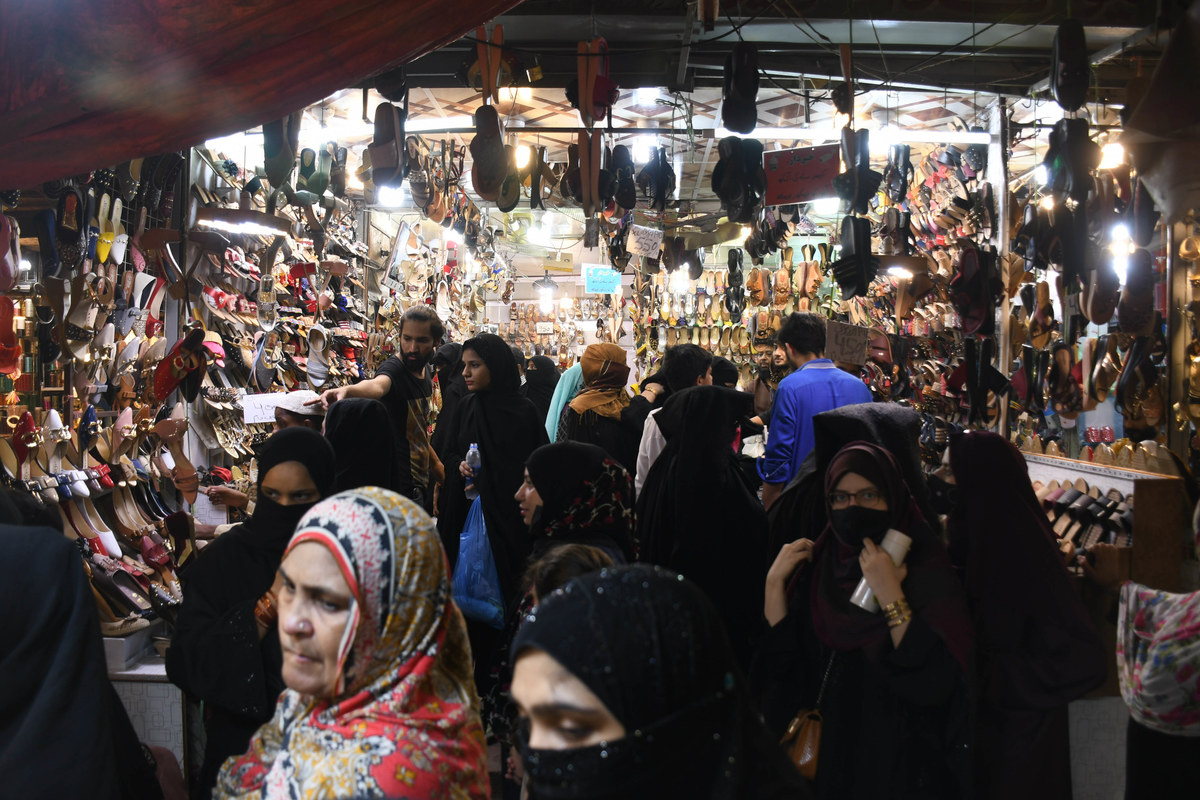
Customers buy shoes ahead of Eid Al-Fitr in Karachi, Pakistan, on April 27, 2022. (AN Photo)
A significant drop in sales has been observed for branded products, especially for women.
“The sales performance, particularly ladies branded products sales, is comparatively low mainly due to the high inflation and low purchasing power of people,” Rana Tariq Mehboob, chairman of the Chainstore Association of Pakistan — a representative body of over 200 brands — told Arab News.
Pakistan is facing increasing inflationary pressure with a 12.7 percent annual inflation rate recorded in the month of March 2022 as compared with 12.24 percent in February 2022, which is driven mainly by higher prices of commodities in the international market, particularly of petroleum products.
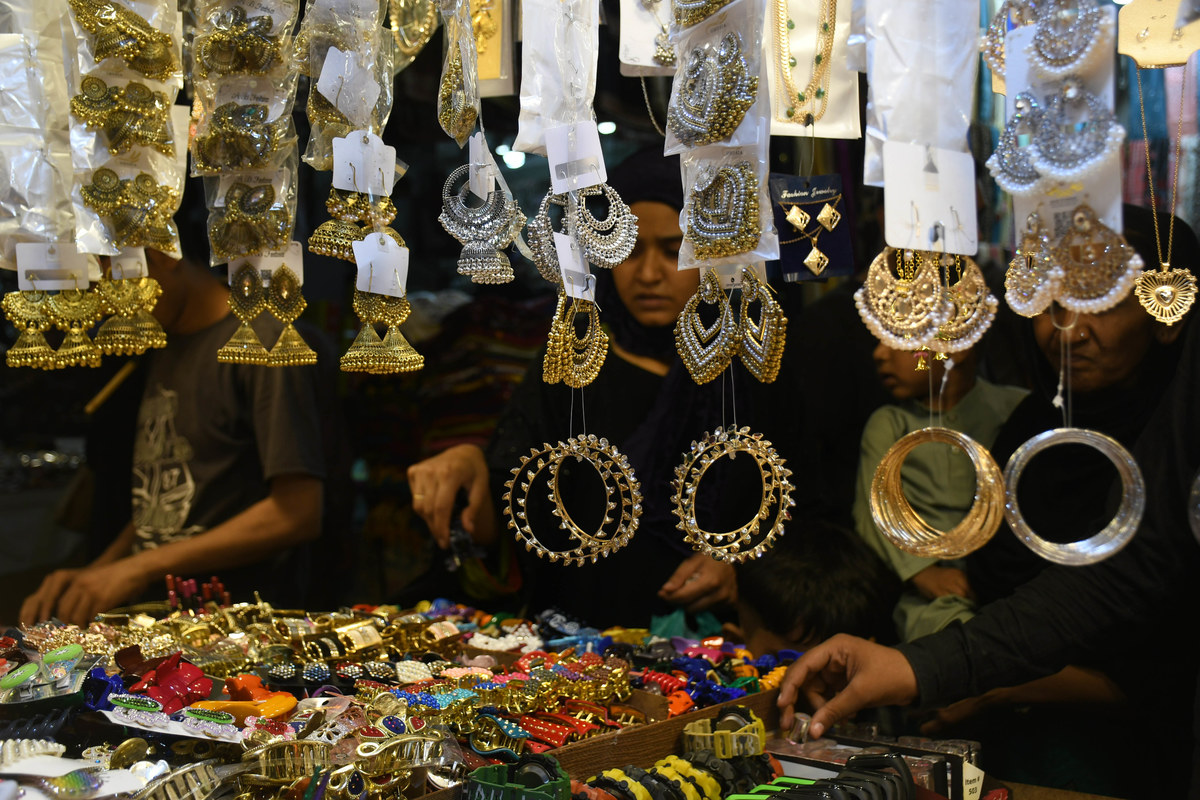
Artificial jewelry is displayed at a shop in Karachi, Pakistan, on April 27, 2022. (AN Photo)
“The prices of local and imported goods and raw material and have increased manifold due to devaluation of the Pakistani rupee against dollar and petroleum products rate hikes,” Mehbood said.
Customers say what stops them from buying more is a sharp increase in prices.
“We are doing Eid shopping. Everything is available and fine, but the prices are more than last year,” one buyer in Karachi, Kanza Nasir, told Arab News.
Traders are aware that the sharp increase in prices is what keeps buyers at bay.
“People make two to three rounds before finally buying because they are unable to afford the goods at higher prices. Customers first buy for their children and then for themselves,” shoe seller Irshad Alam said.
Another trader, Shahryar Ahmed, added that he was not surprised their sales were much lower.
“A product that was available for Rs200 is now being sold at Rs 500,” he said. “That is why our sales have dropped to half.”


