

For tribesmen in southwestern Pakistan, no Eid celebrations without traditional headgear

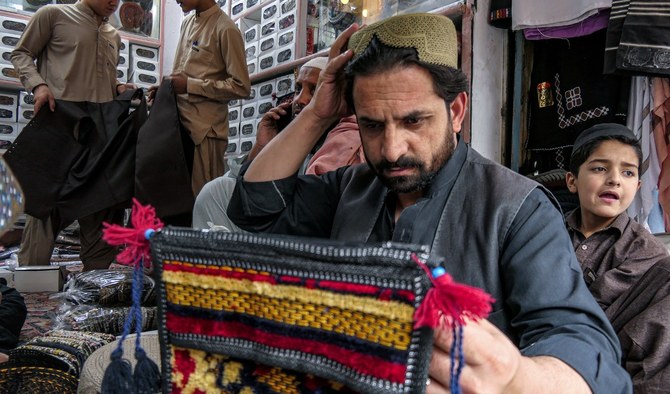
A man tries on a traditional Pashtun cap at a shop in Quetta’s Circular Road, Balochistan, southwestern Pakistan, on April 29, 2022. (AN Photo)
Short Url
Updated 03 May 2022
Follow

For tribesmen in southwestern Pakistan, no Eid celebrations without traditional headgear

  • Every year, right before Eid, men throng to shops on Circular Road of Quetta to buy new headdress
  • An ordinary cap can be as cheap as $3, but one that features embroidery would cost even 30 times more

QUETTA: Colorful caps are a source of pride for Baloch and Pashtun tribesmen in southwestern Pakistan, and of significant income for shopkeepers ahead of Eid Al-Fitr, as no celebrations in the region can be complete without traditional headgear.
Every year, right before Eid, men throng shops in Circular Road of Quetta, the provincial capital of Balochistan, to buy new headdress.
Some caps are woven with colorful threads, some fitted with tiny, round pieces of glass. They come in many shapes and sizes, with the major Baloch and Pashtun tribes — which make up the two main ethnic groups in Balochistan province — having their own styles.
“Our forefathers have been wearing cultural caps and turbans for many centuries now, especially during the Eid festival,” Mehmood Shah, who traveled 45 km from Mastung district to Quetta to buy a new cap for Eid.
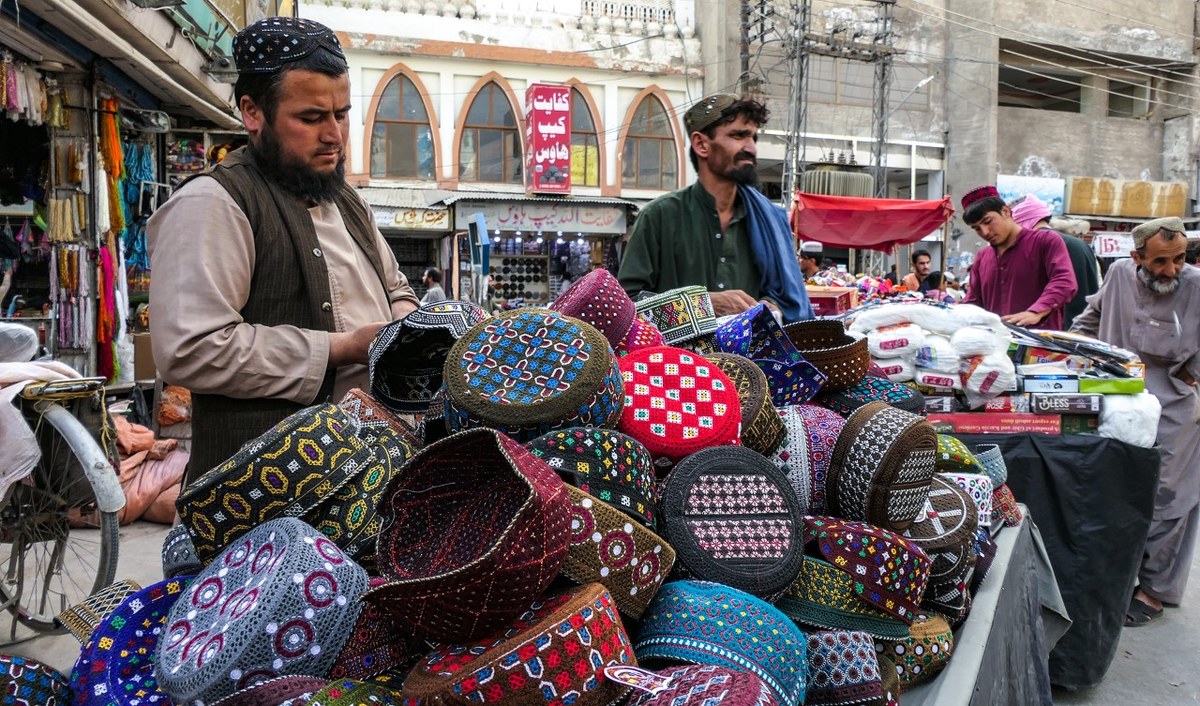


Sellers display traditional caps on a pushcart in Quetta’s Circular Road, Balochistan, southwestern Pakistan, on April 29, 2022. (AN Photo)

“Wearing the traditional headgear on the holy festival is essential dressing for Baloch and Pashtun tribesmen.”
Prices vary. An ordinary cap can be as cheap as $3, but one that features embroidery would cost even 30 times more.
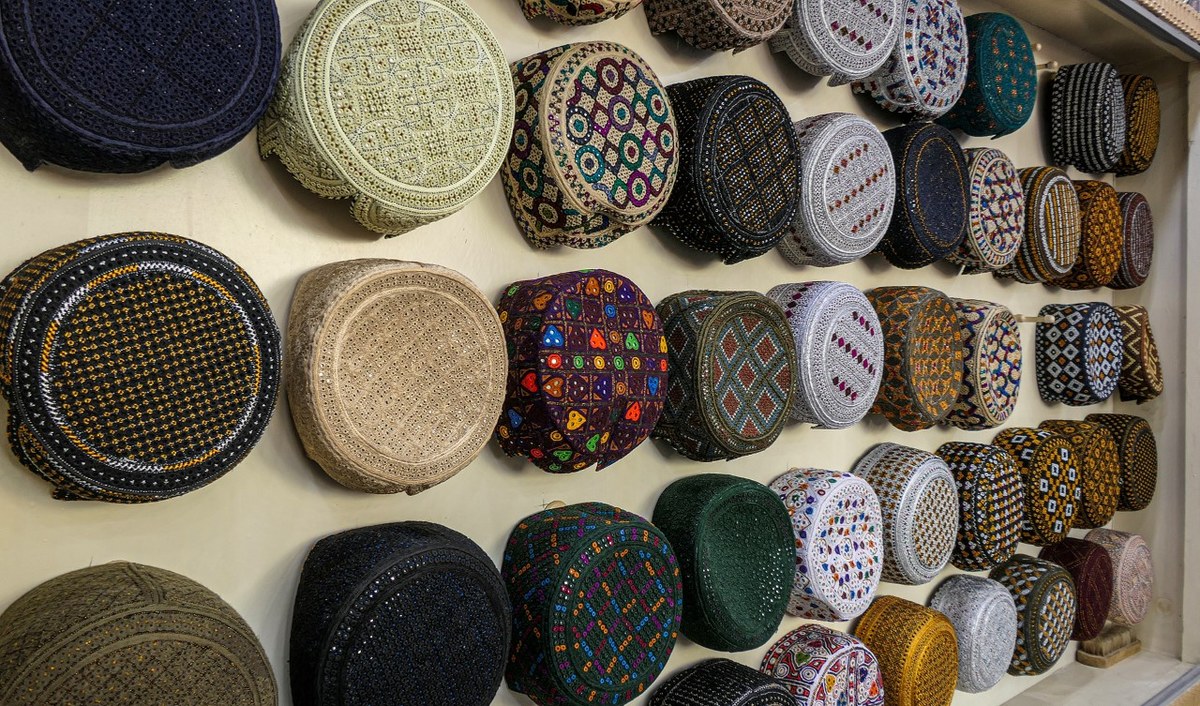


Baloch and Pashtun caps are on display at a shop in Quetta’s Circular Road, Balochistan, southwestern Pakistan, on April 29, 2022. (AN Photo)

Naseer Ahmed, who has been selling traditional headgear for the last two decades, said that handmade Bugti and Yaqoobi caps are the most expensive and sought-after ones, also abroad.
“I have been sending these caps across Balochistan and Afghanistan because demand for caps and turbans rises before Eid Al-Fitr,” he added.
The difference between Baloch and Pashtun headgear can easily be spotted: Baloch caps feature colorful ornaments, while Pashtun ones are known for their simplicity, and woven with a single thread.


Baloch and Pashtun men buy traditional caps for their Eid Al-Fitr attire at a shop in Quetta’s Circular Road, Balochistan, southwestern Pakistan, on April 29, 2022. (AN Photo)

Zia ul Haq, member of the Pashtun Kakar tribe, said Eid was a time when attire was important for everyone in the province.
Although the cultures of Balochis and Pashtuns were different, their love for headgear is the same.
“Without caps and turbans, we feel discomfort,” he told Arab News. “Every single Baloch and Pashtun, whether child, young or old, they all wear their cultural dress during the three days of Eid.”
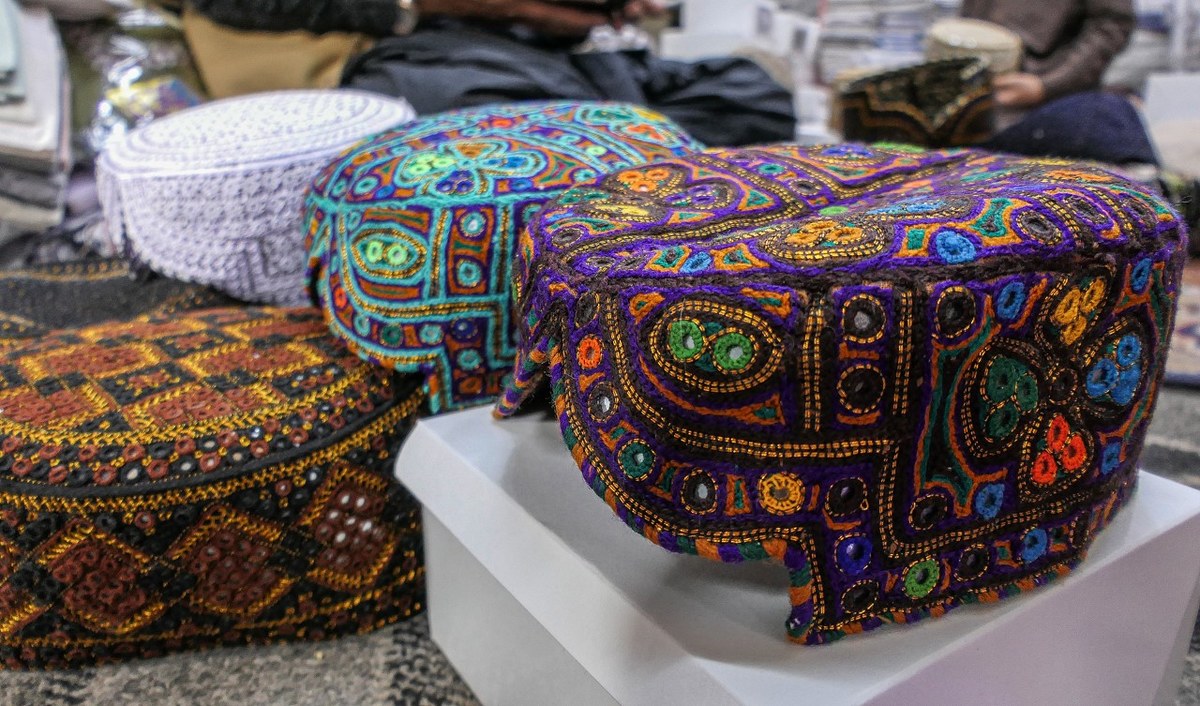


Baloch caps are on display at a shop in Quetta’s Circular Road, Balochistan, southwestern Pakistan, on April 29, 2022. (AN Photo)


Pakistan flags funding strain, host state cooperation gaps in UN peacekeeping

Updated 07 February 2026
Follow

Pakistan flags funding strain, host state cooperation gaps in UN peacekeeping

  • Pakistan says blue helmets remain the most visible symbol of UN commitment to peace
  • The country urges member states to pay contributions on time to sustain UN missions

ISLAMABAD: Pakistan on Friday raised concerns over mounting financial pressures on United Nations peacekeeping operations along with a lack of cooperation from some host countries, warning that the challenges risk undermining the effectiveness and safety of missions worldwide.

Pakistan’s top diplomat at the UN flagged the issues while speaking at a UN Security Council briefing on peacekeeping police components.

Pakistan is one of the world’s top troop-contributing countries and has deployed more than 235,000 peacekeepers to 48 UN missions across four continents over the past eight decades.

A total of 182 of its peacekeepers have also lost their lives while serving under the UN flag.

“We are concerned at the current challenges faced by the United Nations peacekeeping, both financial as well as those arising from lack of host state cooperation,” Ambassador Asim Iftikhar Ahmad told the council. “Pakistan underscores the importance of full cooperation by host States to enable timely deployment of peacekeepers including police components where authorized by the Security Council.”

He noted that UN missions were operating under acute financial stress, leading to capacity reductions that directly affected mandate delivery and the safety of peacekeepers, while UN police units continued to face gaps between authorized strength and actual deployments.

Ahmad urged UN member states to pay their assessed contributions in full and on time to ensure peacekeeping missions remain operationally capable.

“Blue helmets are the most visible symbol of the United Nations commitment to peace and stability,” he said. “Peacekeeping brings relevance and legitimacy to this organization by making a tangible difference in people’s lives.”

Pakistan has contributed both military and police personnel to UN operations, deploying more than 50 formed police units to missions including Haiti, Darfur, Timor-Leste and Côte d’Ivoire, according to Pakistan’s UN mission.