HONG KONG: Hong Kong has plummeted down an international press freedom chart as authorities have wielded a draconian new security law to silence critical news outlets and jail journalists, a new report said on Tuesday.
For two decades, media rights watchdog Reporters Without Borders (RSF) has ranked countries and territories around the world by how free their press is.
Hong Kong, a regional media hub for both international and local media, has been steadily slipping down the table under Chinese rule.
In the last year alone it has plunged 68 places to 148th, sandwiching the international business hub between the Philippines and Turkey.
“It is the biggest downfall of the year, but it is fully deserved due to the consistent attacks on freedom of the press and the slow disappearance of the rule of law in Hong Kong,” Cedric Alviani, head of RSF’s Taiwan-based East Asia bureau, said.
“In the past year we have seen a drastic, drastic move against journalists,” he added.
China has imposed increasingly authoritarian strictures on Hong Kong following large-scale and sometimes violent pro-democracy protests three years ago.
It implemented a sweeping national security law in 2020 that has since crushed dissent and seen dozens of democracy activists jailed as well as journalists.
Alviani said authorities initially used the law to pursue political opponents and democracy activists, but throughout 2021 it began to increasingly be deployed against local media.
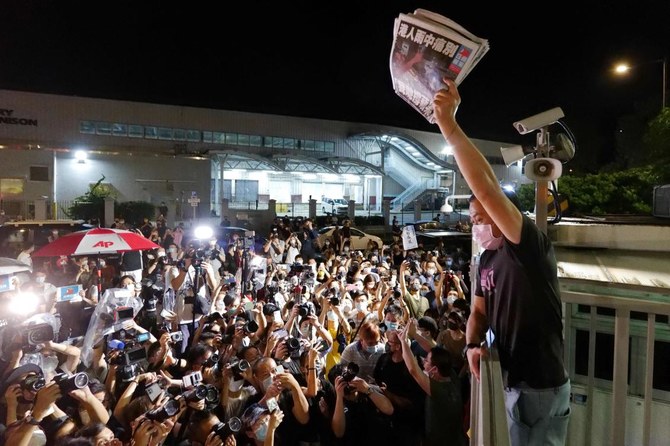
Last year, Apple Daily and Stand News, two popular outlets that were critical of the government, collapsed after newsroom leaders were arrested and company assets were frozen by the security law.
Alviani said RSF’s database now lists 13 Hong Kong media workers as being in jail, a number he said was “enormous” and equivalent to almost ten percent of all known journalist detentions in China.
China has consistently been ranked by RSF as one of the world’s most hostile countries for journalists, and currently sits at 175th out of 180.
But until recently Hong Kong was a comparative oasis of free speech thanks to a “One Country, Two Systems” formula, in which Beijing promised the city could keep key freedoms and autonomy for 50 years after the 1997 handover by Britain.
When RSF published its first report in 2002, Hong Kong had some of the freest media in Asia and ranked 18th worldwide.
For now, the security law has been directed against local media but questions have swirled over the future of the international press based in the territory.
Last week, the city’s foreign press club scrapped Asia’s most prestigious human rights awards, citing the threat posed by the security law.
Multiple major news outlets — including AFP, Bloomberg, CNN, the Economist and the Financial Times — have longstanding Asia headquarters in the city.
“No media can do without correspondents in Hong Kong. But do the media need to have their regional headquarters in Hong Kong?” asked Alviani.
“Is it safe to leave your computer archive, to leave your server, to leave your management team in Hong Kong? In the current situation maybe not.”


![]()

Hong Kong plummets toward bottom of press freedom ranking
Short Url
https://arab.news/46mh9
Hong Kong plummets toward bottom of press freedom ranking
- China has imposed increasingly authoritarian strictures on Hong Kong following large-scale and sometimes violent pro-democracy protests three years ago


Latest updates



© 2026 SAUDI RESEARCH & PUBLISHING COMPANY, All Rights Reserved And subject to Terms of Use Agreement.