

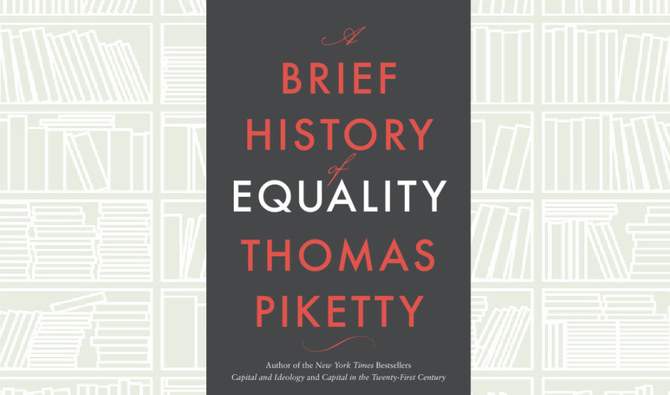

The world’s leading economist on inequality presents a short but sweeping and surprisingly optimistic history of human progress toward equality despite crises, disasters, and backsliding. A perfect introduction to the ideas developed in his monumental earlier books.
The gist of Piketty’s book “is that inequality has been shrinking, not growing, for the past 300 years,” said a review on goodreads.com.
It said Piketty “does a great job explaining how capitalism produced imperialism and racism, and through this built the deeply unequal world we live in today. He also, simultaneously, outlines how people have fought to change this and successfully reduced inequalities.”
Piketty’s first two books — Capital in the 21st Century and Capital and Ideology — were strong arguments regarding the origins and nature of economic inequality in the modern world and the problems that can be expected if steps are not taken to remedy this inequality and the related nexus of problems.
The changes he proposes in the book “are sincerely revolutionary, as in, would result in a massive redistribution of power and wealth,” said the review.
The name that Piketty gives to his program is participatory socialism.


