LONDON: A British pilgrim who performed Umrah in Ramadan described the experience as “overwhelming,” and said it was “great” to be back at the Grand Mosque in Makkah following the COVID-19 pandemic.
Following the lifting of most coronavirus restrictions in Saudi Arabia, Muslims from around the world have flocked to the holy city of Makkah to perform Umrah during Ramadan. The minor pilgrimage is believed to carry the same reward as Hajj when performed in the holy month.
Dr. Hussain Anwar, 27, performed Umrah on the 27th night of Ramadan which could have been Laylatul Qadr, the night on which the Qur’an was first revealed to Prophet Mohammed in Makkah more than 14 centuries ago.
Its exact date is unknown and it is believed to fall on an odd night during the last third of Ramadan.
Many Muslims consider the 27th night of Ramadan to be Laylatul Qadr, and thus, the Grand Mosque in Makkah and the Prophet’s Mosque in Madinah witness a surge in worshippers on the night.
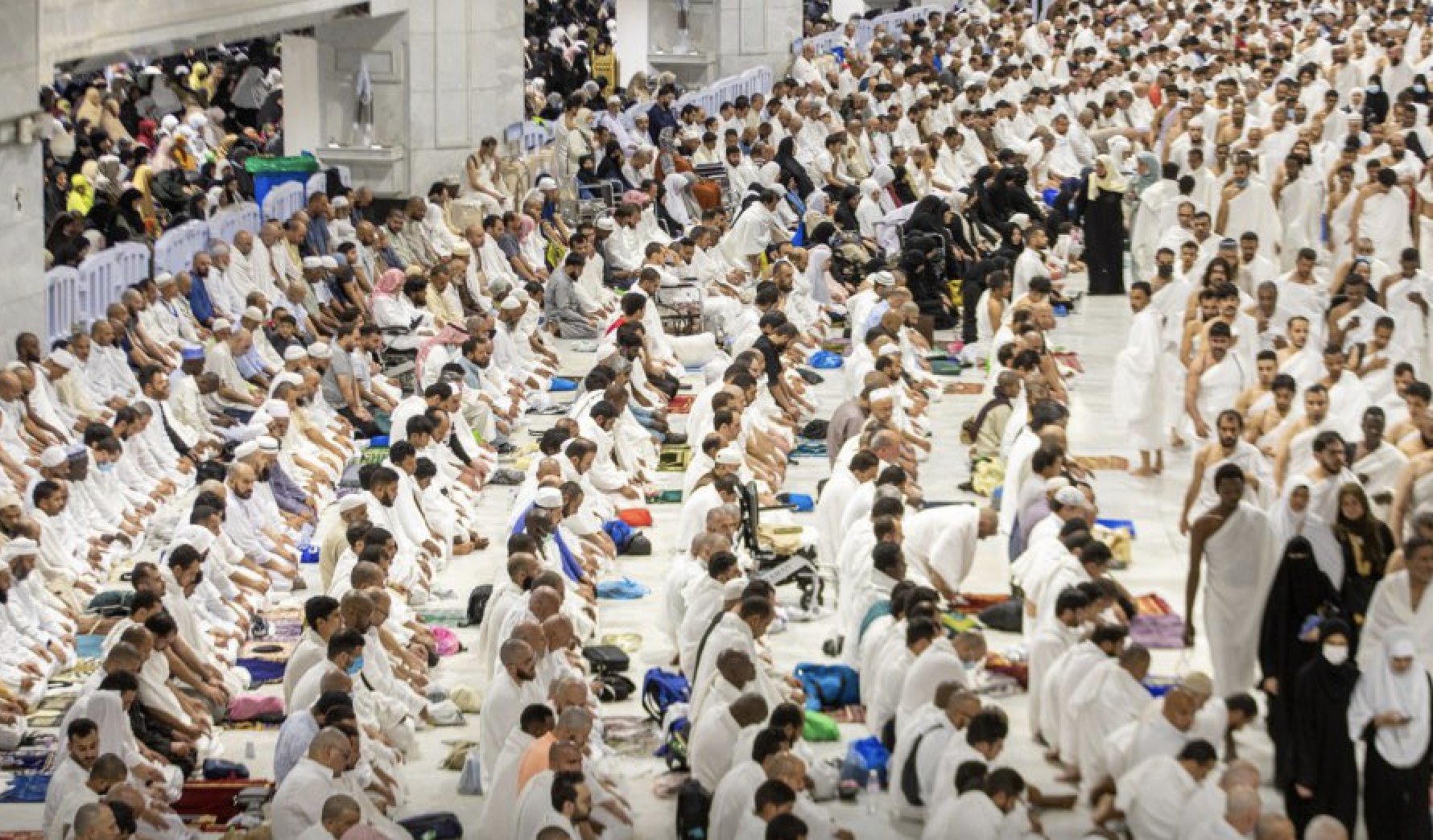
Worshippers pray at the Grand Mosque in Makkah on the 27th night of Ramadan. (@ReasahAlharmain)
It took 4 hours 30 minutes in total for Anwar to perform Umrah due to the amount of worshippers, and “there were people praying in the streets well beyond the boundary of the mosque” because it was “filled to the brim.”
Speaking to Arab News from the rooftop of the Grand Mosque on Thursday, he said that hearing the taraweeh and tahajjud prayers while performing his rituals was beautiful.
“Just being able to listen to the Qur’an while doing tawaf was an incredible feeling. By the time we started sa’ee, the tahajjud prayer was taking place so, again we were able to listen to the Qur’an being recited,” he said.
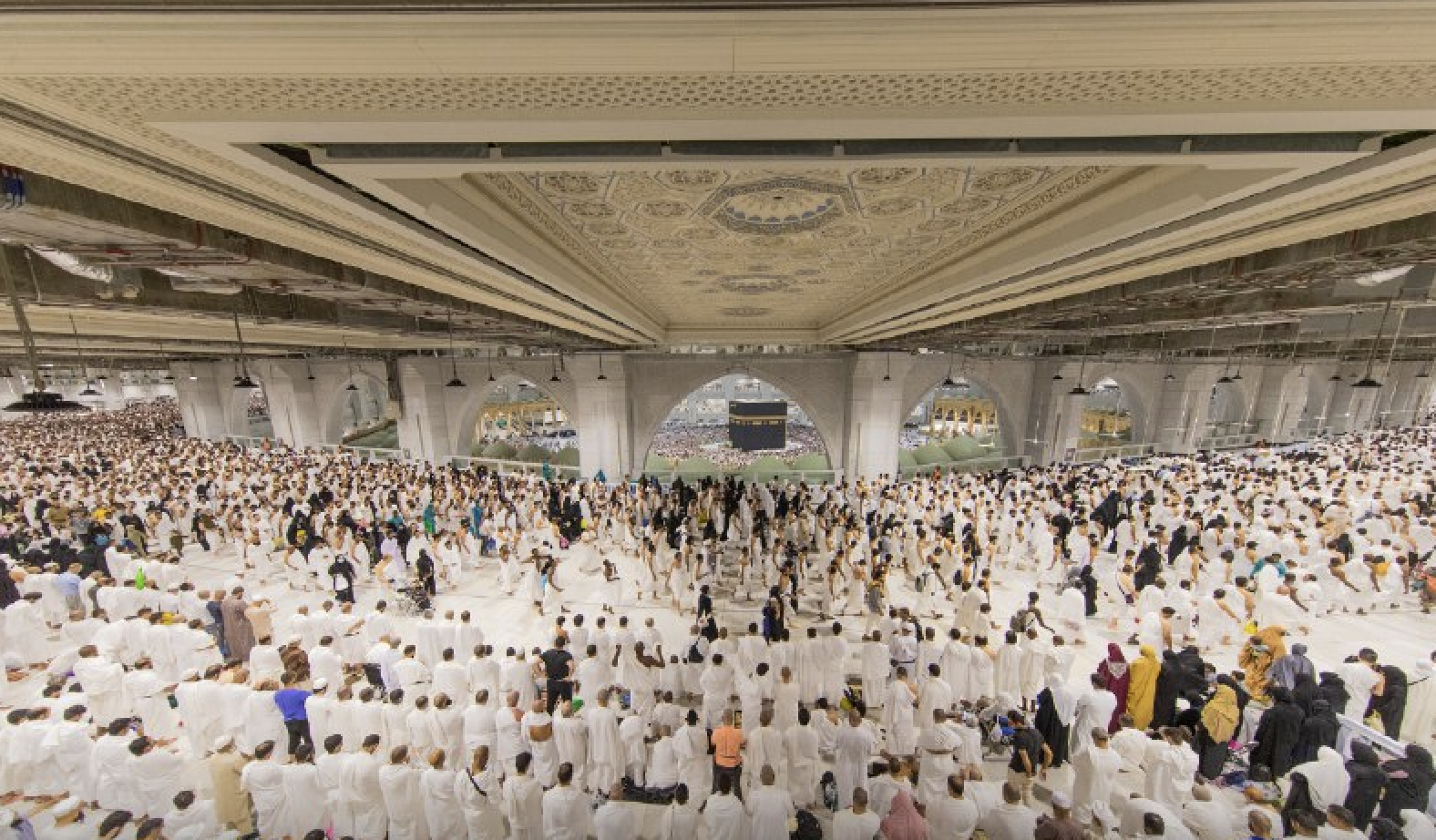
Worshippers pray at the Grand Mosque in Makkah on the 27th night of Ramadan. (@ReasahAlharmain)
“That’s the main thing I missed all these years, being able to be here, perform prayers in the Grand Mosque, and listen to the Qur’an being recited beautifully — it’s great,” he added.
Anwar arrived in Makkah on Wednesday from Madinah, and was forced to break his fast in a taxi as roads were blocked off to control the crowds entering the Grand Mosque ahead of the 27th night of Ramadan.
He described the hospitality of locals as “amazing,” and was given food by strangers to break his fast.
“There were people walking around offering those who were stuck in their cars dates and water — eventually someone came to the car and gave us six burgers, so that was our iftar and suhoor sorted,” he said.
He had previously spent a few days in Madinah and said that breaking his fast at the Prophet’s Mosque was a beautiful experience.
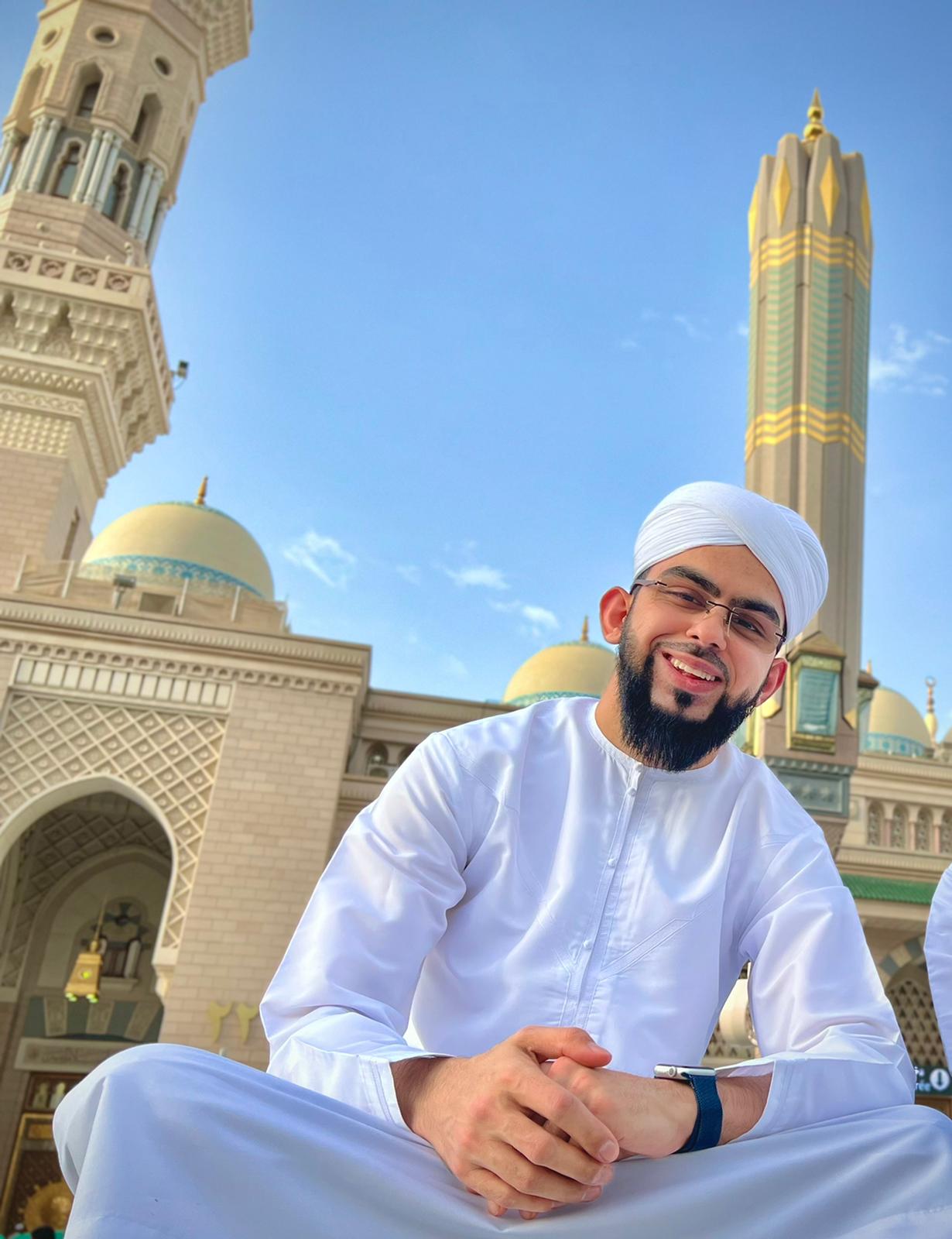
Dr. Hussain Anwar sits in the courtyard of the Prophet’s Mosque in Madinah. (Supplied)
“Even though Madinah was busy, there’s always a sense of tranquility and peace in the city and there’s always an air of calmness despite the amount of people,” Anwar said.
“The people of Madinah are so nice and generous and at iftar time you get people pulling you to come and eat on their sufra to break your fast with them.”
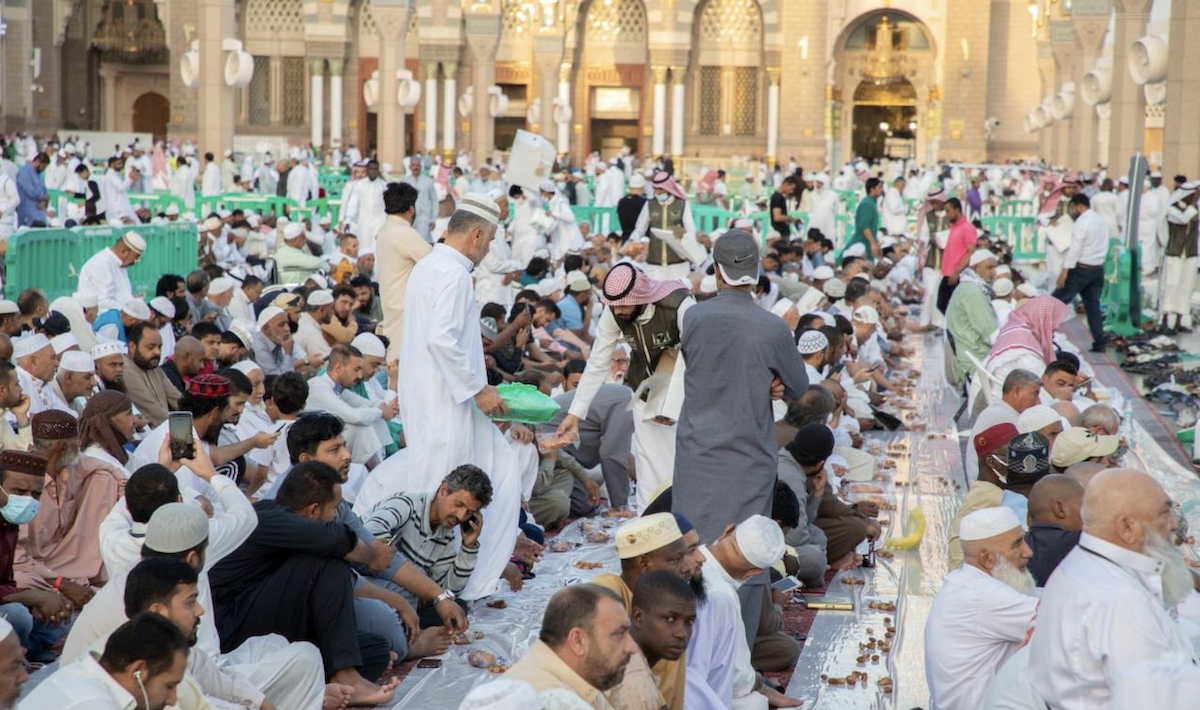
People wait to break their fast at the Prophet’s Mosque in Madinah. (@wmngovsa)
He added that there have been significant changes in the way that people pay their respects to the Prophet in Madinah post-pandemic, which has made the process much easier for visitors.
“It’s a lot more organized and you have to join a queue. There is also another queue to visit the noble Rawdah,” he said.
Anwar used the Haramain High Speed Railway to travel between the two holy cities, and also from Jeddah to Madinah when he first arrived in the Kingdom.
“The Haramain High Speed Railway is absolutely brilliant. It got us from Madinah to Makkah within 2 hours 30 minutes,” he said.
“We also used the train to get from Jeddah to Madinah when we landed. It was an amazing experience, very quick — it took us from Jeddah to Madinah in 1 hour 40 minutes, it’s incredible.”
Anwar has previously spent Ramadan in the two holy cities and said that the same journey had taken him between 4-5 hours in the past by road.
“This seems like a much safer and quicker option. The Haramain High Speed Railway is very comfortable and it was a very nice experience. So we opted to use the train again to travel from Madinah to Makkah,” he said.
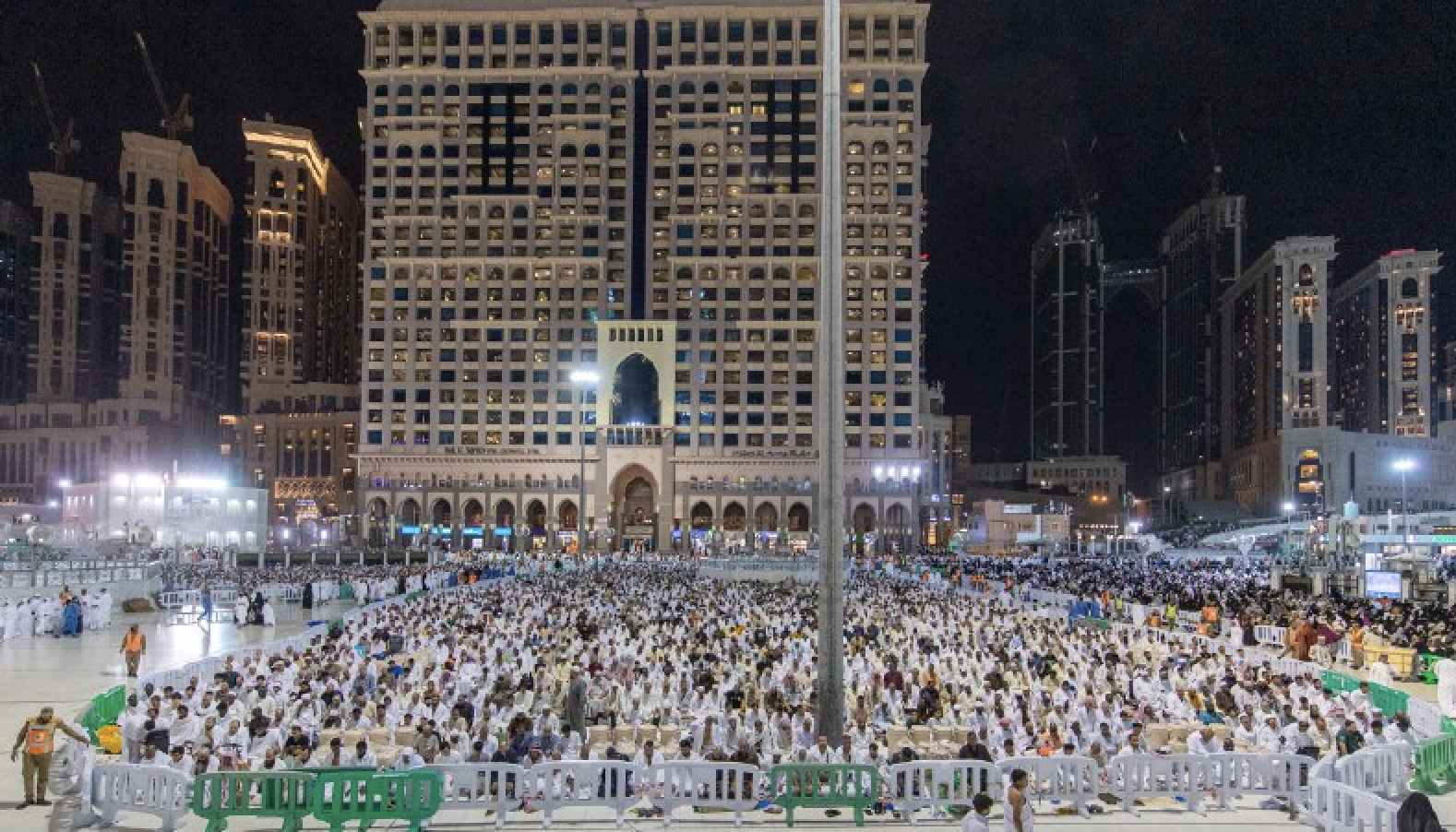
Worshippers pray at the Grand Mosque in Makkah on the 27th night of Ramadan. (@ReasahAlharmain)
“The economy class was completely filled out so we traveled in business class. It’s a very popular option amongst Umrah pilgrims and visitors because it’s a lot easier, you just sit on a train and it takes you straight there. There’s no stopping and starting, there’s no worrying about traffic, it takes you straight to the station so it’s great,” he added.
Anwar also commended the increase in women working in shops, hotels, train stations, and airports across the Kingdom.
“Before, employees would be predominantly men, but there are a lot more women working in Saudi Arabia now. At Jeddah airport, lots of the security personnel and Border Force staff were women and this is a good example of inclusion,” he said.