KABUL: A blast in the Afghan capital ripped through a Sunni mosque and killed at least 10 people on Friday, an interior ministry official said.
A wave of deadly bombings has rocked the country in the last two weeks of the fasting month of Ramadan — some claimed by the Daesh group — killing dozens of civilians.
“Many worshippers were at the Khalifa Sahib mosque when the blast went off,” a survivor who gave his name as Ahmad told AFP.
“Many victims were thrown off their feet.”
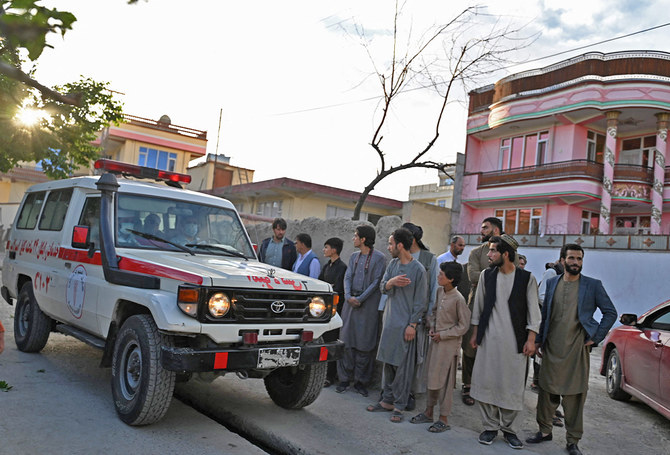
Bloodied casualties were ferried in ambulances to a hospital in central Kabul but Taliban fighters barred journalists from accessing the facility.
“The blast occurred two hours after Friday prayers as worshippers were performing rituals,” interior ministry deputy spokesman Bismillah Habib told AFP, adding at least 15 people were injured.
Friday’s blast came hours after Afghanistan’s supreme leader Hibatullah Akhundzada praised the country’s security apparatus in a message ahead of the Eid Al-Fitr holiday that marks the end of Ramadan.
While he made no mention of the recent spate of bombings, he said Afghanistan had been able to build “a strong Islamic and national army,” as well as “a strong intelligence organization.”
Several recent bombings have targeted the minority Shiite community, but Friday’s blast was at a Sunni mosque.
It comes a day after two bombs on separate minibuses killed at least nine people in the northern city of Mazar-i-Sharif, targeting Shiite passengers heading home to break their fast.
A bomb at a Shiite mosque in the city a week earlier killed at least 12 worshippers and wounded scores more.
Daesh has claimed responsibility for several of the recent attacks.
The regional branch of the militant group in Sunni-majority Afghanistan has repeatedly targeted Shiites and minorities such as Sufis, who follow a mystical branch of Islam.
Daesh — a Sunni militant group — is a bitter rival of the new Taliban rulers of Afghanistan.
The Taliban pursued an Afghanistan free of foreign forces, whereas Daesh wants an “Islamic caliphate” stretching from Turkey to Pakistan and beyond.
Taliban officials insist their forces have defeated Daesh, but analysts say the militant group remains a key security challenge.


![]()

Up to 10 killed as blast rips through mosque in Afghan capital
Short Url
https://arab.news/rcfrv
Up to 10 killed as blast rips through mosque in Afghan capital
- Casualties were ferried in ambulances to a Kabul hospital hours after Friday prayers
- A wave of deadly bombings has rocked Afghanistan in the last two weeks of Ramadan
Latest updates



Recommended


© 2026 SAUDI RESEARCH & PUBLISHING COMPANY, All Rights Reserved And subject to Terms of Use Agreement.