


Members of UK-based Emirates Society host Ramadan iftar to celebrate cultural ties

The Emirates Society hosted a Ramadan iftar event in London offering delicious Emirati food. (AN Photo/Hasenin Fadhel)
Short Url
Updated 30 April 2022
Follow

Members of UK-based Emirates Society host Ramadan iftar to celebrate cultural ties

  • Politicians, businessmen, academics and young people gather to celebrate British ties with the UAE 
  • The Ramadan iftar event was hosted by the UAE’s Ambassador to the UK, Mansoor Abulhoul

LONDON: The Emirates Society, a UK-based friendship group dedicated to strengthening UK-UAE ties, organized a Ramadan iftar in the heart of the British capital to celebrate Emirati culture and heritage.

“Ramadan of course is important for those of the faith and of those who are not, because we know how much it means at home (the UAE), and we all want to celebrate that and it’s just that happy opportunity at the end of the day to get together,” Alistair Burt, a former British government minister and chairman of the Emirates Society, told Arab News.

The event, which was held at the UAE-owned Carlton Tower Jumeirah in London, attracted a wide range of people, including MPs, ambassadors, heads of think tanks and charity organizations, and businessmen, all of whom are interested in fostering UK-UAE ties.

Burt, who has been involved with the society since its launch in 2018 by UAE Foreign Minister Sheikh Abdullah bin Zayed, is stepping down as chairman to give the opportunity to someone else to take it to the next stage.


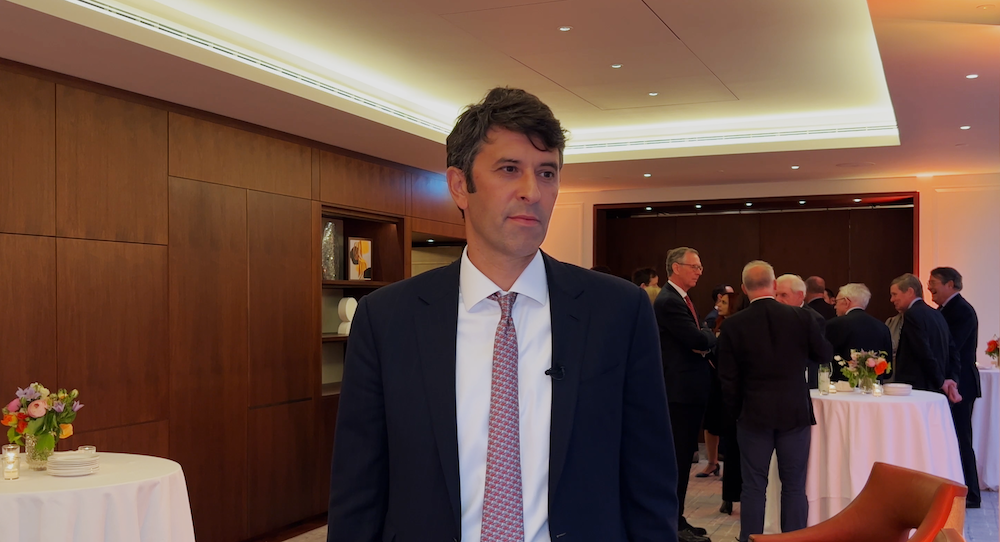
Chairman of the Emirates Society Alistair Burt, who has been involved with the society since its launch in 2018, is stepping down so someone else can take the organization to the next stage. (AN Photo/Hasenin Fadhel)

“I’m very proud of what we’ve achieved. We’ve had some landmark events, both in person, and virtually, we’ve been to Mars, and we’ve had opportunities here, we’ve spoken about difficult things, we’ve spoken about easy things, we’ve really looked at culture, and art and design in London, and I think we’ve built up the relationship with colleagues very much, so it’s ready for the next stage,” he said.

In the last year, the society has held a variety of exhibitions, lectures and discussions on topics ranging from food waste, to archaeology and investment opportunities.

“For me, it’s always been about broadening the relationship away from the things that the newspapers talk about. Newspapers and politics are all about some very straightforward things, it’s defense and security, it’s taking in the Middle East in that context.”

During his tenure as the British minister for the Middle East, he said he was more interested in the “people underneath all this,” who are interested in contemporary things, whereas in Britain “there’s a tendency to look back.”


The Emirates Society iftar event was held at the UAE-owned Carlton Tower Jumeirah in Knightsbridge, London. (AN Photo/Hasenin Fadhel)

He said: “I always wanted the Emirates Society to be something that recognizes that vision but took it on in a contemporary way, and I think that’s where we’re going,” adding that there are a lot more opportunities in science and in social media to come.

Burt, who vowed to continue being involved with the Emirates, also said they were working with younger people, as well as universities and students, to attract more youth to the society.

The iftar event was hosted by the UAE’s Ambassador to the UK Mansoor Abulhoul, who said now that the COVID-19 pandemic has lifted, he would like to see more events being hosted and an increase in members and youth engagement — as they have a strong Emirati student base in the UK — as well as private sector involvement.

“The purpose of the Emirates Society is as a friendship platform, and to foster greater ties across the relationship, which is so key, when you have a very strong bilateral relationship, you want to ensure that people connectivity is optimized,” Abulhoul said.


UAE’s Ambassador to the UK Mansoor Abulhoul said he would like to see more events being hosted by the Emirates Society now that coronavirus restrictions have been listed. (AN Photo/Hasenin Fadhel)

With currently over 100,000 British expats in the UAE, making it among the largest British communities in the world, he said there are a lot of people with ties in the UAE as generations of Britons have been born there.

The UAE has shared a special relationship with Britain since its founding in 1971, developing strong, strategic ties in the economy, defense, education, culture, health care and the energy sector.

The ambassador said the iftar event also coincided with Zayed Humanitarian Day, which is marked on Ramadan 19 each year, where they celebrate the Emirates’ founder and his contributions to helping others less fortunate

“It’s wonderful to be able to do it within Ramadan on Zayed Humanitarian Day, and I think he had an exemplary role over his career that was breathed into his sons in terms of foreign aid assistance we give around the world, assistance we give within our own country to those who are less fortunate,” Abulhoul said.

Nusrat Ghani, the Conservative MP for Wealden in East Sussex, said holding the iftar was “incredibly valuable” as it brought people together and gave them the opportunity to enjoy other cultures.

“It’s lovely to meet so many of my Emirati friends and those in the diplomatic services, we haven’t met up for quite some time because of COVID-19, and just catching up on conversations we had a few years ago,” she said, adding that they spoke about the environment, the new technology that the UAE could be harnessing and exploiting for many more people across the world, upcoming elections in Lebanon and extremism.

“There’s a lot of overlap in what happens between our countries and what interests our voters, our constituents, and I’m hoping that we can continue these conversations and make some really good decisions about things that matter to them, everything from security to the environment,” Ghani added.


Israel is risking global security, warns Somali Information Minister

Updated 6 sec ago
Follow

Israel is risking global security, warns Somali Information Minister

  • Tel Aviv’s actions boost terror groups he tells Arab News in exclusive interview
  • Jama accuses Tel Aviv of wanting to relocate Palestinians from Gaza to region

RIYADH: Israel’s recognition of Somaliland and its presence in the region risks inflaming the situation there, allowing terrorist groups to undermine regional security and stability, according to Somali Information, Culture and Tourism Minister Daud Aweis Jama.

In a special interview with Arab News, Jama insisted that Israel’s unprecedented Dec. 26 move to recognize Somaliland as a sovereign state represents a major setback for Mogadishu’s fight against terrorist organizations like Al-Shabab and Daesh.

“The presence of Israel will be used by the terrorist groups to expand their operations in the region. (They will) have a pretext to spread their ideologies in the region,” he said.

“That is another factor that is also risking global security and regional stability, because we have been in the last stage of overcoming the challenges of the terrorist groups Al-Shabab and ISIS,” he added, using another term for Daesh.

Jama added: “We have been putting all our resources and all our time into making sure that we finalize the final stages of the fight against Al-Shabab. So, if something else interrupts us, that means that we are not going to focus fully on the operations against Al-Shabab. And that means we are giving more opportunities to Al-Shabab or other organizations.”

The consequences of this hit to Somalia’s ability to fight terror will not be restricted to the country’s borders, according to Jama, but will spread across the region and beyond.

“This might invite other, external terrorist groups to the region, because they will take advantage of this crisis and will make sure that they take over all the areas that have been defeated before,” the minister said.

“We believe this has come at a time that is going to affect our security as a Somali government, the security of the Horn of Africa, the security of the Gulf of Aden, the security of the Red Sea, the security of the Middle East and global stability. This is a very important location that holds the trade of the world.”

The minister underlined that Israel’s recognition and larger presence in the region are leading to more challenges, “putting more fuel on the ongoing challenges that exist in the region, especially in Somalia.” He added: “And at this time, it is not only limited to Somalia, but it’s going to be a challenge that is going to spread like a fire all over the region and all over the world.”

Jama told Arab News that Israel has other strategic motives for its recognition of Somaliland — including the forced resettlement of Palestinians from Gaza.

“According to reliable sources that our intelligence gathered, one of the conditions that Israel put forward (for recognizing Somaliland) was to have a place that they can settle the people from Gaza,” he said.

“We find that it is a violation also of the people of Palestine, because we believe that the people of Palestine have the right to self-determination. The two-state solution that has been the call of the international community has to be adhered to and implemented.”

Israel’s coalition government, the most right-wing ‌and religiously conservative in its history, includes far-right politicians who advocate the ‍annexation of both Gaza and the West ‍Bank and encouraging Palestinians to leave their homeland.

Somalia’s UN Ambassador Abukar Dahir Osman said ‍Security Council members Algeria, Guyana, Sierra Leone and Somalia “unequivocally reject any steps aimed at advancing this objective, including any attempt by Israel to relocate the Palestinian population from Gaza to the northwestern region of Somalia.”

Israel last month became the first country to recognize Somaliland as an independent nation. In the three-plus decades since its self-declaration of independence in 1991, no state had recognized the northwestern territory as being separate from Somalia.

Mogadishu immediately rejected the Israeli move, alongside countries all over the world.

Saudi Arabia affirmed its rejection of any attempts to impose parallel entities that conflict with the unity of Somalia. It also affirmed its support for the legitimate institutions of the Somali state and its keenness to preserve the stability of Somalia and its people.

A group of foreign ministers from Arab and Islamic countries, alongside the Organization of Islamic Cooperation, also firmly rejected Israel’s announcement. In a joint statement, the ministers warned that the move carries “serious repercussions for peace and security in the Horn of Africa and the Red Sea region” and undermines international peace and security.

The 22-member Arab League rejected “any measures arising from this illegitimate recognition aimed at facilitating forced displacement of the Palestinian people or exploiting northern Somali ports to establish military bases,” the organization’s UN Ambassador Maged Abdelfattah Abdelaziz told the UN Security Council.

In the most recent development in Israel-Somaliland relations, less than two weeks after Tel Aviv’s recognition, Israeli Foreign Minister Gideon Saar visited the region on Tuesday to publicly formalize diplomatic relations.

“It was a blatant violation of Somalia’s sovereignty that Israel recognized a region within the Somali Federal Republic as an independent state,” Jama underlined. “That was a total violation of international laws. It was a violation of the territorial integrity and sovereignty of Somalia.

“From the beginning, our path was to follow diplomatic efforts. And we kind of started with a successful UN Security Council meeting that supported Somalia’s territorial integrity and sovereignty. (This was) followed by other international actors like the Arab League, the Organization of Islamic Cooperation, the African Union and regional bodies like the East African Community and IGAD.

“Also, the Peace and Security Council of the African Union has reiterated the importance of supporting Somali sovereignty and territorial integrity.”