

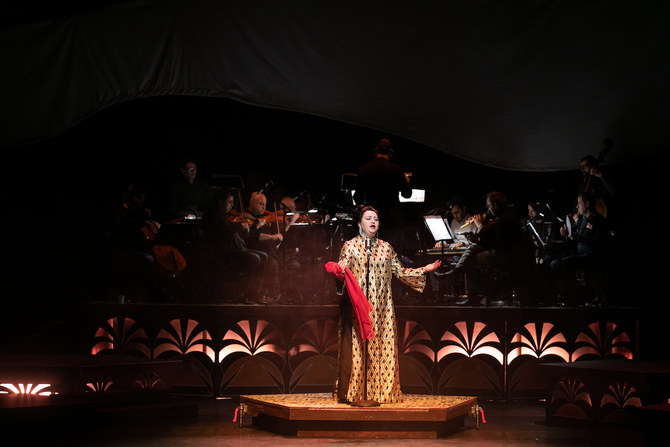
Saudi producer Mona Khashoggi on her new musical, a tribute to Umm Kulthum

The show will make its Middle East debut at Dubai Opera on May 3. (Supplied)
Short Url
Updated 28 April 2022
Follow

Saudi producer Mona Khashoggi on her new musical, a tribute to Umm Kulthum

  • ‘Umm Kulthum & The Golden Era’ makes its regional debut next month

DUBAI: When it comes to musical theater, London’s West End is second only to Broadway in terms of significance. It’s a rare occasion, though, when an Arab-focused production finds its way into the ranks of globally renowned shows such as “The Lion King,” “Wicked” and “Les Misérables.”

But in 2020, just a couple of weeks before the COVID-19 pandemic forced theaters worldwide to close their doors, Saudi playwright, producer and arts patron Mona Khashoggi introduced Londoners to “Umm Kulthum & The Golden Era” — a show based around the life story and seminal songs of the late Egyptian singer, who died in 1975. The show will make its Middle East debut at Dubai Opera on May 3.

Khashoggi came up with the idea for the show when she arrived at the sad realization that musical theater had become a lost art in the region.

“I was sitting there thinking, ‘Why don’t we, Arabs, make something like “Mamma Mia”?’
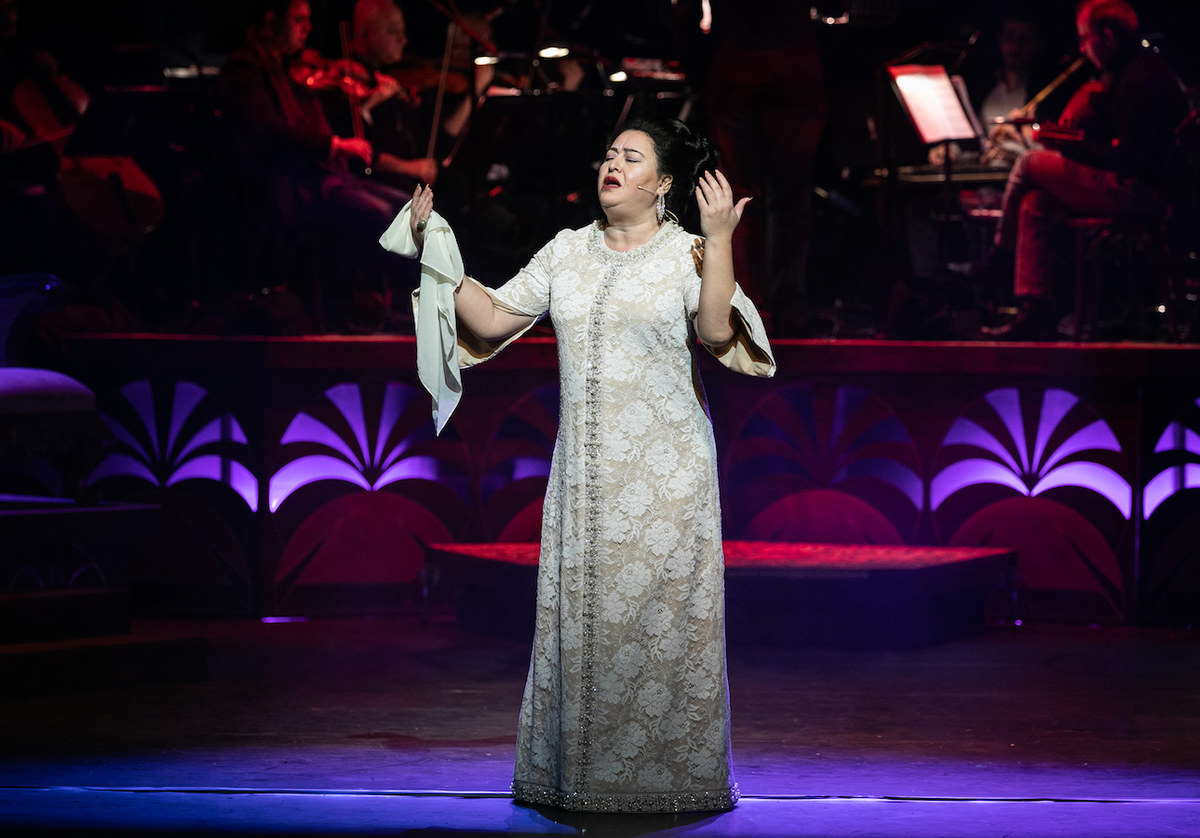


Lubana Al-Quntar as Umm Kulthum in the musical 'Umm Kulthum & The Golden Era.' (Supplied)

There used to be so many musicals in the Arab world, but now — apart from some in Lebanon — it’s just concerts,” Khashoggi tells Arab News. “I wanted to do a musical in the West End, but with an Arab story.” 

That proved to be a hard sell. “I went to all of the Arab producers and nobody wanted to do it,” Khashoggi says. “They were all afraid to touch it, because Umm Kulthum is like a goddess.”

So the producer took matters into her own hands, writing her first international play. One that demonstrates the rise of Umm Kulthum from Qur’an orator to iconic diva. 

The story begins with Umm Kulthum’s humble childhood in the rural Egyptian Delta. Her supportive father, a sheikh, played a crucial role in her life, teaching her how to read Qura’nic verses aloud. That practice had a huge influence on her singing.
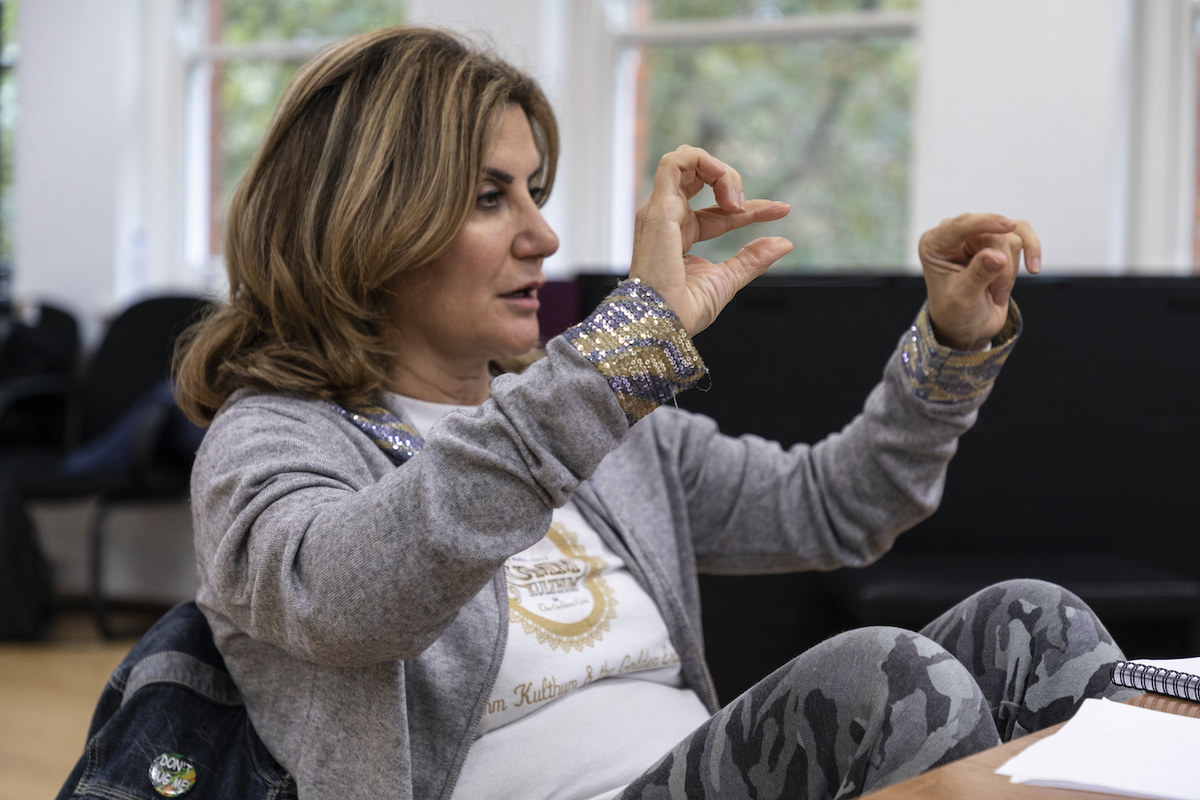


Mona Khashoggi is a Saudi playwright, producer and arts patron. (Supplied)

By the 1960s, Umm Kulthum — “The Star of the East” — was at the top of her game. She released her biggest hits, including “Alf Layla Wa Layla,” in her sixties and seventies and was revered by almost everyone in the Arab world, from all backgrounds. She had plenty of fans in the West too, including superstars like Maria Callas, Bob Dylan, and Robert Plant.

In 1967, her sold-out shows at the Olympia in Paris helped finance and rebuild the Egyptian army under the rule of her friend, Gamal Abdel Nasser. She became a symbol of national pride. “I think she was super clever,” Khashoggi says. “She was a fellaha (village girl), who became the greatest woman in the Arab world. . . She loved the soil that she stood on and was proud of who she was.”

Her death was international news. “When she died, the whole Arab world mourned her,” Khashoggi says. “Who gets that kind of treatment?”

For the producer, this was a deeply personal project. Her late father Mohammed was a good friend of Umm Kulthum and when the singer died it hit him hard.
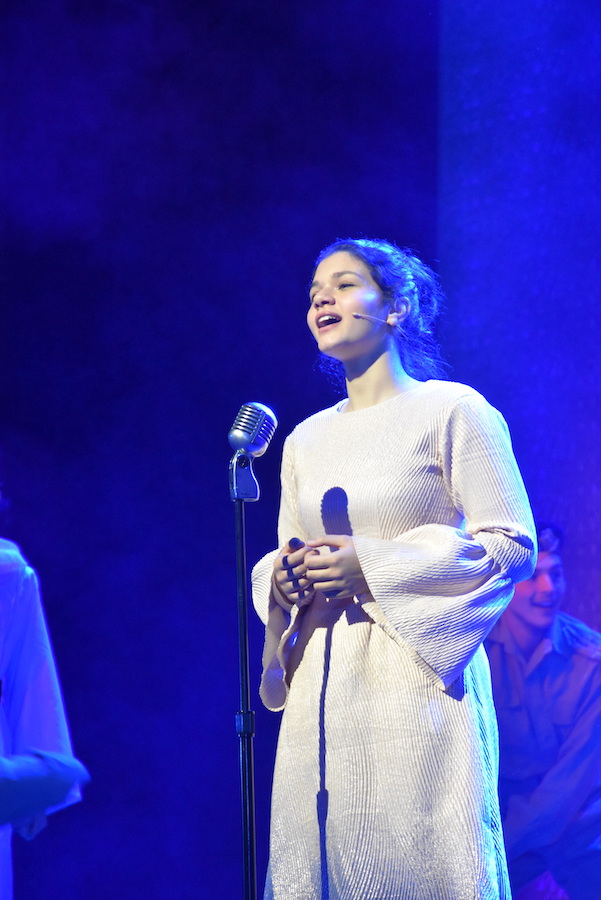


Sanaa Nabil, Umm Kulthum's great-grandniece, will perform in the show. (Supplied)

“My dad locked himself in a room for three days. As a child, it was a very traumatizing experience,” she recalls. The musical’s exploration of Umm Kulthum’s important relationship with her own father is a nod to Khashoggi’s relationship with Mohammed, who introduced her to a whole world of culture during her childhood, which was spent in Lebanon and England. 

The musical has two actresses playing Umm Kulthum — Sara Masry plays the younger version and Syrian opera virtuoso Lubana Al-Quntar the older. There will also be a special guest performance by Sanaa Nabil, the great-grandniece of Umm Kulthum. While the song lyrics are in Arabic, the dialogue is in English, making it a bilingual show with the express purpose of attracting foreign and younger audiences. 

The million dollar questions remains: Why has Umm Kulthum’s global popularity endured to this very day? There are a number of factors to consider, including her singular voice, her iconic image, and the stirring lyrics and memorable melodies of her romantic and patriotic songs, which are still being revisited and reinterpreted by contemporary musicians.

“She commands her audience,” Khashoggi says. “The way she expresses herself is incredible; you don’t have to understand Arabic. One minute she’s angry and the next she’s tender. She’s a rollercoaster of emotions in one minute.” 


Joy Awards 2026 spotlights arts in the Arab world

Updated 18 January 2026
Follow

Joy Awards 2026 spotlights arts in the Arab world

RIYADH: Riyadh hosted its annual Joy Awards, bringing together stars and creative projects from across the Arab world as part of an event that has been held annually since 2022. The 2026 ceremony continued its focus on recognizing storytelling and creative work, while highlighting projects released over the past year.
As audiences anticipated the winners following the release of the nominees, awards were presented across six sectors; music, cinema, series, directors, sports and influencers. In addition to category awards, the ceremony also honored recipients of special accolades including Personality of the Year, Lifetime Achievement, and Joy Honorary awards.
Previous events have recognized Arab and international figures for their contributions to the arts, including Matthew McConaughey, who received the Personality of the Year Award in 2025.
Amid the Kingdom’s expansion of its entertainment sector — spanning film, music and sports — the Joy Awards reflected Riyadh Season’s role in hosting large-scale cultural events.
This year’s fan-favorite nominees, many of whom were Saudi nationals, were cheered on as they walked the Joy Awards’ iconic lavender carpet, where fashion once again took center stage as a key expression of the region’s evolving creative identity.
Among winners who took home the Joy Awards was Saudi 14 year old Rateel Alshehri, who won Favorite Female Influencer. Speaking to Arab News on the lavender carpet, Rateel shared her excitement towards Joy Awards:
“I’m so excited about being at Joy Awards today, it’s something I’ve been looking forward to (…) Everyone here deserves to be here.” On her beautiful sky-blue gown, Rateel shared that she was wearing Saudi designer, Adnan Akbar.
Rateel’s excitement towards the awards was echoed by both Arab and non-Arab guests on the lavender carpet as many took in the unique atmosphere that Riyadh offers Joy Awards; where Arab entertainment and art is celebrated.
Lebanese actress Laila Abdullah also shared her enthusiasm towards both the award show and the Kingdom’s ambitions in hosting the Joy Awards and creating a hub for creative voices.
Speaking to Arab News she emphasized Saudi’s unique qualities: “It’s this mix of culture and luxury (…) It has that Gulf Arab character, the Saudi touch, you know? And that’s what really makes it stand out” Joy Awards was filled with a bustling energy that was eager and excited to give a platform to dreamers, artists, and talents who have been waiting to showcase their visions within the Arab world. It was a celebration that went beyond mere award-giving, reflecting the same ambition and creative momentum that defines Riyadh Season.
The lavender carpet paved way for international guests to speak to Saudi media on how it feels to be a part of an artistic celebration of Arab talent. Speaking to Arab News, Australian actor Luke Arnold shared his excitement towards attending the Joy Awards: “What I’m most excited about is kind of what I love about film and television, which is people from all over the world coming together to tell stories and share their expertise (…) It’s really exciting hearing about some of the potential projects happening, meeting some of the local talent here…just really excited to have more stories out in the world.”
Speaking to Arab News, Lebanese fashion influencer Karen Wazen reiterated the sentiment on Riyadh giving Joy Awards a special and unique energy for the arts, saying: “I am so impressed, I’m so proud to be at an event like this in our region, in Saudi Arabia. This is probably the most impressive and big carpet that I’ve ever seen (…) I’m very excited to watch the ceremony, but also I think to just meet so many people from our industries, it’s a beautiful place to do so.”
That vibrant atmosphere was on full display at the Joy Awards as the ceremony continued with stars like Millie Bobby Brown winning the Personality of the Year Award and the Lifetime Achievement Honor presented to acting legend Forest Whitaker. The stardom was not limited to the film sector, as American pop star Katy Perry performed her iconic songs live; and British singer Robbie Williams took to stage to give a standout performance.
The Joy Awards 2026 once again proved that setting new benchmarks in entertainment and creative expression is not only achievable, but celebrated when driven by local talent and support. As stars from around the world took to Riyadh’s lavender carpet, Arab culture was placed firmly at the forefront — spanning film, music, and digital creativity. The Joy Awards stand as a symbol of the broader cultural transformation that Riyadh is championing across the Arab world’s entertainment industry.