Archbishop joins imam and Muslims at interfaith iftar in Palermo

The Palermo Muslim community held an interfaith iftar with leading members of the Italian clergy and local city officials.
Short Url
Updated 27 April 2022
Follow

Archbishop joins imam and Muslims at interfaith iftar in Palermo

  • ‘We want our city to be a welcoming place for every religion and culture,’ says city mayor

ROME: The Palermo Muslim community held an interfaith iftar here with leading members of the Italian clergy and local city officials in a bid to promote, peace, respect and integration.

The event was organized by the Tunisian community in the city, with the support of the Moroccan consulate and the Municipal Council of Cultures, and attracted over 1,000 people.

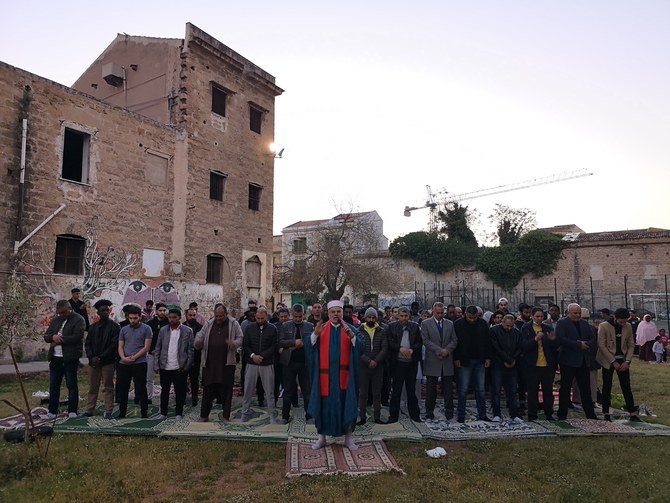
Palermo Archbishop Corrado Lorefice and the Imam of the Piazza Gran Cancelliere Mosque Mustafa Boulaalam joined the common prayer, which was followed by a dinner with traditional Tunisian dishes.

The faithful — mostly Tunisians, Moroccans and Bangladeshis — had their prayer in Piazza Magione, a large and iconic square in the oldest part of the city center.
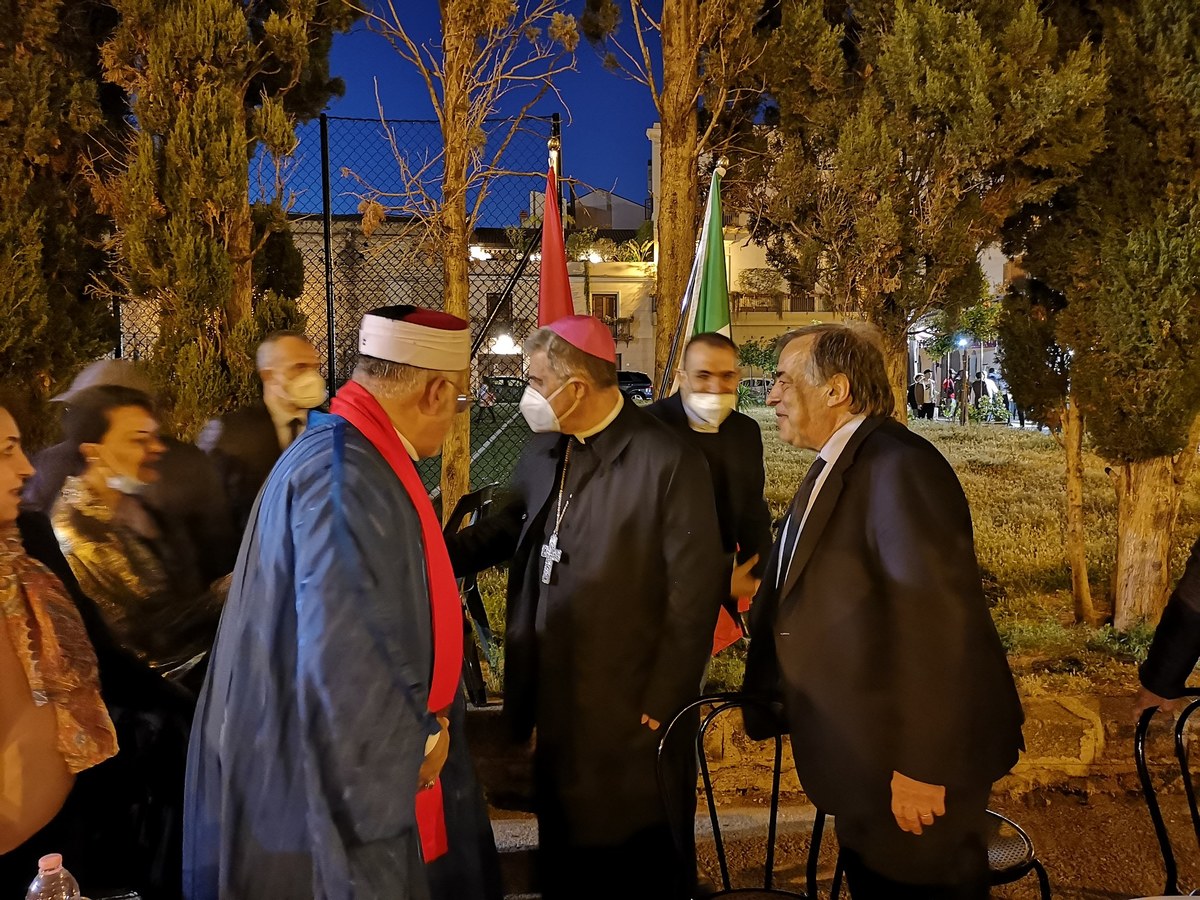
Palermo Mayor Leoluca Orlando also attended the event.

“In Palermo we believe in integration and sharing together. We want our city to be a welcoming place for every religion and culture,” said Orlando.

He thanked the Muslim communities in Palermo “for their active presence in the religious, social and cultural texture of our city which aims to be a meeting place for everyone.”

At the end of the event, the Tunisian community honored the mayor with a plaque to thank him “for being our sentinel of respect and human dignity.” Orlando also received from the imam his traditional hat and cloak.

Boulaalam said: “After two years of restrictions due to the COVID-19 pandemic, now we finally manage to live some normality and we have the pleasure to celebrate Ramadan again together with the entire city of Palermo.

“We are pleased to let everyone know the precious message of peace marking the holy month of Ramadan.”


Ukraine sanctions Belarus leader for supporting Russian invasion

Updated 9 sec ago
Follow

Ukraine sanctions Belarus leader for supporting Russian invasion

  • Ukraine on Wednesday sanctioned Belarus’s long-time leader Alexander Lukashenko for providing material assistance to Russia in its invasion and enabling the “killing of Ukrainians.”
KYIV: Ukraine on Wednesday sanctioned Belarus’s long-time leader Alexander Lukashenko for providing material assistance to Russia in its invasion and enabling the “killing of Ukrainians.”
Lukashenko is one of Russian President Vladimir Putin’s closest allies and allowed his country to be used as a springboard for Moscow’s February 2022 attack.
Russia has also deployed various military equipment to the country, Ukraine alleges, including relay stations that connect to Russian attack drones, fired in their hundreds every night at Ukrainian cities.
“Today Ukraine applied a package of sanctions against Alexander Lukashenko, and we will significantly intensify countermeasures against all forms of his assistance in the killing of Ukrainians,” President Volodymyr Zelensky said in a statement.
Russia has also said it is stationing Oreshnik missiles in Belarus, a feared hypersonic ballistic weapon that Putin has claimed is impervious to air defenses. It has twice been fired on Ukraine during the war — launched from bases in Russia — though caused minimal damage as experts said it was likely fitted with dummy warheads both times.
Zelensky also accused Lukashenko of helping Moscow avoid Western sanctions.
The measures are likely to have little practical effect, but sanctioning a head of state is a highly symbolic move.
Ukraine and several Western states sanctioned Putin at the very start of the war.
Lukashenko has at times tried to present himself as a possible intermediary between Kyiv and Moscow.
Initial talks on ending Russia’s invasion in the first days of the war were held in the country.
But Kyiv and its Western backers have largely dismissed his attempts to mediate, seeing him as little more than a mouthpiece for the Kremlin.