

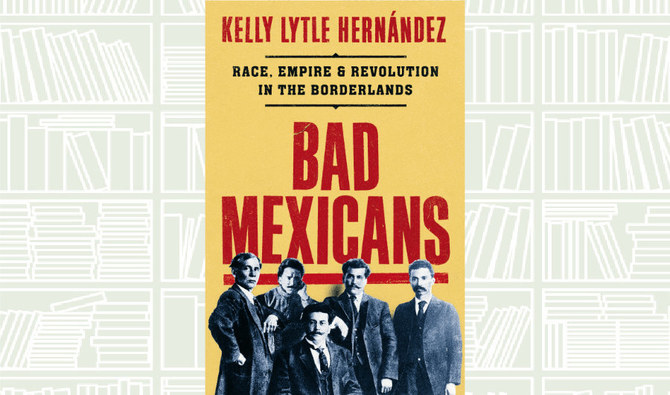
What We Are Reading Today: Bad Mexicans by Kelly Lytle Hernández

Short Url
Updated 26 April 2022
Follow

What We Are Reading Today: Bad Mexicans by Kelly Lytle Hernández

Bad Mexicans tells the dramatic story of the magonistas, the migrant rebels who sparked the 1910 Mexican Revolution from the US.

Determined to oust Mexico’s dictator, Porfirio Díaz, who encouraged the plunder of his country by US imperialists, the rebels had to outrun and outsmart the swarm of US authorities vested in protecting the Diaz regime.

But the magonistas persevered. They lived in hiding, wrote in secret code, and launched armed raids into Mexico until they ignited the world’s first social revolution of the twentieth century.

Taking readers to the frontlines of the magonista uprising and the counterinsurgency campaign that failed to stop them, Kelly Lytle Hernández puts the magonista revolt at the heart of US history.

Long ignored by textbooks, the magonistas threatened to undo the rise of Anglo-American power, on both sides of the border, and inspired a revolution that gave birth to the Mexican-American population, making the magonistas’ story integral to modern American life.


What We Are Reading Today: Power and Possession in the Russian Revolution by Anne O’Donnell

Updated 09 March 2026
Follow

What We Are Reading Today: Power and Possession in the Russian Revolution by Anne O’Donnell

The revolutions of 1917 swept away not only Russia’s governing authority but also the property order on which it stood. The upheaval sparked waves of dispossession that rapidly moved beyond the seizure of factories and farms from industrialists and landowners, envisioned by Bolshevik revolutionaries, to penetrate the bedrock of social life: the spaces where people lived.

In Power and Possession in the Russian Revolution, Anne O’Donnell reimagines the Bolsheviks’ unprecedented effort to eradicate private property and to create a new political economy—socialism—to replace it.

O’Donnell’s account captures the story of property in reverse, showing how the bonds connecting people to their things were broken and how new ways of knowing things, valuing them, and possessing them coalesced amid the political ferment and economic disarray of the Revolution.