


RIYADH: Saudi Arabia’s Research Products Development Co., a subsidiary of PIF-owned TAQNIA, is launching its first robotic prototype this year to support offshore oil operations, its CEO said.
“The robot will be used to inspect leakage in pipelines under the water,” RPDC CEO Abdulmohsen Almajnouni told Arab News.
RPDC, which helps local patent holders commercialize their ideas and turn them into products, worked with Saudi Aramco to develop this prototype.
“The prototype’s patent is owned by Aramco, and it’s developed and tested by RPDC’s team led by international robotic expert Nahid Sidki,” said Almajnouni. The robot will soon be ready for full-scale production.
Strategic alliances
RPDC was established as an effective technology development and commercialization engine by the Saudi Arabia Advanced Research Alliance.
SAARA is the first-of-its-kind alliance between leading organizations from the public and private sectors. The founding partners include Saudi Aramco, King Abdulaziz City for Science and Technology, King Abdullah University of Science and Technology, TAQNIA and King Fahd University of Petroleum and Minerals.
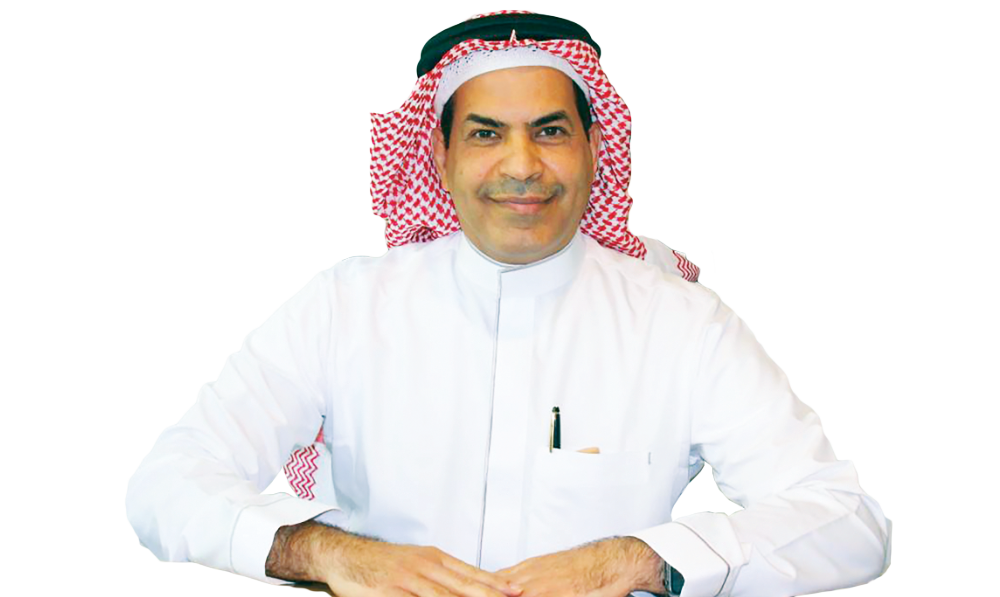
RPDC CEO, Abdulmohsen Almajnouni
RPDC aims to bridge the gap between national research and development and the market by developing technology innovation and patents into successful business opportunities.
The Riyadh-based company has successfully enhanced and developed technology innovation in the Kingdom and generated good revenue within eight years of its creation, Almajnouni said.
Before the creation of RPDC, patent applications in the Kingdom ended on the shelves, and no real action was taken to adopt them. Things changed after the company became operational.
Almajnouni added: “So, the idea was how can we establish an entity that takes the best practices in the world to develop this IP or even better advance the IP into a final product?”
Harnessing innovation
The company has been doing plenty of work on the intellectual property front for the last eight years and with great success.
“We have been doing this now over the last eight years. Of course, we have had a lot of challenges, but I can say proudly that recently we were able to kick-start three main projects and other various products,” Almajnouni said.
HIGHLIGHTS
• The robot will be used to inspect leakage in pipelines under the water.
• RPDC, which helps local patent holders commercialize their ideas and turn them into products, worked with Saudi Aramco to develop this prototype.
• The prototype’s patent is owned by Aramco, and it’s developed and tested by RPDC’s team led by international robotic expert Nahid Sidki.
He added that over the past five years, the company has grown successfully thanks to the support of the firm’s founders, shareholders, government support and Saudi Aramco’s scientific endeavors. “I can proudly tell you that we are a company with around 30 people, and I would have a stable income stream in tens of millions of dollars annually. We execute various projects depending on their stage of commercialization. In addition, RPDC conducted market assessments for new companies,” Almajnouni told Arab News.
Almajnouni stressed that the company generates income from its partners like Aramco and SABIC.

Nahid Sidki, chief technology officer of Research Products Development Company.
“The income comes from our customers because we are part of the Public Investment Fund. So, we are obligated to be a profit center. That means we offer services to our clients, and they pay for the services,” he added.
The other service provided by the RPDC is a strategic partnership with consultant firms. “But the challenge has always been how to take an IP from the lab to the industry,” Almajnouni said.
“We assess these IPs,” he continued, “we evaluate them as to which one would ultimately lead to a product that is needed and can be sold. So, we do this service called the intellectual property or patent review on assessment.”
Taking it to the drawing board
Almajnouni noted that the product the company receives is tested thoroughly by the technical team before drawing up a business plan.
“It should be a product that you can take; you can test it and understand how it works. You can even further improve it.
FASTFACTS
• RPDC was established as an effective technology development and commercialization engine by the Saudi Arabia Advanced Research Alliance.
• SAARA is the first-of-its-kind alliance between leading organizations from the public and private sectors. The founding partners include Saudi Aramco, King Abdulaziz City for Science and Technology, King Abdullah University of Science and Technology, TAQNIA and King Fahd University of Petroleum and Minerals.
The other thing we do is prepare a complete business plan for clients, which includes an assessment, a market review followed by prototyping.”
Almajnouni admitted that the IP market, in general, is quite challenging.
Because this is a very challenging market, IP development is risky. I’m not sure how any company can grow easily because many of these IPs will take time,” he said.
A patent may not hit the market, or maybe it will. But what cannot be stopped is an idea whose time has come.


