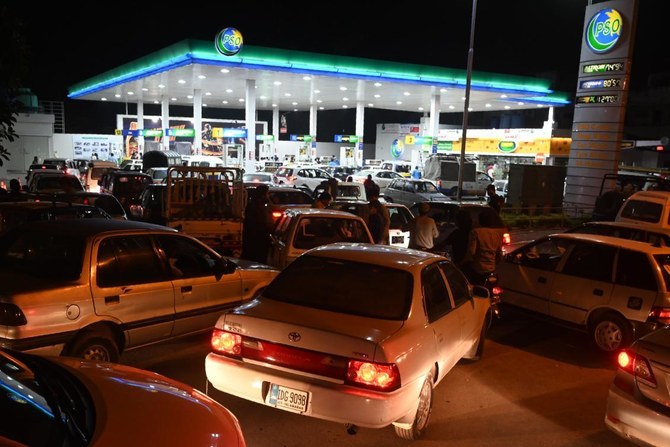
ISLAMABAD: Panic buying across Pakistan is fueling an “artificial shortage” of diesel, the Ministry of Energy said on Monday, as Islamabad is expected to roll back fuel price subsidies amid the government’s efforts to revive its $6 billion loan program from the IMF.
Pakistan, facing economic challenges after a new government took over this month from ousted Prime Minister Imran Khan, has asked the IMF to extend its loan program and increase the funding by $2 billion to help ease difficulties in financing, the country’s Finance Minister Miftah Ismail has said.
The South Asian country has agreed to roll back subsidies to the oil and power sectors , the IMF said in a statement, ahead of a mission visit next month “to resume discussions” on the loan program, when officials are expected to thrash out details on the bailout package.
The likely increase in diesel prices has fueled an “artificial shortage” across Pakistan, with farmers among those struggling to secure enough fuel as the country is in the peak of the wheat harvesting season. The Ministry of Energy said Pakistan has enough diesel supply.
“This is an artificial shortage as Pakistan has enough diesel reserves available to fulfill the demand,” Rabbiya Khalid, a spokesperson for the Ministry of Energy, told Arab News.
“People should stop panic buying. There is absolutely no shortage of diesel in Pakistan.”
The shortage has also hit the country’s most populous Punjab province, where wheat harvesting has been delayed as a result.
“The diesel shortage is hurting the farmers and delaying the wheat harvesting,” Mian Muhammad Umair Masood from the Pakistani farmers’ association, Pakistan Kissan Ittehad, told Arab News.
Masood said the delay in wheat harvesting would impact sowing of other crops, including cotton, maize and rice, and called on the government to continue the fuel subsidy to support the farmers.
“The oil shortage at this crucial time could lead to food insecurity in the country,” he said. ”Diesel is mainly used in agriculture, and a fuel subsidy to farmers means additional crop yield and food security.”
The new government, promising populist measures, had kept fuel prices unchanged this month to provide relief to its citizens. But aid from the lender appears critical as Pakistan grapples with Asia’s second-fastest inflation and its foreign exchange reserves fell to less than two months of import cover.
The IMF suspended its $6 billion loan to Pakistan in 2020, after Pakistan failed to meet the conditions. The plan was revived last year under tougher conditions agreed to by Khan’s administration, including raising oil prices and electricity tariffs, but the increases were rolled back in response to public anger over rising living costs.
Pakistan revises prices of petroleum products every fifteen days, and the next revision is scheduled for April 30. It is expected that fuel prices would increase to fulfill the IMF’s demands.
Samiullah Tariq, head of research at Pakistan Kuwait Investment, said that sufficient stock of the diesel was available in the country and the shortage was “temporary” as oil company dealers expected a price hike by the end of this month.
“The government should announce the revised oil prices as early as possible to end this artificial shortage,” Tariq told Arab News.


![]()

Pakistan faces ‘artificial shortage’ of diesel ahead of IMF loan review
Short Url
https://arab.news/jj8ag
Pakistan faces ‘artificial shortage’ of diesel ahead of IMF loan review
- Islamabad has asked the IMF to extend and boost its loan program
- Gov’t expected to roll back fuel price subsidies to meet IMF’s demands
Latest updates


Recommended


© 2026 SAUDI RESEARCH & PUBLISHING COMPANY, All Rights Reserved And subject to Terms of Use Agreement.