LAHORE: A court in Pakistan on Friday directed President Arif Alvi to appoint another representative to administer oath to Punjab chief minister-elect Hamza Shehbaz after provincial governor Omar Sarfaraz Cheema refused to administer it, local media reported.
Shehbaz, who belongs to the Pakistan Muslim League-Nawaz (PML-N) party, was elected as the new chief minister on April 16, during a chaotic session of the Punjab Assembly.
But Governor Cheema, a member of former prime minister Imran Khan’s party, delayed the oath-taking a day later, saying he could not endorse an “unconstitutional action.”
Shehbaz filed a plea against the governor in the Lahore High Court (LHC), maintaining Cheema was not fulfilling his “constitutional duty.”
“[A] governor cannot refuse to administer oath,” Geo News channel quoted LHC Chief Justice Muhammad Ameer Bhatti as ruling in the short order.
“President of Pakistan should appoint another representative for the oath taking.”
The directives came after the court asked Cheema to present the reasons for not administering the oath, but he excused himself from administering it.
However, the chief justice remarked the governor could not deny performing his duties and issued the short order, according to the report. He asked the court office to dispatch the order to President Alvi.
Shehbaz described the LHC’s verdict as a “victory of the constitution.”
“A province of 110 million [people] was without a government for 21 days,” he said on Twitter. “First, the CM was elected under the court orders and now the constitution won regarding the oath-taking.”
Shehbaz said history would remember how the constitution and the law was ridiculed during this time. “Now this province will again be on the path of progress and prosperity,” he added.


![]()
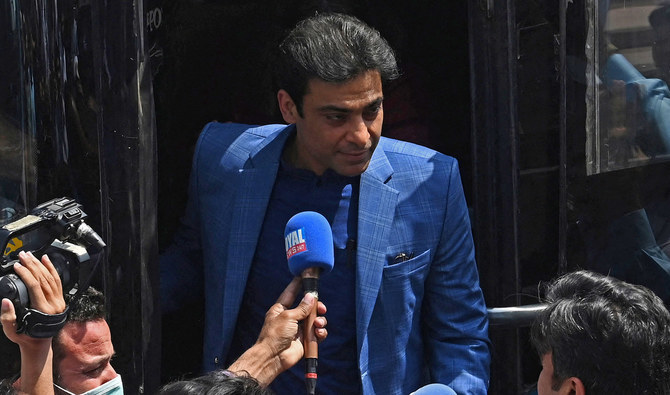
Pakistan court orders president to appoint representative for Punjab CM-elect’s oath-taking
Short Url
https://arab.news/86s4p
Pakistan court orders president to appoint representative for Punjab CM-elect’s oath-taking
- Hamza Shehbaz, son of Prime Minister Shehbaz Sharif, was elected as chief minister on April 16
- But Governor Omar Sarfaraz Cheema refused to administer oath to the chief minister-elect
Latest updates


Recommended


© 2026 SAUDI RESEARCH & PUBLISHING COMPANY, All Rights Reserved And subject to Terms of Use Agreement.