How Bilqius Edhi, ‘powerhouse for humanity,’ changed lives of Pakistani orphans

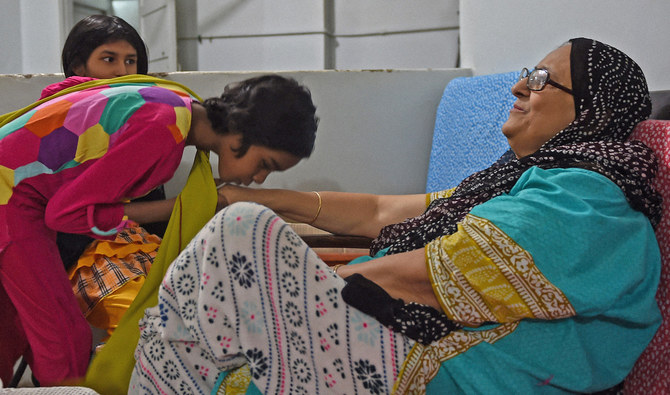
An orphaned child pays her respects to Bilquis Edhi at her charity office in the port city of Karachi, Pakistan, on February 15, 2016. (AFP/File)
Short Url
Updated 23 April 2022
Follow

How Bilqius Edhi, ‘powerhouse for humanity,’ changed lives of Pakistani orphans

  • Bilquis Edhi was the wife of Abdul Sattar Edhi, the philanthropist whose name became synonymous with charitable causes in Pakistan
  • They saved the lives of thousands of abandoned newborns by placing cradles across Pakistan, where they could be left in a safe place

KARACHI: When Bilquis Edhi passed away last week, she orphaned not only four of her own children, but also thousands of others whom she took in her care and changed their lives.

Bilquis was 17 years old when in 1964 she joined a nursing home set up by Abdul Sattar Edhi, the Pakistani philanthropist whose name became synonymous with charitable causes. She married Edhi at the age of 19 and helped him run the charity that today operates nursing homes, orphanages, and Pakistan’s largest ambulance service.

She died on April 15, six years after her husband.

Together they have saved the lives of thousands of abandoned newborns by placing cradles outside Edhi centers and other parts of Karachi and Pakistan, where they could be left anonymously in a safe place and taken care of by the Edhi Foundation, which would either raise them or find them new parents.

Many “Edhi babies,” as the call themselves, have become doctors, engineers, and scholars — some in Pakistan, and some abroad, mainly in the US, UK and Ireland. Not all of them found adoptive parents, but the Edhis made sure each and every one had a childhood and received an education.

Rabia Bibi Osman, 28, was one of such children.
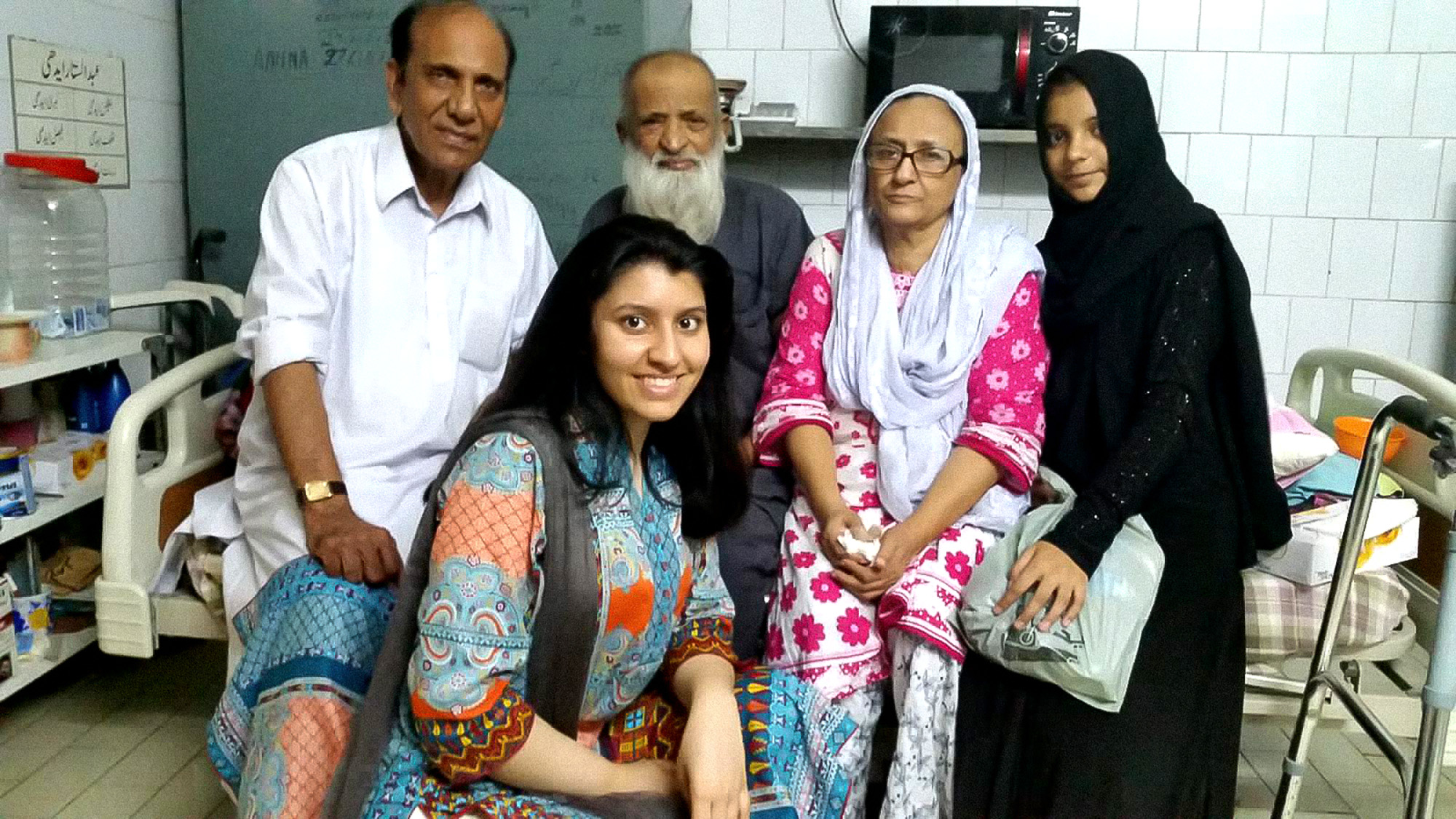


Rabia Osman, front, poses for a photo with Abdul Sattar Edhi and Bilquis Edhi. (Photo courtesy: Rabia Osman)

“She wanted us to feel loved, have a home, have a family,” Osman told Arab News in a phone interview. “I was very lucky to have been given a family but not a lot of children got that opportunity. As a result, she raised these children on her own, made sure they were loved and happy.”

She was adopted by a Pakistani family who brought her up in New York, where she completed a bachelor’s degree in computer science, a master’s degree in cybersecurity at Albany Law School, and now works as a privacy analyst.  

The children would address Bilquis as their “bari ammi” (elder mother).

“Bari ammi was humble and kind. She lived a simple life with an extraordinary purpose. She was loving and empathic,” Osman said.

For her, Bilquis was a “powerhouse for humanity.”

“She was selfless when it came to her husband, and fearless when it came to the rights of women and children.”

In a wide-ranging interview with Arab News last month, Bilquis recalled how she and her husband had faced opposition.

“We placed cradles and we faced opposition, we were called infidels,” she said, adding that people said Edhi would go to hell for raising abandoned children, but “he was not scared of anyone.”

Osman was adopted from an Edhi center when she was very little, but she would meet her barri ammi when Bilquis visited the foundation’s office in New York.
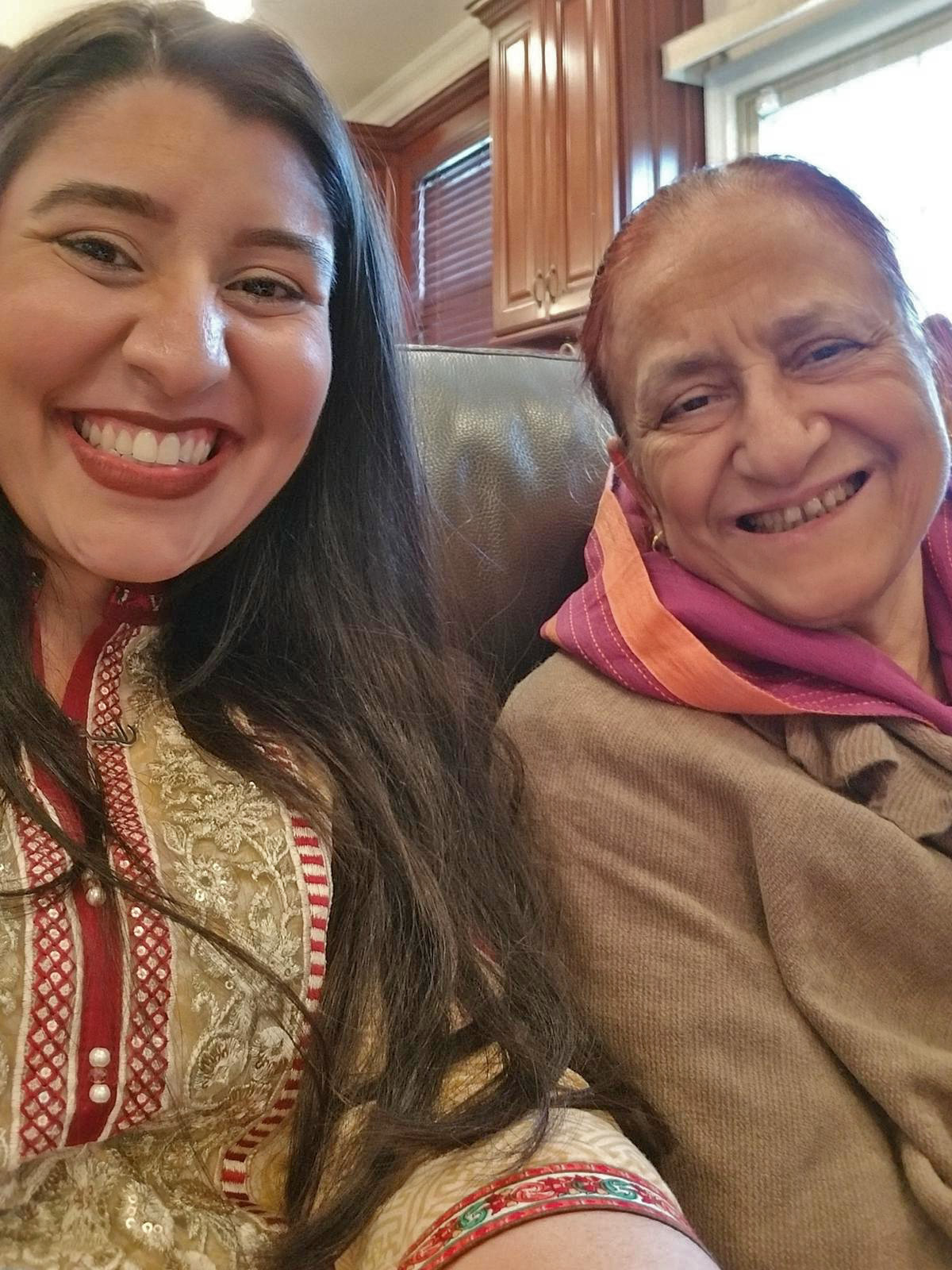


In this undated photo, Rabia Osman, an "Edhi baby" poses with Bilquis Edhi visiting her adoptive family's home in New York. (Photo courtesy: Rabia Osman)

“The Edhi office in NY is very close to where I grew up,” she said. “We would visit bari ammi when she was in New York, have dinners and talk for hours. I remember watching Pakistani dramas with her and listening to her tell me about her life.”

Osman was named after Bilquis’s own mother, Rabia Bano.

Bari ammi would always tell her to be proud of being an Edhi baby, to be honest and forgiving, “even if your forgiveness was not asked,” she said.

“She always told me to be honest about who I am and where I come from.”

Osman was hopeful that Bilquis’s mission will continue after her death.

“So long as we continue to support the Edhi Foundation, her legacy will continue. Her foundation, the other centers, the ambulances, the homes, the orphanage, is her legacy,” she said.

“There will be a void created with her death, but our support will keep her legacy alive.”


Pakistan, Qatar resolve to boost strategic, economic cooperation at Doha talks

Updated 25 sec ago
Follow

Pakistan, Qatar resolve to boost strategic, economic cooperation at Doha talks

  • Both countries urge dialogue on Afghanistan amid renewed border tensions between Islamabad and Kabul
  • Discussions focus on bilateral trade and investment, energy, defense, manpower and labor and culture

ISLAMABAD: Pakistan and Qatar on Tuesday agreed to deepen their strategic and economic cooperation during high-level talks between Prime Minister Shehbaz Sharif and his Qatari counterpart Sheikh Mohammed bin Abdulrahman bin Jassim Al Thani, Sharif’s office said.

Sharif visited Qatar along with a high-level delegation on the invitation of Qatari emir Sheikh Tamim bin Hamad Al Thani. The Pakistan premier also held meetings with Qatar’s trade and defense minister to discuss cooperation in various domains.

The visit came at a time when Pakistan is seeking closer economic engagement with Gulf partners amid its broader push to stabilize the economy and attract investment, while maintaining security and defense cooperation with key regional states.

During their meeting in Doha, PM Sharif and Qatar’s Sheikh Mohammed discussed bilateral relations and exchanged views on regional and international developments, according to the Pakistan prime minister’s office.

“They reaffirmed the strong brotherly relations between Pakistan and Qatar and expressed satisfaction at the growing momentum in political, economic and institutional ties,” Sharif’s office said.

“Discussions focused on enhancing cooperation in the fields of trade and investment, energy, defense, manpower and labor and culture, with both sides stressing the importance of their task force to accelerate cooperation in all these areas.”

Pakistan and Qatar maintain strong trade and investment ties. In 2022, the office of Qatar’s emir said the Qatar Investment Authority planned to invest $3 billion in Pakistan, targeting sectors including transport, aviation, education, health, media, technology and labor.

Nearly 300,000 Pakistanis live and work in Qatar, according to Pakistan’s foreign office, with many employed in health, education, engineering and public services, as well as construction and transport. The two countries engage through forums such as the Bilateral Political Consultations and the Joint Ministerial Commission.

Sharif said he had productive discussions with Qatar’s emir Sheikh Tamim bin Hamad Al Thani on how the two sides could transform their brotherly ties into mutually beneficial economic relationships. 

“We also took stock of the regional situation,” he said. “Pakistan and Qatar will continue to work together for peace and stability in the region and beyond.”

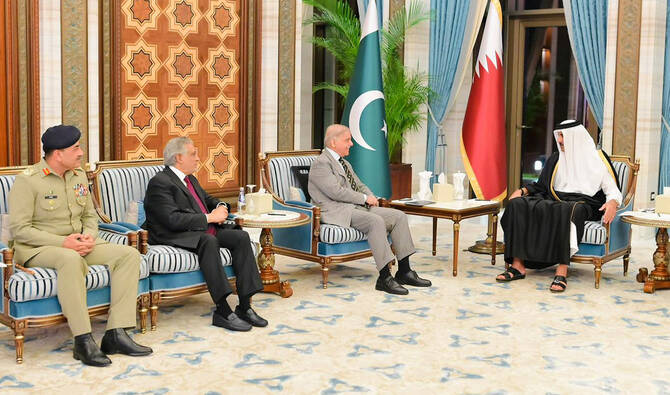
Prime Minister Shehbaz Sharif (second right) meets the Qatari Emir Qatar’s emir Sheikh Tamim bin Hamad Al Thani (left) in Doha, Qatar, on February 24, 2026. (PID)

DIALOGUE WITH AFGHANISTAN

Earlier, Sharif and Qatar’s Deputy PM Sheikh Saoud Al-Thani discussed the situation in Afghanistan and called for dialogue to support regional stability.

The meeting took place amid renewed tensions after Islamabad carried out airstrikes last week on what it described as Tehreek-e-Taliban Pakistan (TTP) targets inside Afghanistan. Kabul said the strikes killed civilians and vowed to respond to what it called a violation of its sovereignty.

“Regional developments were also discussed, in particular the situation in Iran and Afghanistan,” Sharif’s office said in a statement. “Both sides emphasized the importance of dialogue, de-escalation and collective efforts to promote peace and stability in the region.”

This was the second time in less than six months that Pakistan conducted airstrikes in Afghanistan. The last strikes triggered heavy, weeklong clashes between the neighbors along their border before Qatar and Turkiye mediated a ceasefire between them in Oct. last year.

Separately, Sharif held meetings with Qatar’s State Minister for Trade Dr. Ahmed bin Mohammed Al-Sayed and a delegation of the Qatar Businessmen Association (QBA), highlighting Pakistan’s investment-friendly reforms.

He invited QBA members to explore opportunities in infrastructure, logistics, energy, agriculture, technology and export-oriented manufacturing, his office said.