

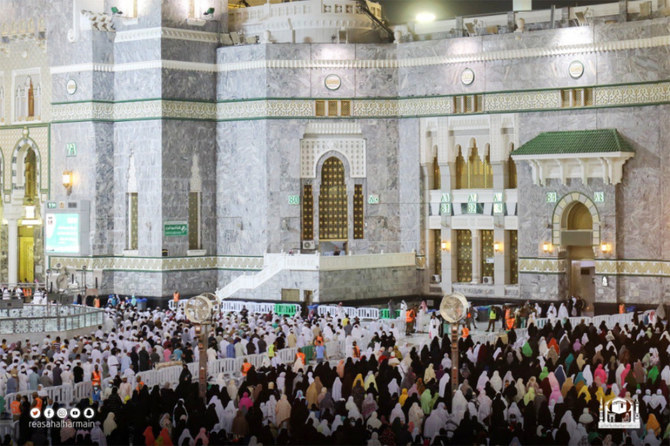
100 gates to manage crowds at Makkah’s Grand Mosque

1 / 7
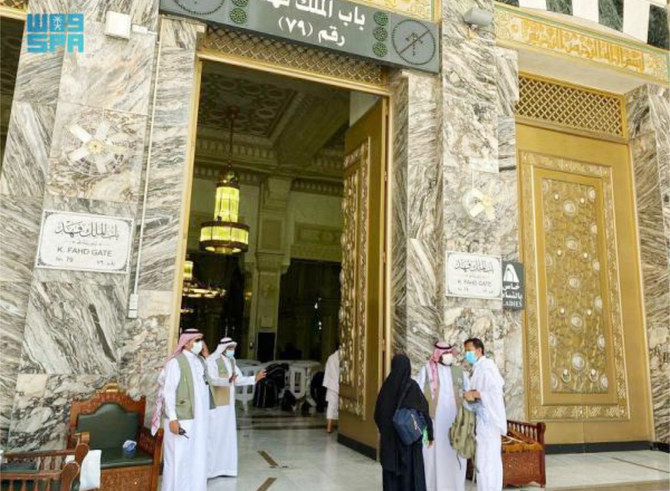
Around 330 employees are assigned at 100 gates of the Grand Mosque to facilitate the smooth flow of pilgrims’ movements. (Supplied)
2 / 7
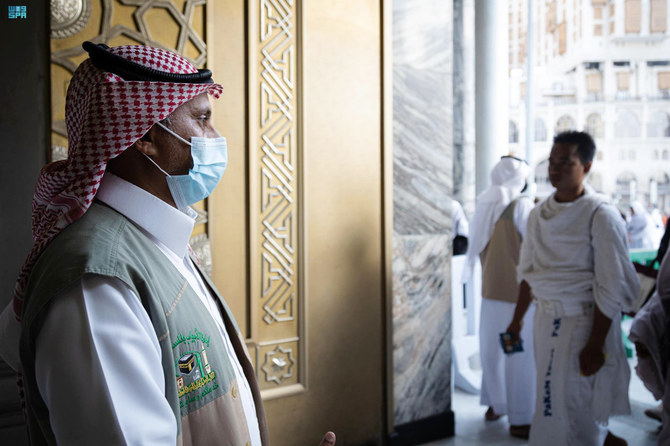
Around 330 employees are assigned at 100 gates of the Grand Mosque to facilitate the smooth flow of pilgrims’ movements. (SPA)
3 / 7
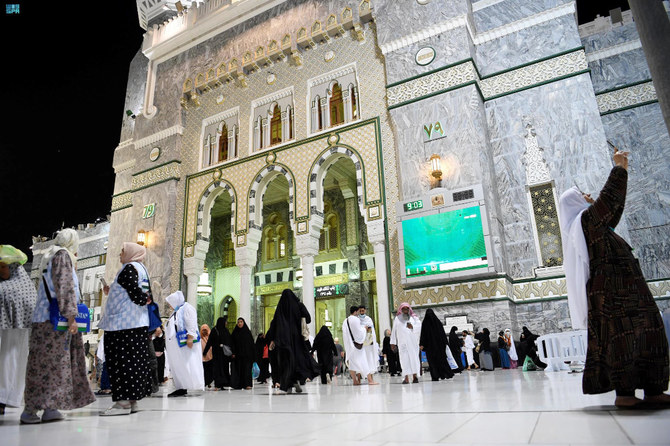
Around 330 employees are assigned at 100 gates of the Grand Mosque to facilitate the smooth flow of pilgrims’ movements. (SPA)
4 / 7
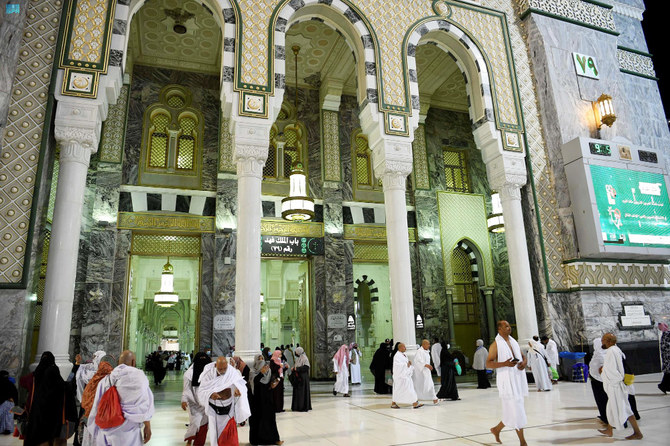
Around 330 employees are assigned at 100 gates of the Grand Mosque to facilitate the smooth flow of pilgrims’ movements. (SPA)
5 / 7
Around 330 employees are assigned at 100 gates of the Grand Mosque to facilitate the smooth flow of pilgrims’ movements. (SPA)
6 / 7
Around 330 employees are assigned at 100 gates of the Grand Mosque to facilitate the smooth flow of pilgrims’ movements. (SPA)
7 / 7
Around 330 employees are assigned at 100 gates of the Grand Mosque to facilitate the smooth flow of pilgrims’ movements. (Supplied)
Short Url
Updated 19 April 2022
Follow

100 gates to manage crowds at Makkah’s Grand Mosque

  • Al-Hujaili said that 35 praying areas for men and 30 for women have been prepared at the second Saudi expansion, as well as several routes for guiding the mosque’s visitors to ensure a smooth movement of crowds

MAKKAH: During the first ten days of Ramadan, crowds of worshippers and Umrah pilgrims flocked to the Grand Mosque from the Kingdom and abroad to perform Umrah and pray in a reassuring, tranquil spiritual atmosphere.

The General Presidency for the Affairs of the Two Holy Mosques, represented by the Tafweej and Crowds Management, is keen on receiving visitors with a distinguished cadre; 330 employees are working on organizing the entry of pilgrims through specific gates to ensure the flow of movement.
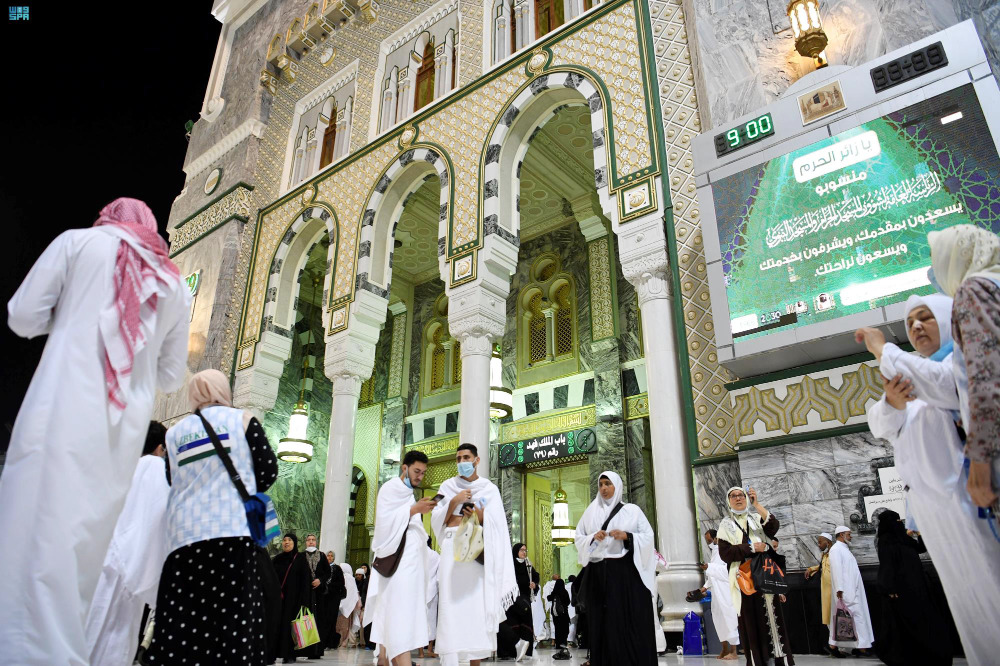
Osama bin Mansour Al-Hujaili, undersecretary-general for Tafweej and Crowds Management, said that the agency had allocated 48 gates for the entry of pilgrims, including 17 at the third Saudi expansion, 23 at the King Fahd expansion, seven at Al-Masaa area and the gate of Ajyad Bridge.

FASTFACT

All efforts have been made to provide best services to visitors and Umrah pilgrims as part of a plan for the holy month, in accordance with the aspirations of the Saudi leadership.

It also allocated 38 gates for the entrance of pilgrims to the mosque, including 13 gates at King Fahd expansion, six gates at the King Abdul Aziz area, and 19 gates at Al-Masaa and Ajyad, in addition to four gates for emergency services and ten for services.
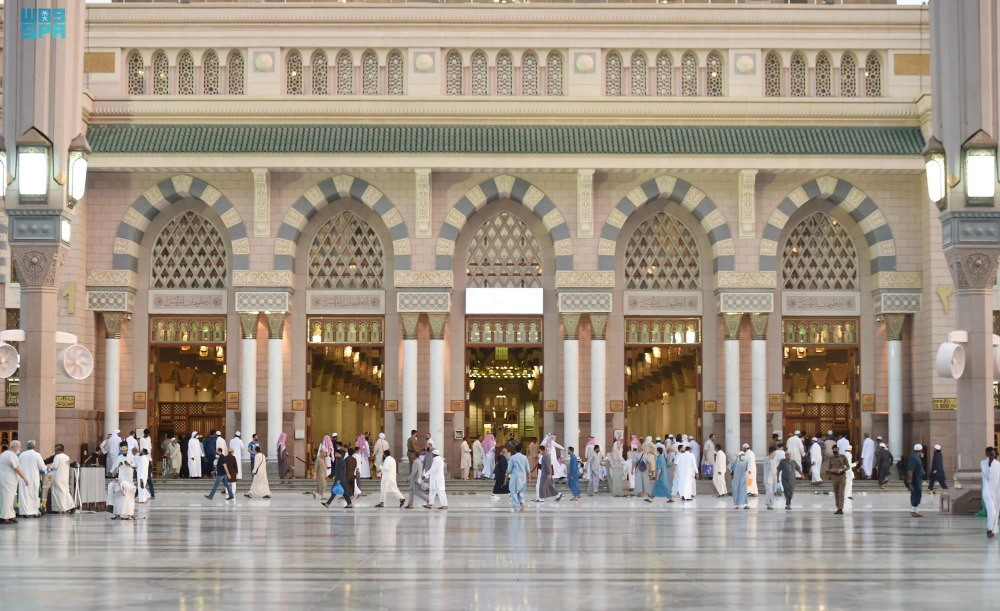
Al-Hujaili said that 35 praying areas for men and 30 for women have been prepared at the second Saudi expansion, as well as several routes for guiding the mosque’s visitors to ensure a smooth movement of crowds.

He said that efforts had been made to provide all services for visitors and Umrah pilgrims as part of a plan for the holy month, offering the best services for visitors in accordance with the aspirations of the Saudi leadership.

The “Tafweej” program was launched, dedicated to crowd management through an electronic system for preparing and monitoring the grouping dispatch plan, in addition to increasing the absorptive capacity, building camps equipped with services, and the “electronic system for the holy sites” initiative.

Saudi Arabia highlights responsible leadership at AI Impact Summit in India

Updated 4 sec ago
Follow

Saudi Arabia highlights responsible leadership at AI Impact Summit in India

  • Kingdom among more than 70 countries at event discussing cooperation over artificial intelligence

NEW DELHI: Saudi Arabia, represented by the Saudi Data and Artificial Intelligence Authority, participated in a high-level session on harnessing the latest technology for people and the planet during the AI Impact Summit 2026, hosted by India. 

The summit brought together representatives from more than 70 countries and 25 international organizations, alongside senior policymakers and technology experts, to discuss the transformative potential of AI and the importance of global cooperation. 

The Saudi delegation was led by SDAIA President Abdullah Alghamdi and included Saudi Ambassador to India Haitham Al-Maliki, as well as officials from relevant government entities. 

The session focused on launching a global network of specialized AI scientific institutions, accelerating research and innovation through advanced technologies, strengthening collaboration among governments and research bodies, and promoting the use of AI to address pressing global challenges. Discussions also focused on leveraging AI to advance the objectives of the UN Sustainable Development Goals. 

Abdulrahman Habib, deputy chief strategy officer at SDAIA, stressed the importance of unifying international efforts to ensure the responsible and ethical use of AI. He highlighted the need for AI development to deliver sustainable and positive outcomes for societies and economies worldwide. 

Habib also outlined Saudi initiatives, noting the Kingdom’s progress in establishing regulatory frameworks and national policies that balance innovation with effective governance of emerging technologies. He pointed to applied AI models that have improved quality of life, enhanced the efficiency of government services, and contributed to environmental sustainability. 

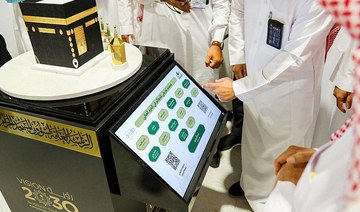
SDAIA’s participation in the summit reflects Saudi Arabia’s growing role in shaping the global AI agenda and strengthening its presence in international technology forums. The engagement aligns with the objectives of Saudi Vision 2030, which places digital transformation and innovation at the core of the Kingdom’s long-term development strategy.