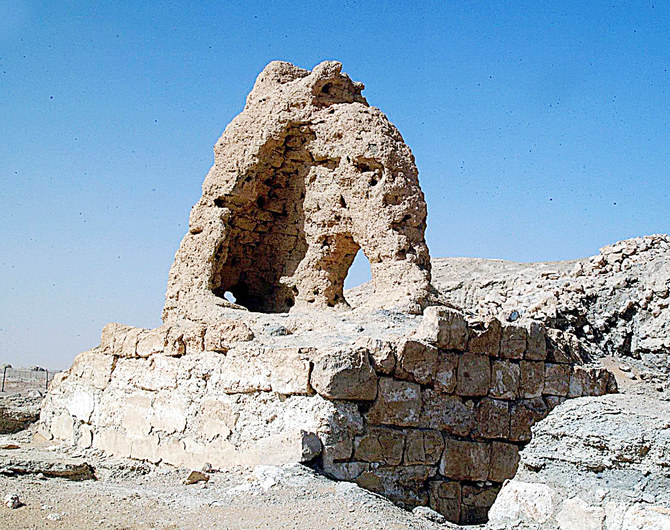
Qaryat Al-Faw, the first capital of the Kindite kingdom, witnessed the establishment of several ancient civilizations, with its plethora of tombs depicting their presence and passing.
There are three types of cemeteries that can be distinguished in Al-Faw. The first is located on the western edge of the city and consists of the collective family cemeteries that belonged to those of heightened political and social status in the city.
The tomb is 5 meters deep, 1 meter wide, and 6 meters long from north to south. There are holes on the eastern and western walls in which a person could put his legs to go into or out of the tomb.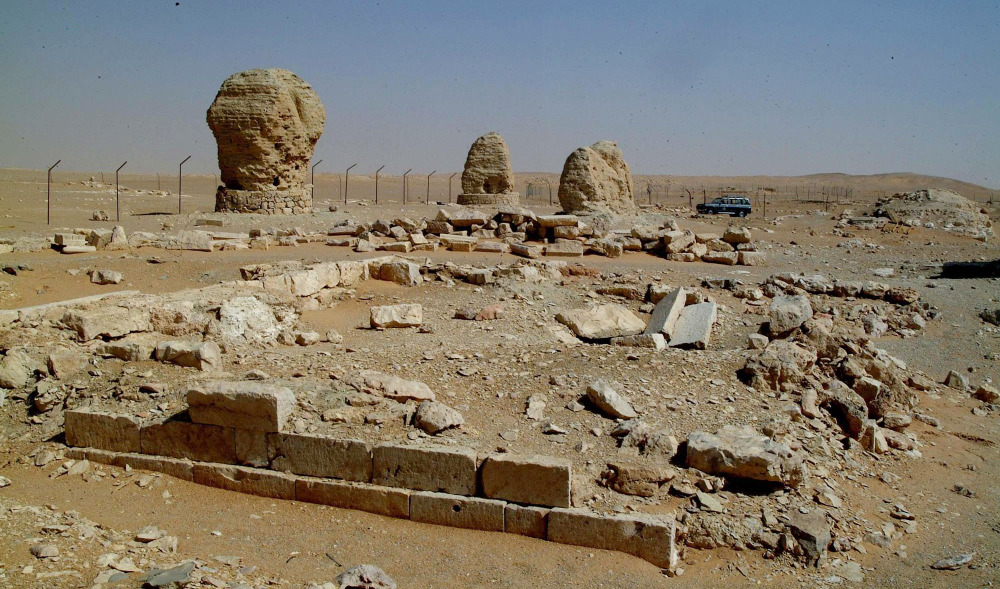
In addition, there are four doors on the four sides. Three of these doors lead to caves carved in round shapes, while the western door leads to a built room tiled with white plaster and a lower room at the northern end which contains a pit containing valuable things belonging to the deceased.
The second type consists of the cemeteries of the noblemen, where the tomb consists of eastern and western rooms with a ditch in the middle that is three-and-a-half meters deep, with holes in the eastern and western sides for people to enter and exit the tomb.
The third type of cemeteries belonged to the common people of the various kingdoms. They are located to the northeast of the city, on the edge of the western valley in the plaster area that lies to the north of the market. The cemeteries are strikingly similar to Islamic cemeteries. These tombs are composed of an irregular and un-plastered ditch between 1 and 5 meters long and ends with a tomb closed with a small clay board, which is similar to those used in the village buildings. Excavators found several jars among the dead upon opening them.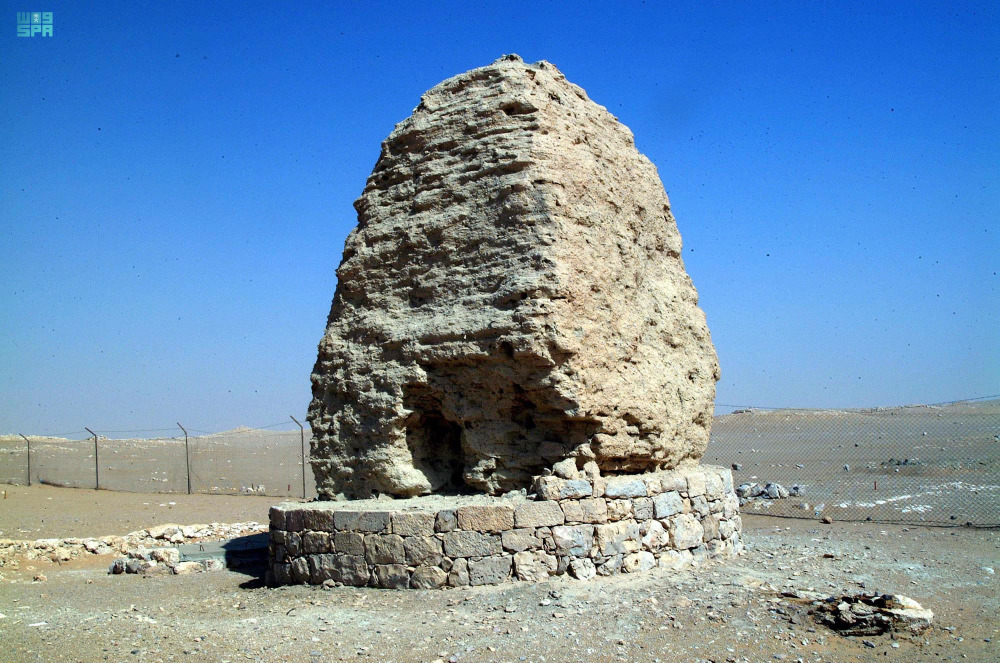
Al-Faw is considered as one of the most important archeological sites in the Arabian Peninsula. It boasts special importance due to its geographic location as a commercial center and a crossroads for caravans loaded with minerals, grains and weavings.
It was a major transit point for the caravans coming from the kingdoms of Sheba, Ma’in, Qataban, Hadhramout and Himyar on their way to Najran, Al-Faw then to Al-Aflaj and Yamamah before heading east to the gulf and north to Mesopotamia and Syria.
The tombs can be found about 150 km from the headquarters of Wadi Al-Dawasir governorate from the southeast, specifically in the area where Wadi Al-Dawasir overlaps with the Tuwaiq Mountains in an area called “Al-Faw.”


![]()

ThePlace: Qaryat Al-Faw, the first capital of the kingdom of central Arabia
Short Url
https://arab.news/868zn
ThePlace: Qaryat Al-Faw, the first capital of the kingdom of central Arabia


Latest updates


© 2026 SAUDI RESEARCH & PUBLISHING COMPANY, All Rights Reserved And subject to Terms of Use Agreement.