
LONDON: The holy month of Ramadan is a social occasion and iftar meals that bring people from all walks of life together are an opportunity to “join hearts,” the head of the Muslim Council of Britain said on Saturday.
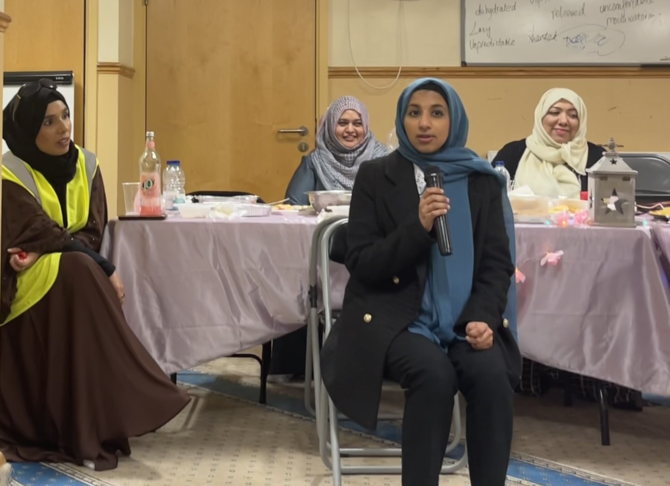
Speaking to Arab News at an iftar hosted by the UKIM Masjid Ibrahim & Islamic Centre in east London, MCB Secretary-General Zara Mohammed said communities “can achieve a lot more” when they unite.
The iftar was attended by more than 300 people from the local community and guest speakers included Mohammed, Mayor of Newham Rokhsana Fiaz, local MP Stephen Timms and London Assembly member Unmesh Desai.
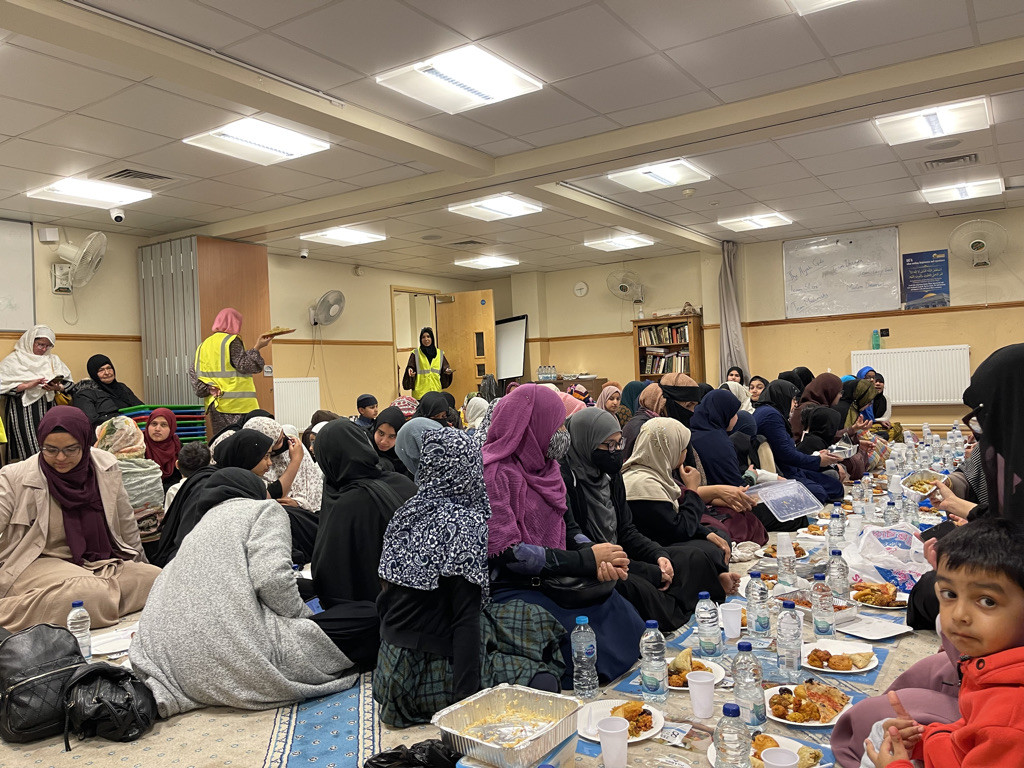
Women and children break their fasts at the UKIM Masjid Ibrahim & Islamic Centre in east London on April 16, 2022. (AN photo)
“This is an excellent example of what unity looks like and how we can achieve a lot more when we do come together, because if everybody is here in the mosque sharing a meal, as friends, community and family, that’s the best way to join hearts,” the secretary-general said.
After a two-year hiatus, British Muslims are once again observing Ramadan without any COVID-19 restrictions.
Practices usually observed during Ramadan such as communal iftar meals, taraweeh prayers and visiting family and friends have now resumed.
Mohammed has been visiting Muslim communities up and down the country during Ramadan and has attended iftar meals in Liverpool, Rochdale, Oldham and London.
“Now that COVID-19 restrictions have been lifted, it’s important to meet people, especially in the most blessed month of Ramadan. In Islam, Ramadan is a social occasion — it’s meant to be done together. So I’m really glad that I could be here today and share something of what I’ve learned with everybody else,” she said.
Mohammed commended the mosque for its services to the local community and its “spirit of giving, sharing, learning and being open so people can understand us.”
She described the community cohesion work that UKIM Masjid Ibrahim did during the pandemic as “truly outstanding.”

UKIM Masjid Ibrahim & Islamic Centre in east London runs a food bank for those who need it in the local community. (@MasjidIbrahimUK)
Although the mosque was closed to worshippers during government-imposed lockdowns, Masjid Ibrahim, like hundreds of mosques across the UK, was busy running a food bank for the needy, holding pop-up vaccine clinics to encourage people to get jabbed, and providing much-needed funeral services free of charge.
“I think the work that Masjid Ibrahim did over the pandemic was truly outstanding. I know, behind the scenes, it was a 24/7 commitment, and they were also going through a pandemic. They had families, they had responsibilities, but they were dropping off food to people and having conversations. They were making sure that whilst the mosque was closed to the public, facilities, work, funerals, bereavement and support was still happening,” Mohammed said.

People wait to be jabbed against COVID-19 at the UKIM Masjid Ibrahim & Islamic Centre in east London. (File/@MasjidIbrahimUK)
UKIM Masjid Ibrahim continues to run a food bank that is feeding more than 500 families a week at a time when inflation in the UK has hit a 30-year high of 7 percent.
The mosque is also providing free iftar meals to people of all faiths and none in the local Newham community during the holy month.