


DUBAI: Of all the retail-industry business models held responsible for the growth of unsustainable consumer habits, few come close to matching the bad reputation acquired by fast fashion — the design, manufacturing and marketing methods behind the production of mass-produced clothing.
The environmental costs keep rising as fast-fashion brands release as many as 52 micro-collections each year, which constantly show up on roadside billboards, online banner ads and social media sites teasing the best deals in trendy clothing.
On the bright side, ethical fashion, quality second-hand clothing and other more environmentally friendly alternatives are increasingly available to consumers, who have a big role to play in countering the harmful effects of fast fashion.
Still, experts say businesses must take responsibility for their actions and governments must develop regulations to encourage eco-conscious shopping habits and promote sustainable fashion.
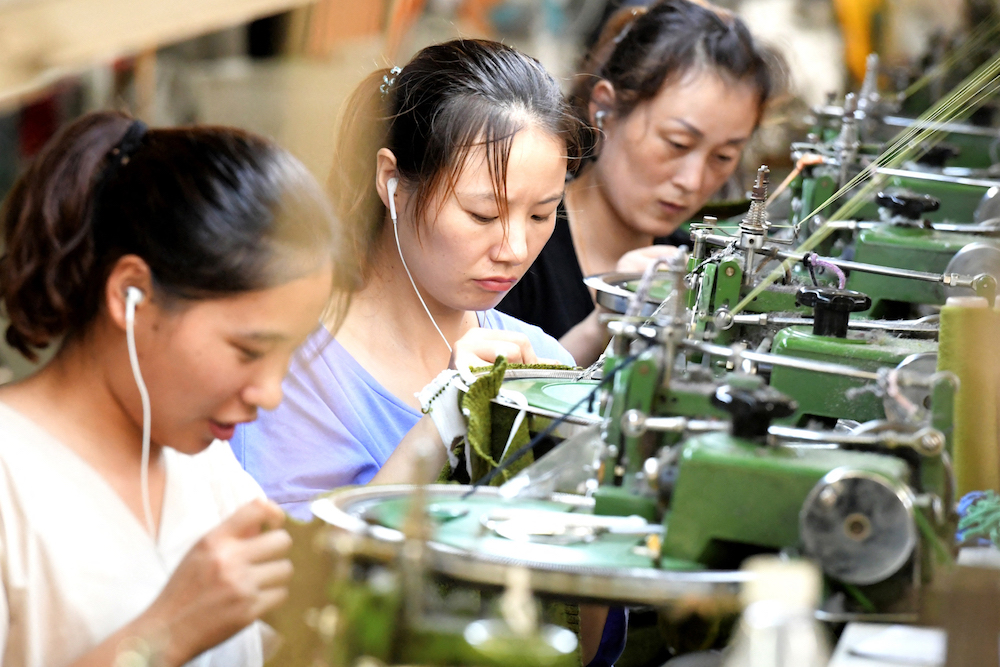
Employees working on a production line of clothes for export at a factory in Xiayi county, in Shangqiu in China's central Henan province. (AFP/File Photo)
The challenge is, to put it mildly, daunting. As brands devote big budgets to digital marketing and subliminal advertising in response to a seismic shift away from in-store sales, consumers who spend hours browsing websites for the best deals seldom connect their purchasing decisions to environmental (or socioeconomic) issues.
For example, a pair of jeans might seem like a fairly harmless purchase. In fact, the production process behind this wardrobe staple requires about 2,000 gallons of water — equivalent to the amount the average person will drink in seven years.
This explains why the $3 trillion fashion industry, which accounts for 2 percent of global gross domestic product, has been alternately identified as the second or third largest polluter in the world year after year, just behind oil.
The industry might be responsible for as much as 10 percent of global carbon emissions, which is more than all international flights and maritime shipping combined, according to the UN Conference on Trade and Development. Clothing factories, mostly located in developing countries, churn out well over 80 billion garments every year, with fast-fashion brands dominating the retail market.
“As fashion changes so quickly, consumers tend to want to buy instantaneously and then, when fashion changes again, they want to dispose of it,” Kris Barber, founder and CEO of DGrade, a sustainable brand in the UAE that produces clothing from recycled plastic bottles, told Arab News.
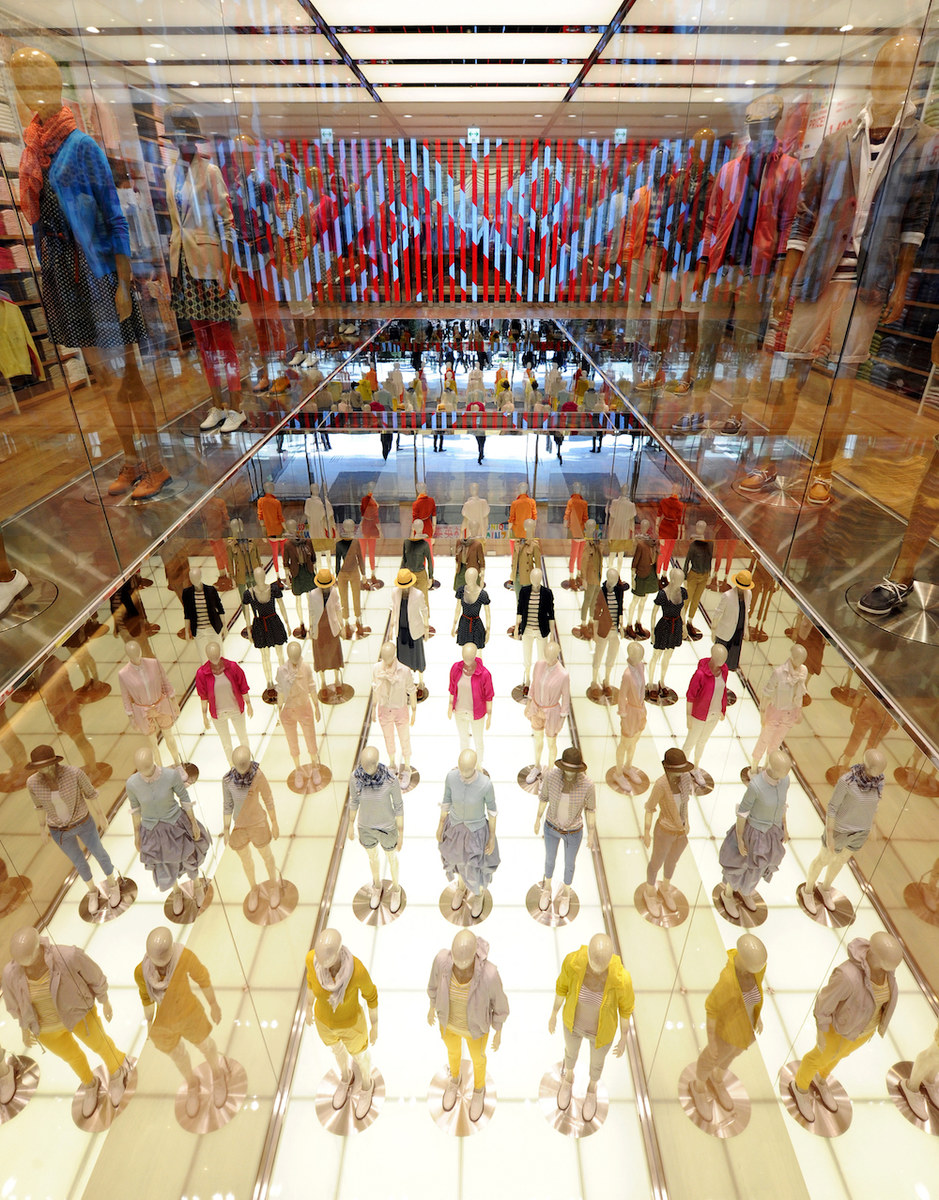
Mannequins stand in line on the stairwell first floor and second floor at the flagship store of Japan's cheap-chic clothing chain Uniqlo at Ginza shopping district in Tokyo. (AFP/File Photo)
According to the 2015 documentary “The True Cost,” an expose of the fashion industry directed by filmmaker Andrew Morgan, about 400 percent more clothing was being produced worldwide at that time compared with 20 years previously. The figure is probably much higher now.
This, coupled with a steady fall in prices, mean that garment purchases are more affordable to a much larger section of the global population, pushing consumerism in the sector to an all-time high.
For better or worse, people now own five times the amount of clothing their grandparents did — and are more likely to throw clothes away after minimal use.
Surveys suggest that some items of clothing are worn an average of only seven times before they are disposed of, and most women use as little as 20 to 30 percent of the contents of their wardrobes.
“Generally speaking, the retail business model for products that have an inbuilt disposable element — not just in textiles but across the board, from mobile phones to televisions — is all about overproduction and driving down the unit cost,” said Barber.
His journey in eco-fashion began 12 years ago and, along with his colleagues at Dgrade, he is working to improve the quality of recycled fibers. The company produces more than 250 types of fabric that are indistinguishable in quality from those made from virgin fibers.
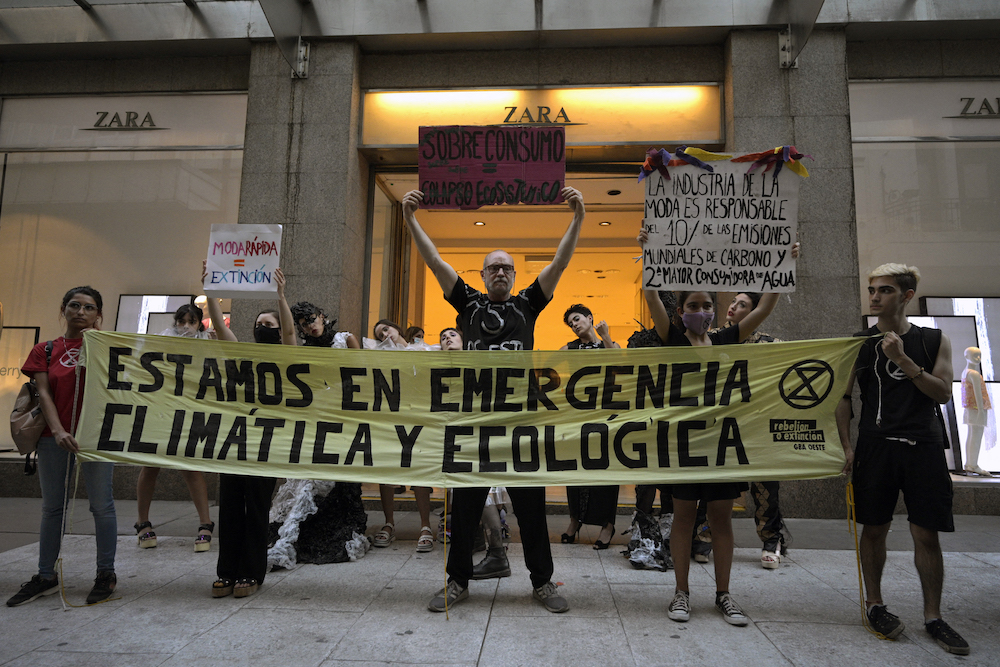
Members of Extinction Rebellion Argentina are seen dressed with model designs created with recycled elements by Trash Couture fashion designers, during a demonstration against fast fashion industry, at Florida pedestrian street in Buenos Aires. (AFP/File Photo)
“Production of each of our T-shirts, which are made of 100 percent recycled polyester, consumes 10 plastic bottles on average,” Barber said.
DGrade, which also produces customized clothing for businesses, recently expanded operations at its manufacturing plant in the UAE, where more than 1,000 tons of polyethylene terephthalate, or PETP, plastic bottles are recycled every month to make fabrics and food packaging. There are about 50,000 empty bottles in each ton.
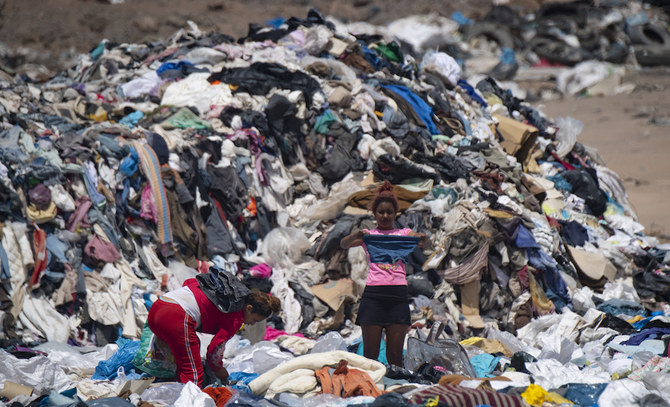
The scale of the global issue the business is addressing is huge. Currently, the equivalent of one garbage truck filled with textiles is sent to landfill or incinerated every second, worldwide. Studies show that unless the fashion industry takes major steps to reduce waste, it will use up a quarter of the world’s carbon emissions budget by 2050.
Experts within the industry broadly agree on the need for checks on the production of garments, shoes and fashion accessories. Whether consumers will be willing to pay extra for more environmentally sustainable items is another matter altogether.
Juliette Barkan, co-founder of Palem, a sustainable fashion brand in the UAE, said that awareness of the industry’s environmental footprint and responsible consumption ought to go hand in hand.
“Unless consumers put pressure on industries and opt for more durable items, choosing slow fashion, quality and timeless pieces over fast fashion, the changes will remain anecdotal,” she told Arab News.
Based on her experience, Barkan says the role of social media in shaping consumption habits cannot be overstated.
INNUMBERS
* $3tn - Value of global fashion industry.
* 2% - Fashion industry’s share of global GDP.
* $3bn - Projected value of KSA online fashion market.
* 75% - Middle Eastern poll respondents who said they buy from eco-conscious fashion companies.
“In a world where we are all our own brand, our need to dress up has increased considerably, creating constant need for newness,” she said. “The demand is so big that the leaders of the sector are now investing in the metaverse to fill the demands of digital fashion.”
Palem uses natural fibers made from 100 percent sustainable materials, such as organic cotton, sustainable viscose or recycled fabrics in its fashion lines. To encourage more manufacturers to become equally sustainable, Barkan says, consumers need to become more aware of what they are buying.
“The good news is we feel that there is an awakening, a new-found awareness among consumers in the Middle East,” she said. “People are starting to ask questions and take ownership of the subject.”
This is reflected in the number of sustainable fashion brands emerging in the region and the establishment of the Middle East Fashion Council in the UAE, which was founded jointly by Simon Lo Gatto and Payal Kshatriya Cerri.
The fashion council was set up as “a dictionary” for designers in the region and “a guide for whether a designer was looking to become more sustainable,” said Lo Gatto.

Women search for used clothes amid tons discarded in the Atacama desert, in Alto Hospicio, Iquique, Chile. (AFP/File Photo)
Added Cerri: “Our place in this narrative is to bring together the leaders, challenge the way we think, challenge the way the sourcing and manufacturing is done to brands based in the region from other countries, as well as to be able to provide a platform and support for manufacturers within the region.”
She believes the fashion industry in the Middle East needs to adopt innovative methods, in particular the use of blockchain and 3D printing, to help reduce waste and increase transparency in the production process. A greater localization of production would also help.
“Dubai is a massive retail hub for all brands but homegrown brands are where the fight is,” Cerri said.
With sustainability at the core of its values, the Middle East Fashion Council has partnered with Dubai’s Sustainable City, the first net-zero energy residential development in the emirate, to host two fashion shows, one this month, the other in October. Going forward, the organizers hope to host a sustainable fashion week showcasing eco-friendly brands.
The fashion market in Gulf nations and the wider region has grown exponentially in recent years. The first edition of Arab Fashion Week, following in the footsteps of long-established events in New York, Paris, London and Milan, took place in Dubai in 2015. It later became the first floating fashion show when it was staged aboard the Queen Elizabeth II cruise ship in 2018.
In Saudi Arabia, the online fashion market was worth $715 million in 2018 and is expected to reach $3 billion this year, making it the largest in the region. Over that same period, the online fashion market across the rest of the Gulf Cooperation Council area is expected to have grown from $140 million to $500 million, and in Egypt from $125 million to $300 million.

Juliette Barkan, co-founder of Palem. (Supplied)
This regional growth means the adoption of more sustainable production and consumption habits are all the more pressing. Despite the growth of e-commerce and the emerging fashion scene in the Middle East, however, many designers who attempt to take a more sustainable approach continue to face challenges to their efforts to grow their brands.
“Many new sustainable brands are not PR ready,” said Cerri.
Consumers in the GCC area are intensely loyal to big, well-established brands, says Alia Jashanmal, the co-founder of Aloushi’s, a sustainable lifestyle e-commerce store. But attitudes are beginning to change.
The good news is that attitudes are beginning to change. “I believe our society is adjusting to promote homegrown businesses,” Jashanmal told Arab News. “People are educating themselves on how to identify and support sustainable fashion.”
In its “Global Consumer Insights Survey 2021,” which was published in December, professional services network PwC identified a growing awareness of social and environmental sustainability among consumers in Saudi Arabia, the UAE and Egypt.
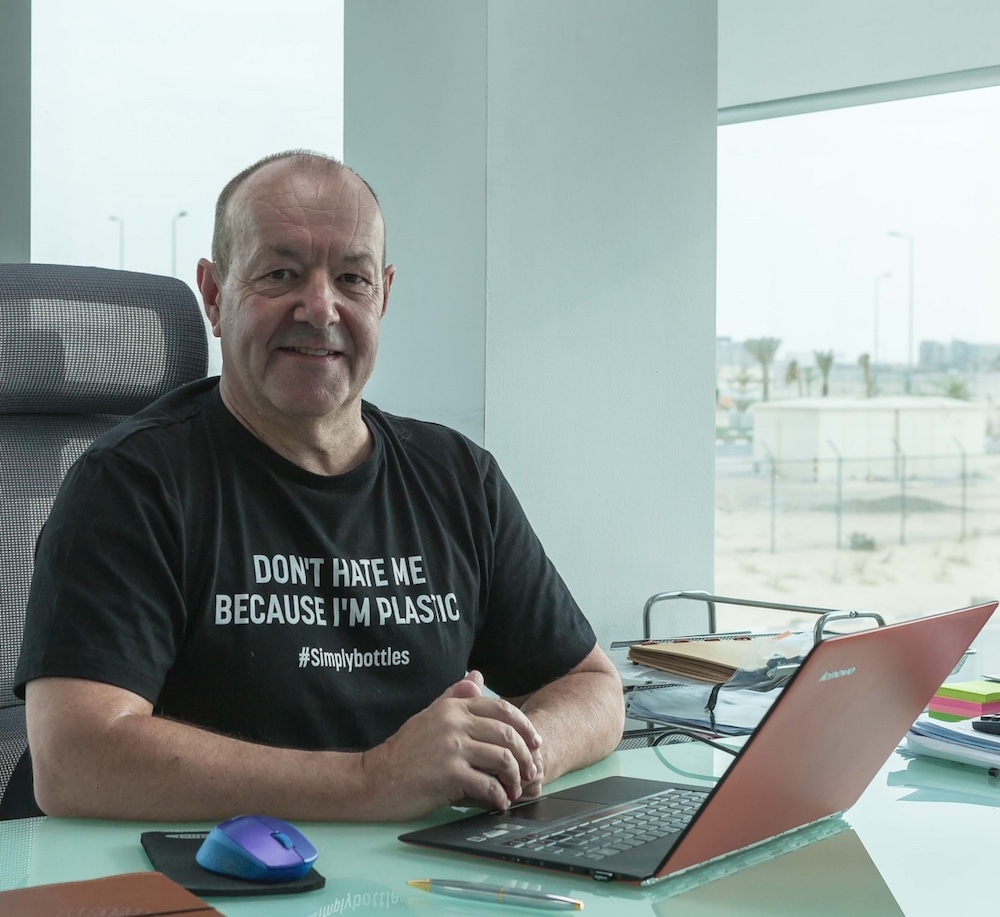
Kris Barber. (Supplied)
Among those surveyed, about 65 percent said they had become more eco-friendly over the previous six months, while seven out of 10 shoppers said they engage in sustainable behaviors.
In fact, the respondents from the region consistently outscored global survey participants on a range of questions related to this issue. For instance, about 75 percent of Middle Eastern consumers said they buy from companies that are environmentally conscious, compared with 54 percent globally.
While fast fashion no doubt remains ascendant for now, it could also be the retail business model du jour. Which is why, for Barber and his colleagues at DGrade, the consumer survey’s findings ought to be viewed as an incentive for the industry to do better.
“Without entirely blaming the fashion industry,” he told Arab news, “I think it’s more about trying to create products that are of very good quality, products that last longer and that people are going to use and wear more often.”


