

Saudi environment ministry develops breakthrough vaccine against livestock abscess

1 / 3
The ministry is working on vaccines for other diseases based on local isolates of bacteria and viruses. (Supplied)
2 / 3
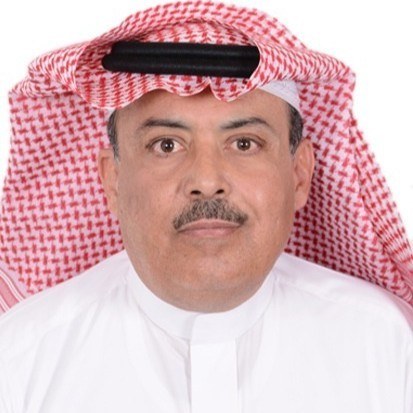
Abdullah Sulaiman Al-Sudais, Al-Watania Agriculture’s CEO Supplied)
3 / 3
Mohammed Al-Fuhaid, General Directorate of Laboratories director at the MEWA. (SUPPLIED)
Short Url
Updated 14 April 2022
Follow

Saudi environment ministry develops breakthrough vaccine against livestock abscess

  • Treatment expected to deliver ‘major benefits’ to animal production in the Kingdom
  • Joint scientific team’s field surveys, clinical trials yield results in record time

RIYADH: Saudi Arabia’s Ministry of Environment, Water and Agriculture has announced the development of a vaccine against livestock abscesses, saying that tests have shown the treatment is “100 percent safe” and offers greater than 80 percent efficacy. 

“I expect the vaccine to be ready for production in the second half of 2023,” said Mohammed Al-Fuhaid, General Directorate of Laboratories director at the MEWA.

“We’ve already developed the vaccine. We are in the process of doing experiments on the vaccine’s safety and effectiveness,” he told Arab News.

MEWA is working on vaccines for other diseases based on local isolates of bacteria and viruses, with the vaccines “expected to have an impact on the fight against animal diseases, and diseases common to humans and animals,” Al-Fuhaid said.

The joint scientific team’s work plan, which led to a vaccine against livestock abscess diseases being developed in record time, included field surveys and clinical tests to determine the rates of abscess infections in sheep, goats and camels in several regions of the Kingdom. 

Samples and recorded information were used to determine the incidence of abscess disease and study their epidemiology, Al-Fuhaid said.

The action plan also guided animal breeders and carers, explaining how to prevent and control these diseases. 

The team isolated and classified bacteria from samples collected from infected animals. Bacterial isolates were used to produce experimental vaccines for immunization against pseudotuberculosis and Morel’s disease.

Ahmed Al-Eyada, the undersecretary of MEWA, said that the research is part of the ministry’s efforts to develop vaccines from local disease isolates with a higher immune response compared with global isolates.  

“(It aims) to localize the veterinary vaccine industry under the initiative of the Center for the Development and Production of Veterinary Vaccines for Local Isolates. That will contribute to the control and disposal of local diseases to preserve the country’s capabilities,” he said.

Al-Eyada said that the ministry tried the new “multicomponent” vaccine on sheep, and found it offered 100 percent efficacy and excellent protection rates. 

“The specialized specific protection rate in the challenge tests reached 100 percent in Caseous Lymphadenitis (pseudotuberculosis), while the result was 80 percent in Morel’s disease and the multicomponent vaccine resulted in the production of good levels of antibodies in immunized sheep,” he added. 

The ministry signed a memorandum of understanding with Al-Watania Agriculture Co. to collaborate on field experiments for veterinary vaccines, genetic improvement of sheep and goats, data analysis to calculate the genetic value, and genotyping. 

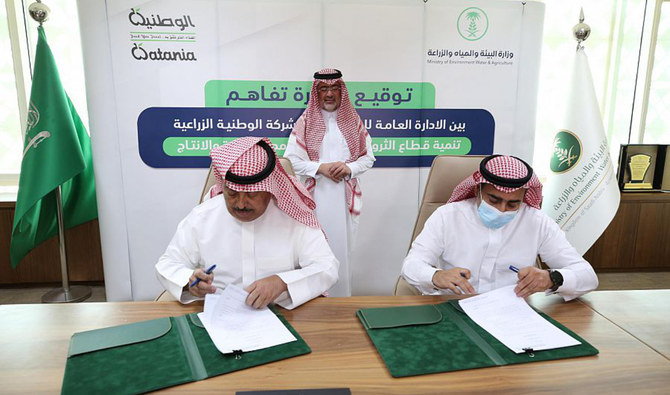
The MoU, which includes advisories and consultation on the analysis of results and data with overseas labs, was signed by Al-Fuhaid and Abdullah Sulaiman Al-Sudais, Al-Watania Agriculture’s CEO.

Al-Sudais said that the agreement will bring many positive results to the livestock sector, enhancing investment opportunities and maximizing benefits by improving the quality of work and genetics “of livestock, in particular.” 

Under the agreement, farms will be opened to joint working teams carrying out experiments and tests.

“It is likely that the agreement will yield many benefits for the animal production sector in the Kingdom,” Al-Sudais said.


Saudi tourism minister urges governments to ease travel barriers amid global tensions

Updated 9 sec ago
Follow

Saudi tourism minister urges governments to ease travel barriers amid global tensions

  • Tourism Minister Ahmed Al-Khateeb said visa restrictions and connectivity were major hurdles disrupting global movement, urging more frequent flights to smaller destinations
  • Panel examined key challenges facing the $10 trillion global travel industry, including rising geopolitical tensions, climate volatility, artificial intelligence and growing cyber risks

DUBAI: Saudi Arabia’s tourism minister, Ahmed Al-Khateeb, has said travel should be made more accessible and flexible as it fosters dialogue and peace at a time when geopolitical tensions are prompting governments to impose stricter visa restrictions.

He was speaking during a panel discussion at the World Economic Forum’s annual meeting in Davos, which examined the key challenges facing the $10 trillion global travel industry. These include rising geopolitical tensions, climate volatility, artificial intelligence and growing cyber risks.

“Tourism brings peace at a time where everybody wants to hear about peace. It connects people, encourages dialogue, creates economies, and serves smaller economies like Africa, Latin America, the Pacific and the Caribbean countries,” said Al-Khateeb.

His remarks come as the US has tightened visa and immigration policies, affecting nationals from dozens of countries, and as anti-tourism protests have surfaced in parts of Europe amid mounting concerns over overtourism in major destinations.

He highlighted Saudi Arabia’s achievements in tourism, saying the sector has created 250,000 jobs in the last five years and boosted female participation to 47 percent, exceeding the global average of 45 percent. He highlighted the Kingdom’s focus on building new airports and expanding existing ones, as well as boosting the hotel sector to cater for 150 million travelers by 2030.

The sector’s contribution to the economy has grown from about 3 percent in 2020 to 5 percent today, with plans to raise that figure to between 8 and 10 percent by 2030.

With travel and tourism accounting for around 10 percent of global GDP, Al-Khateeb said that raising the sector’s contribution in Saudi Arabia would strengthen the Kingdom’s economy, make it more resilient and sustainable, and “allow us to share our beautiful culture with the world.”

He said visa restrictions and connectivity were major hurdles disrupting global movement, urging more frequent flights to smaller destinations to diversify traveler experiences and expand economies beyond major hubs.

With panelists citing last year’s anti-tourism protests in Spain and Mexico, Al-Khateeb said overtourism, already a challenge in some cities, will worsen as the UN projects an increase in the number of global travelers from 1.5 billion to 2 billion by 2050. He therefore urged governments to promote smaller cities and spread tourism beyond traditional hotspots to boost economic growth and create more jobs.

Panel at the World Economic Forum examined key trends and challenges shaping the $10 trillion global travel industry. (Screengrab)

Expressing similar sentiments, Martin Eurnekian, CEO of Corporacion America International, linked economic growth to travel and said travel deregulation in the past had boosted European economies.

“Our history shows when growth was accelerated and these were the cases where the (travel) industry was set free,” said Eurnekian, adding geopolitical tensions and economic regulations were exacting a heavy cost on the industry.

“This is an industry based on freedom and globalization and if we lose sight of that we can really hurt the industry,” he added.

Cara Morton, CEO of global businesses and operations and a member of the executive committee at Zurich Insurance Group, said “disruption is now the norm,” citing an in-house assessment that found 80 percent of 4,000 business travelers experienced some form of disruption during their journeys.

She highlighted the role of artificial intelligence in steering people to new, less crowded destinations: “Obviously that will require governments to then make sure that those places have got the right infrastructure, but we will be able to see wealth distributed more equally. So the key is how we use AI in this area.”

Al-Khateeb said that while AI can enhance traveler experience, it should not replace human interaction.

“We will use tech when it isn’t necessary … such as using AI (for passengers to) move fast and finish their biometrics, but when you go to destination, you want to be served by humans not machines.”

He highlighted global travel trends, including the growing role of airports as destinations in their own right, driven by retail and food and beverage offerings, as well as the rapid rise of wellness tourism.

“Travel interacts with a wide range of sectors from aviation and airports to mobility, transportation, hotels, retail, and entertainment,” said Al-Khateeb.