Asylum-seeker in UK asked for help 72 times before stabbing six people

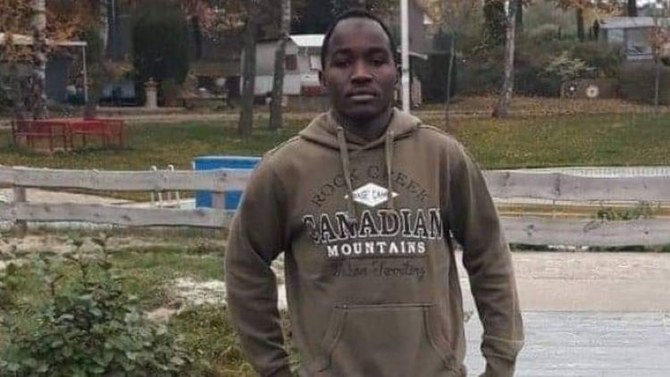
Badreddin Abadlla Adam was shot dead by police after stabbing six people in a Glasgow hotel. (Twitter Photo)
Short Url
Updated 12 April 2022
Follow

Asylum-seeker in UK asked for help 72 times before stabbing six people

  • Badreddin Abadlla Adam repeatedly called the Home Office, an accommodation company and the Migrant Help charity after being moved to a hotel during the pandemic
  • He was shot dead by police in Glasgow, Scotland, after his mental condition deteriorated and he attacked hotel staff and fellow asylum-seekers

LONDON: A Sudanese asylum-seeker in the UK made more than 70 calls to authorities asking for help, before stabbing six people.

Badreddin Abadlla Adam was shot dead by police in Glasgow, Scotland, after his mental condition deteriorated, leading him to attack hotel staff and other asylum-seekers at the city’s Park Inn hotel in June 2020.

The BBC said a report into the incident by the UK Home Office revealed that Abadlla Adam made 72 calls to the Home Office, the charity Migration Help, and Mears, a company in charge of managing asylum-seeker accommodation.

He had been moved into the hotel at the onset of the COVID-19 pandemic and the resultant nationwide lockdowns, where he and others found themselves living in cramped conditions with poor-quality food and no money.

According to the report, the conditions had a “significant impact” on the mental health of Abadlla Adam and others, and no consideration had been given to the previous trauma that many of them had experienced.

It added that the number of calls he made “individually and cumulatively (when considering the content of the contact) are not indicative of any elevated risk. However, the number of times he was in contact with the Home Office, Mears and Migrant Help — 72 times — about his accommodation and his health should have acted as a warning.”

It continued: “He also complained to staff in the hotel and was in touch with the Home Office about a voluntary assisted return. Each of those inquiries was dealt with appropriately and in keeping with the relevant operating procedures. There was no joined-up view that allowed a comprehensive view of escalation in the nature and frequency of (Abadlla Adam’s) contact.”

A Home Office spokesperson told the BBC: “Since this horrific incident we have undertaken a number of significant changes to keep asylum-seekers safe, including how we, our contractors and charities spot vulnerable individuals and provide them with wraparound support and appropriate accommodation.”


A new era for Dutch politics with Rob Jetten set to be sworn in as prime minister

Updated 3 sec ago
Follow

A new era for Dutch politics with Rob Jetten set to be sworn in as prime minister

  • Jetten wants to usher in a new era of consensus in the Dutch parliament, after years of factional bickering across the splintered political spectrum
THE HAGUE, Netherlands: Dutch King Willem-Alexander is swearing in a new minority Dutch coalition government Monday led by the Netherlands’ youngest-ever prime minister, who will have to use all his bridge-building skills to pass laws and see out a full four-year term in office.
Rob Jetten, 38, heads a three-party administration made up of his centrist D66, the center-right Christian Democrats and the center-right People’s Party for Freedom and Democracy. Together, the parties hold only 66 of the lower house of parliament’s 150 seats. That means he will have to negotiate with opposition lawmakers to find support for every piece of legislation his government wants to pass.
That is likely to be tough with the biggest opposition bloc, the newly merged Green Left and Labour Party, already expressing strong objections to Jetten’s plans to cut health care and welfare costs.
Opposition leader Jesse Klaver said Friday in a message on X that under the new government’s plans, “ordinary people will have to pay hundreds of euros more, while the wealthiest are not asked to contribute anything extra.” He added: “We are taking responsibility to adjust these plans. This must change.”
Jetten and his team of ministers will formally accept their new roles when they are sworn in by the king at his palace in a forest on the edge of The Hague. They will then pose for a traditional photo of the new Cabinet on the steps of the palace before getting down to work with their first Cabinet meeting in the afternoon.
How we got here
Jetten narrowly won an Oct. 29 election, taking the same number of seats as anti-Islam lawmaker Geert Wilders’ Party for Freedom, but with slightly more votes. The final result was decided by a count of postal ballots.
The snap election was forced when Wilders, who won the previous election, withdrew his ministers from the four-party right-wing coalition his party led in June last year. Outgoing premier Dick Schoof, whose 11-month-old administration was one of the shortest-lived governments in Dutch political history, has been caretaker leader ever since.
The new prime minister’s foreign policy wish list
Jetten wants to usher in a new era of consensus in the Dutch parliament, after years of factional bickering across the splintered political spectrum.
He is also looking for a reset of the Netherlands influential role in the European Union, which was widely seen as having eroded under the previous government.
Jetten, who has in the past voiced criticism of US President Donald Trump, told The Associated Press last month that one of the first things he will do after taking office is “talk to my colleagues in Europe to see what role the Dutch can play again in strengthening the European cooperation.”
But he also underscored the importance of ties with the United States, a major trading partner for the Dutch economy.
Jetten has pledged to maintain strong Dutch support for Ukraine as it battles against Russia’s four-year-old invasion.
Who’s who in Jetten’s Cabinet
The ministers’ posts in the new Cabinet are shared between Jetten’s party and his coalition partners.
The new foreign minister is Christian Democrat Tom Berendsen. He is expected to seek to rejuvenate the Netherlands’ position in Europe having previously served as the leader of his party’s bloc in the European Parliament.
One name that is not changing is the finance minister — Eelco Heinen retains the job he held in the previous administration, where he was seen as a steady hand on the government’s purse strings.
Dilan Yeşilgöz-Zegerius, a former justice minister and leader of the People’s Party for Freedom and Democracy, moves to the defense ministry where she will oversee moves to beef up the nation’s military.
Bart van den Brink, a Christian Democrat, has been tapped to be minister for asylum and immigration policy and is expected to continue moves by the previous government to rein in migration and speed up procedures for handling asylum applications.