Amnesty accuses Iran of ‘deliberate’ denial of health care to prisoners

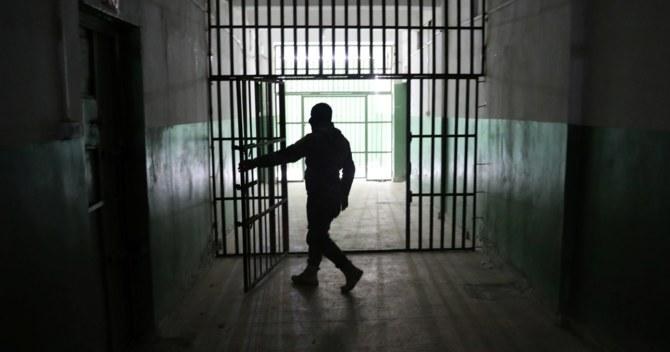
Amnesty said such deaths by deliberate denial of health care amounted to an extrajudicial execution . (File: Reuters)
Short Url
Updated 12 April 2022
Follow

Amnesty accuses Iran of ‘deliberate’ denial of health care to prisoners

PARIS: Rights group Amnesty International on Tuesday accused Iran of deliberately denying life-saving medical care to prisoners, saying it had confirmed 96 cases since 2010 of detainees dying after a lack of treatment.
The report by Amnesty comes after several high profile cases this year alone of prisoners who died in custody due to what activists say was a failure by Iran to properly treat their illnesses.
These include the Iranian poet and filmmaker Baktash Abtin who died in January after contracting Covid-19 and Shokrollah Jebeli, an 82-year-old dual Australian-Iranian national, who died in March after a succession of medical problems.
Amnesty said such deaths by deliberate denial of health care amounted to an extrajudicial execution while the failure of Iran to provide accountability were another example of the systematic impunity in the country.
“The Iranian authorities’ chilling disregard for human life has effectively turned Iran’s prisons into a waiting room of death for ill prisoners, where treatable conditions tragically become fatal,” said Diana Eltahawy, Deputy Regional Director for the Middle East and North Africa at Amnesty International.
“Deaths in custody resulting from the deliberate denial of health care amount to arbitrary deprivation of life, which is a serious human rights violation under international law,” she added.
Amnesty said it had confirmed the deaths in custody of 92 men and four women in 30 prisons in 18 provinces across Iran in such circumstances since January 2010 but these cases are “illustrative, rather than exhaustive” and the true number of cases likely to be higher.
The group said it had documented how prison officials frequently deny prisoners access to adequate health care, including diagnostic tests, regular check-ups, and post-operative care.
“This leads to worsening health problems, inflicts additional pain and suffering on sick prisoners, and ultimately causes or contributes to their untimely deaths.”
It said 64 out of the 96 prisoners died in prison rather than hospitals. In the vast majority of cases, prisoners who died were young or middle aged, it said.
A large proportion of the deaths took place in prisons in northwestern Iran that house many inmates from the Kurdish and Azerbaijani minorities and in southeastern Iran where prisoners mostly belong to Iran’s Baluch minority.
Abtin, 47, who had been convicted on national security charges and was seen by activists as a political prisoner, died of Covid-19 about six weeks after he first displayed symptoms in Tehran’s Evin prison, Amnesty said.
“The authorities caused or contributed to his death by deliberately denying him timely access to specialized medical treatment at a facility well-equipped to deal with cases of Covid-19 after he fell ill with Covid-19 in early December 2022,” Amnesty said.
It said Jebeli had died after being subjected to “more than two years of torture and other ill treatment through the denial of access to adequate specialized medical care” for conditions including kidney stones, a history of strokes, sciatica in his legs, high blood pressure, and an umbilical hernia.
Jebeli, who had been imprisoned in a financial dispute, died in hospital where he had been transferred after he was found unresponsive by other prisoners and had lost all control of his bladder and bowel movements, Amnesty said.


Syria moves military reinforcements east of Aleppo after telling Kurds to withdraw

Updated 3 sec ago
Follow

Syria moves military reinforcements east of Aleppo after telling Kurds to withdraw

ALEPPO: Syria’s army was moving reinforcements east of Aleppo city on Wednesday, a day after it told Kurdish forces to withdraw from the area following deadly clashes last week.
The deployment comes as Syria’s Islamist-led government seeks to extend its authority across the country, but progress has stalled on integrating the Kurds’ de facto autonomous administration and forces into the central government under a deal reached in March.
The United States, which for years has supported Kurdish fighters but also backs Syria’s new authorities, urged all parties to “avoid actions that could further escalate tensions” in a statement by the US military’s Central Command chief Admiral Brad Cooper.
On Tuesday, Syrian state television published an army statement with a map declaring a large area east of Aleppo city a “closed military zone” and said “all armed groups in this area must withdraw to east of the Euphrates” River.
The area, controlled by Kurdish forces, extends from near Deir Hafer, around 50 kilometers (30 miles) from Aleppo, to the Euphrates about 30 kilometers further east, as well as toward the south.
State news agency SANA published images on Wednesday showing military reinforcements en route from the coastal province of Latakia, while a military source on the ground, requesting anonymity, said reinforcements were arriving from both Latakia and the Damascus region.
Both sides reported limited skirmishes overnight.
An AFP correspondent on the outskirts of Deir Hafer reported hearing intermittent artillery shelling on Wednesday, which the military source said was due to government targeting of positions belonging to the US-backed, Kurdish-led Syrian Democratic Forces.

’Declaration of war’

The SDF controls swathes of the country’s oil-rich north and northeast, much of which it captured during Syria’s civil war and the fight against the Daesh group.
On Monday, Syria accused the SDF of sending reinforcements to Deir Hafer and said it would send its own personnel there in response.
Kurdish forces on Tuesday denied any build-up of their personnel and accused the government of attacking the town, while state television said SDF sniper fire there killed one person.
Cooper urged “a durable diplomatic resolution through dialogue.”
Elham Ahmad, a senior official in the Kurdish administration, said that government forces were “preparing themselves for another attack.”
“The real intention is a full-scale attack” against Kurdish-held areas, she told an online press conference, accusing the government of having made a “declaration of war” and breaking the March agreement on integrating Kurdish forces.
Syria’s government took full control of Aleppo city over the weekend after capturing its Kurdish-majority Sheikh Maqsud and Ashrafiyeh neighborhoods and evacuating fighters there to Kurdish-controlled areas in the northeast.
Both sides traded blame over who started the violence last week that killed dozens of people and displaced tens of thousands.

PKK, Turkiye

On Tuesday in Qamishli, the main Kurdish city in the country’s northeast, thousands of people demonstrated against the Aleppo violence, with some burning pictures of Syrian President Ahmed Al-Sharaa, an AFP correspondent said, while shops were shut in a general strike.
Some protesters carried Kurdish flags and banners in support of the SDF.
“Leave, Jolani!” they shouted, referring to President Sharaa by his former nom de guerre, Abu Mohammed Al-Jolani.
“This government has not honored its commitments toward any Syrians,” said cafe owner Joudi Ali.
Other protesters burned portraits of Turkish Foreign Minister Hakan Fidan, whose country has lauded the Syrian government’s Aleppo operation “against terrorist organizations.”
Turkiye has long been hostile to the SDF, seeing it as an extension of the Kurdistan Workers’ Party (PKK) and a major threat along its southern border.
Last year, the PKK announced an end to its long-running armed struggle against the Turkish state and began destroying its weapons, but Ankara has insisted that the move include armed Kurdish groups in Syria.
On Tuesday, the PKK called the “attack on the Kurdish neighborhoods in Aleppo” an attempt to sabotage peace efforts between it and Ankara.
A day earlier, Ankara’s ruling party levelled the same accusation against Kurdish fighters.
The Britain-based Syrian Observatory for Human Rights reported 45 civilians and 60 soldiers and fighters from both sides killed in the Aleppo violence.
Aleppo civil defense official Faysal Mohammad said Tuesday that 50 bodies had been recovered from the Kurdish-majority neighborhoods after the fighting.