



KARACHI: For foodies in Karachi, there is no better time than Ramadan - when the aromas and sights of special delicacies fill the streets as the time for the sunset iftar meal nears - and no better place to find the best snacks than the megacity's iconic food hub, Burns Road.

Workers carry large pots of fruit at Pakistani Fruit Chaat in Karachi, Pakistan, on April 5, 2022. (AN photo by S.A.Babar)
Stretching through the heart of the old city in the Saddar Town area, the famous food street appeared in urban plans in the late 19th century, but only gained fame after 1947, when British India split into two independent states — India and Pakistan — and tens of thousands of Indian Muslims migrated from Delhi and settled in the area.
They brought with them their cuisine, which became part of the foodscape in a city that often lays claims to culinary excellence.
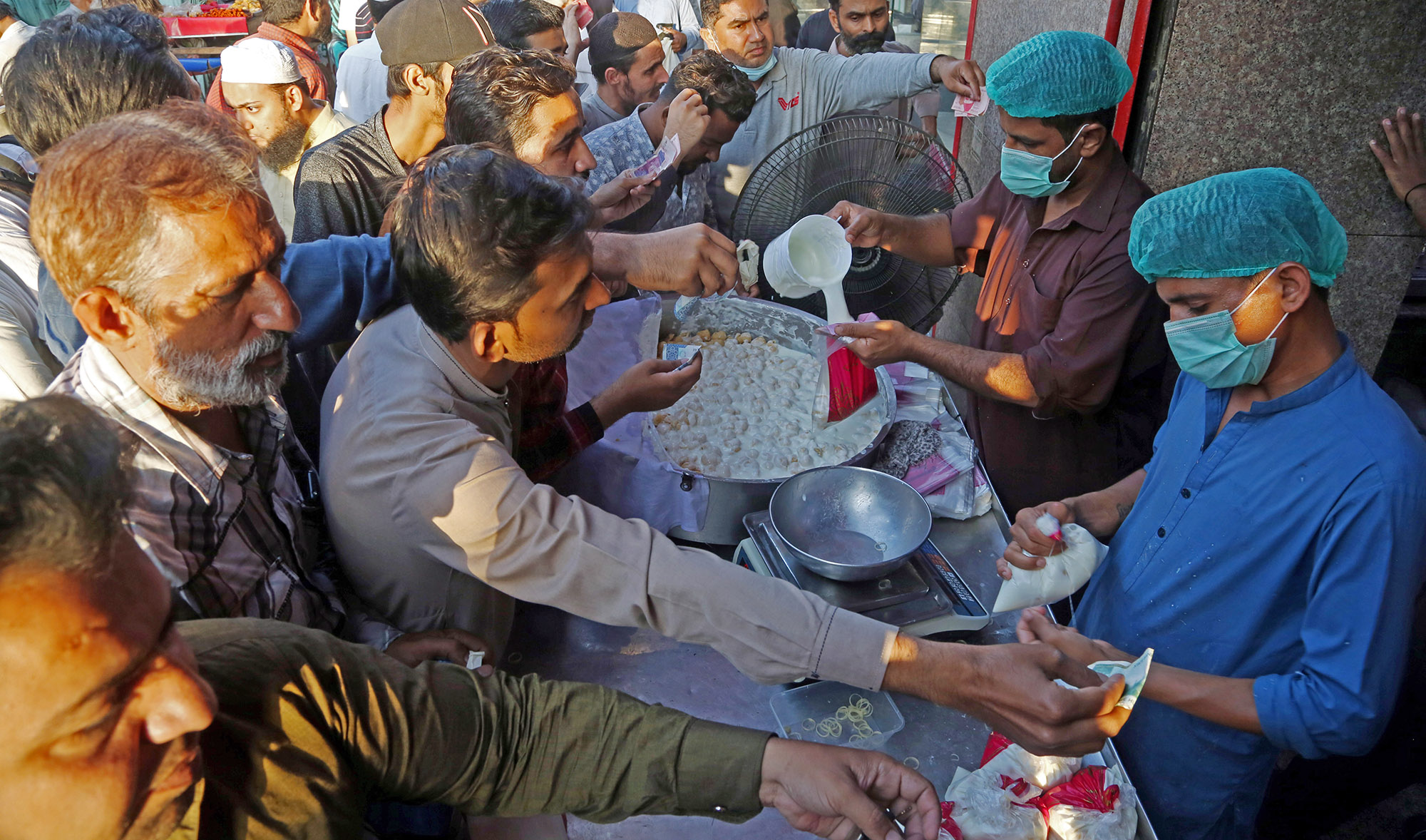
People gather outside a food stall at Fresco Chowk before the Ramadan iftar meal in Karachi, Pakistan, on April 5, 2022. (AN photo by S.A.Babar)
From lentil fritters in savory yogurt known as dahi baray to spicy deep-fried kachoris filled with green gram, potato stuffed crispy samosas, sweet spiral shaped crisp and juicy jalebis, and many more, some of the snacks Burns Road is famous for have been handed down from generation to generation.
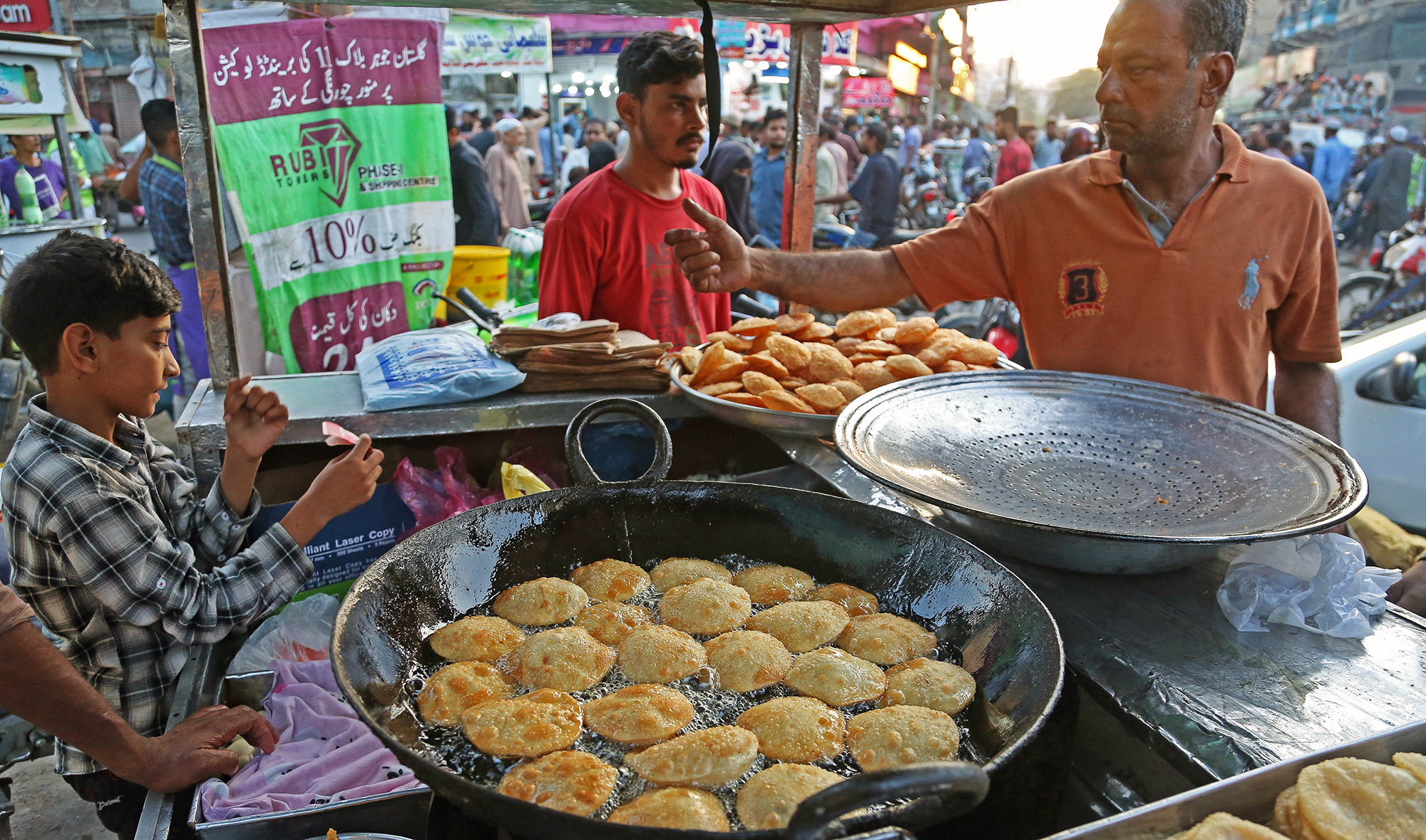
Kachori, a favorite item for the iftar meal in Ramadan, on display in Karachi, Pakistan, on April 5, 2022. (AN photo by S.A.Babar)
Naseem Saleem, who sells dahi baray, told Arab News his family, migrants from India, had been running a food shop on Burns Road for nearly seven decades.
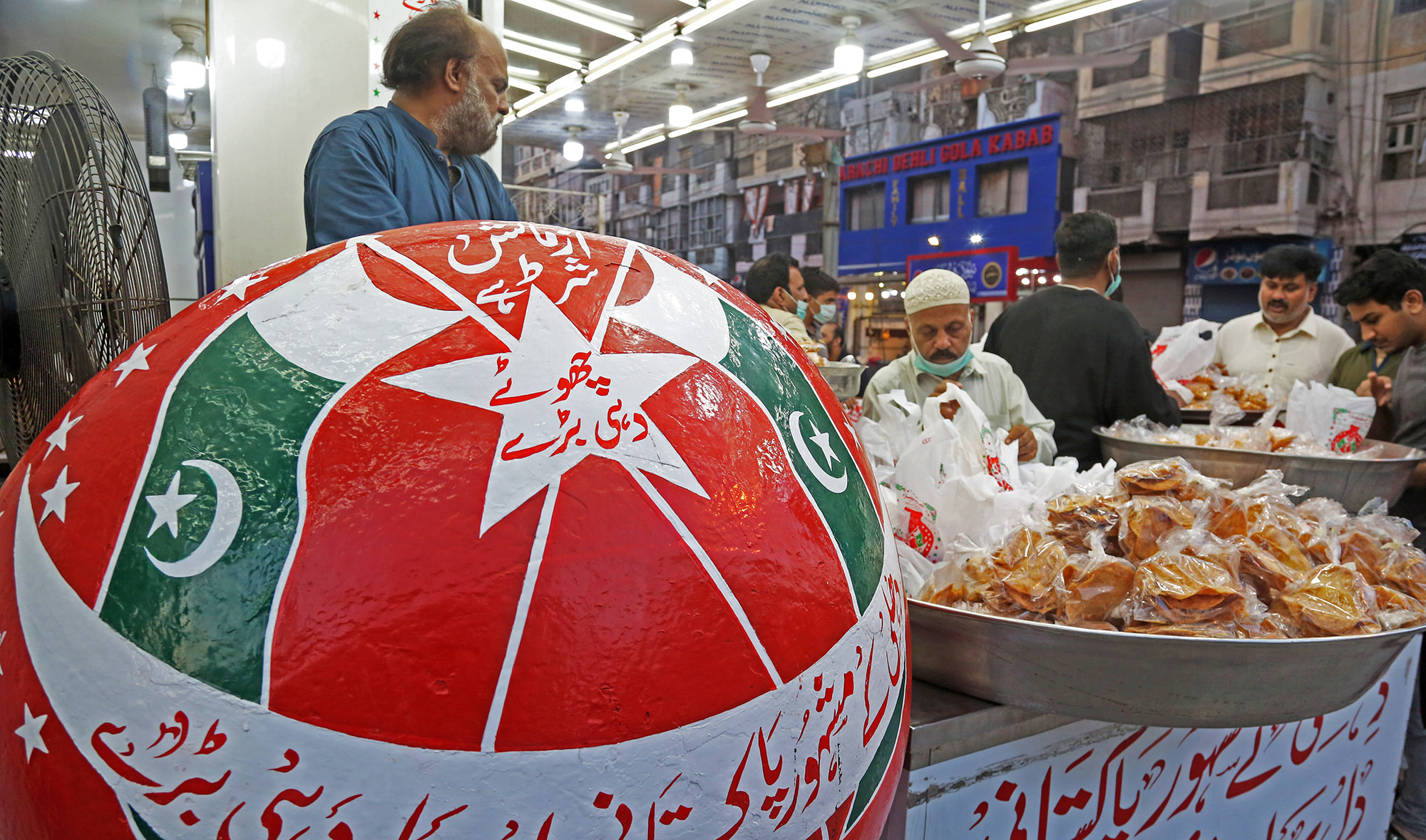
People purchase dahi baray, a favourite item on the iftar Ramadan menu, in Karachi, Pakistan, on April 5, 2022. (AN photo by S.A.Babar)
"Like most of these snacks you see here, dahi baray also has its origin in Delhi, from where our family migrated and opened this shop in 1954," he said, hastily packing food parcels for customers to bring home for iftar, the evening meal partaken after sunset in Ramadan.
A few yards from Saleem's shop, a queue was forming in front of Faseko, and adjacent to it Fresco Sweets, both famous for samosas, Arab-style bread and sweets.
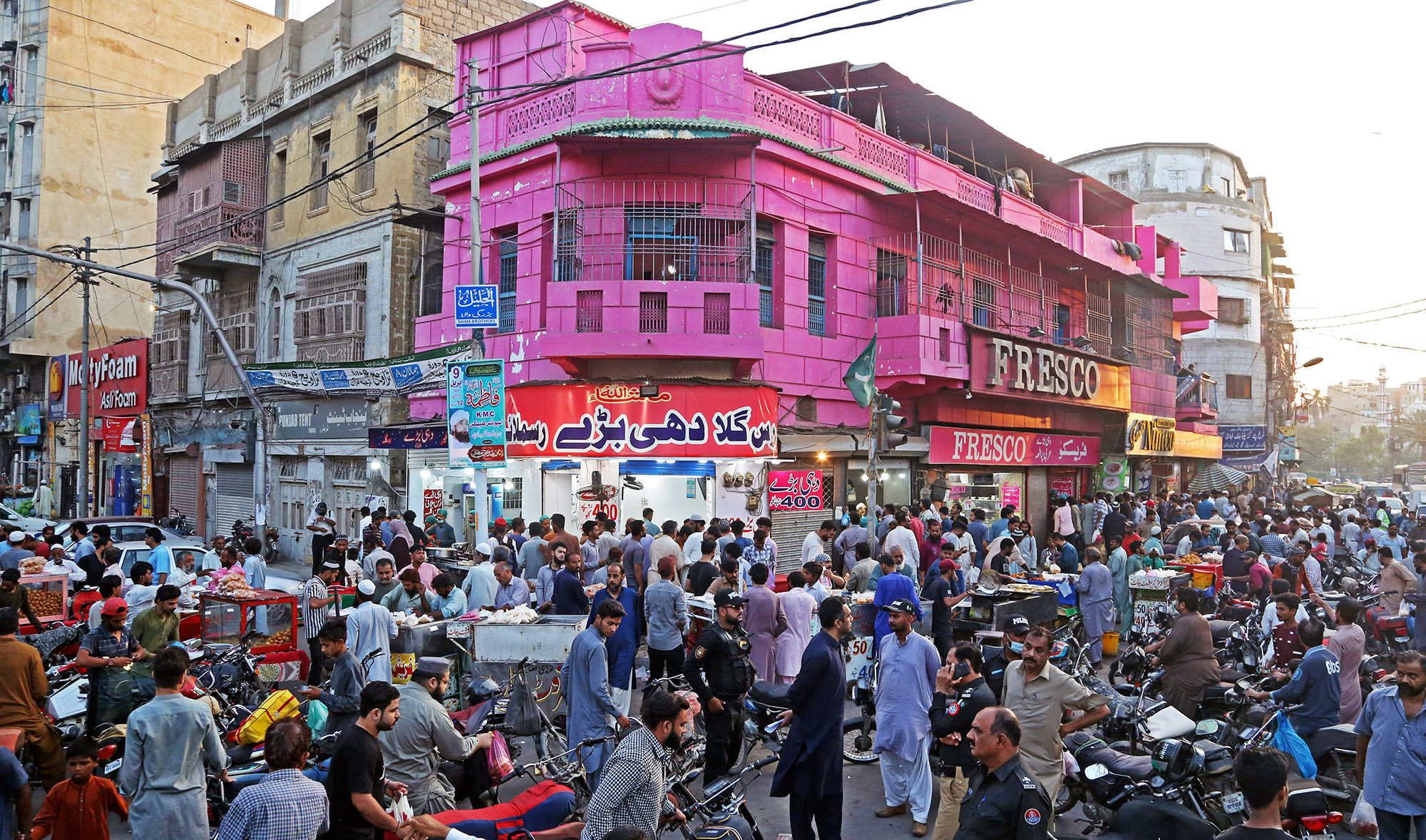
A view of Fresco Chowk before the iftar meal in Ramadan, Karachi, Pakistan, on April 5, 2022. (AN photo by S.A.Babar)
The owner of Faseko, Hafiz Faseeh, said the number of customers increased manifold during Ramadan because "everyone wants to add the best to his Iftar menu."
Customer Owais Ali, who had come to Burns Road from the Gulshan-e-Iqbal locality some 20 kilometers away, said the food street offered the best quality of Ramadan fare.
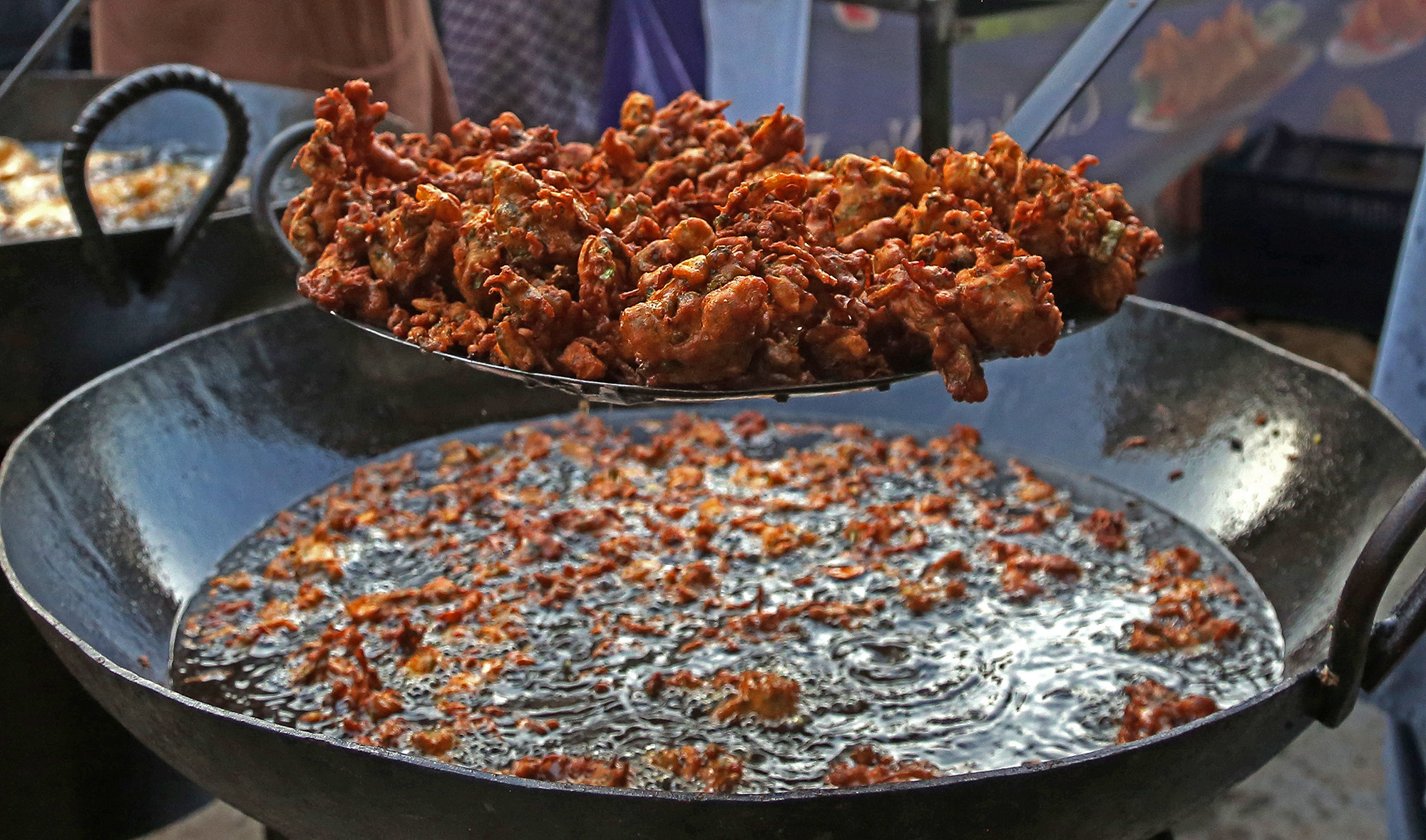
A street-side vendor prepares pakoras for the iftar meal during the fasting month of Ramadan in Karachi, Pakistan, on April 5, 2022. (AN photo by S.A.Babar)
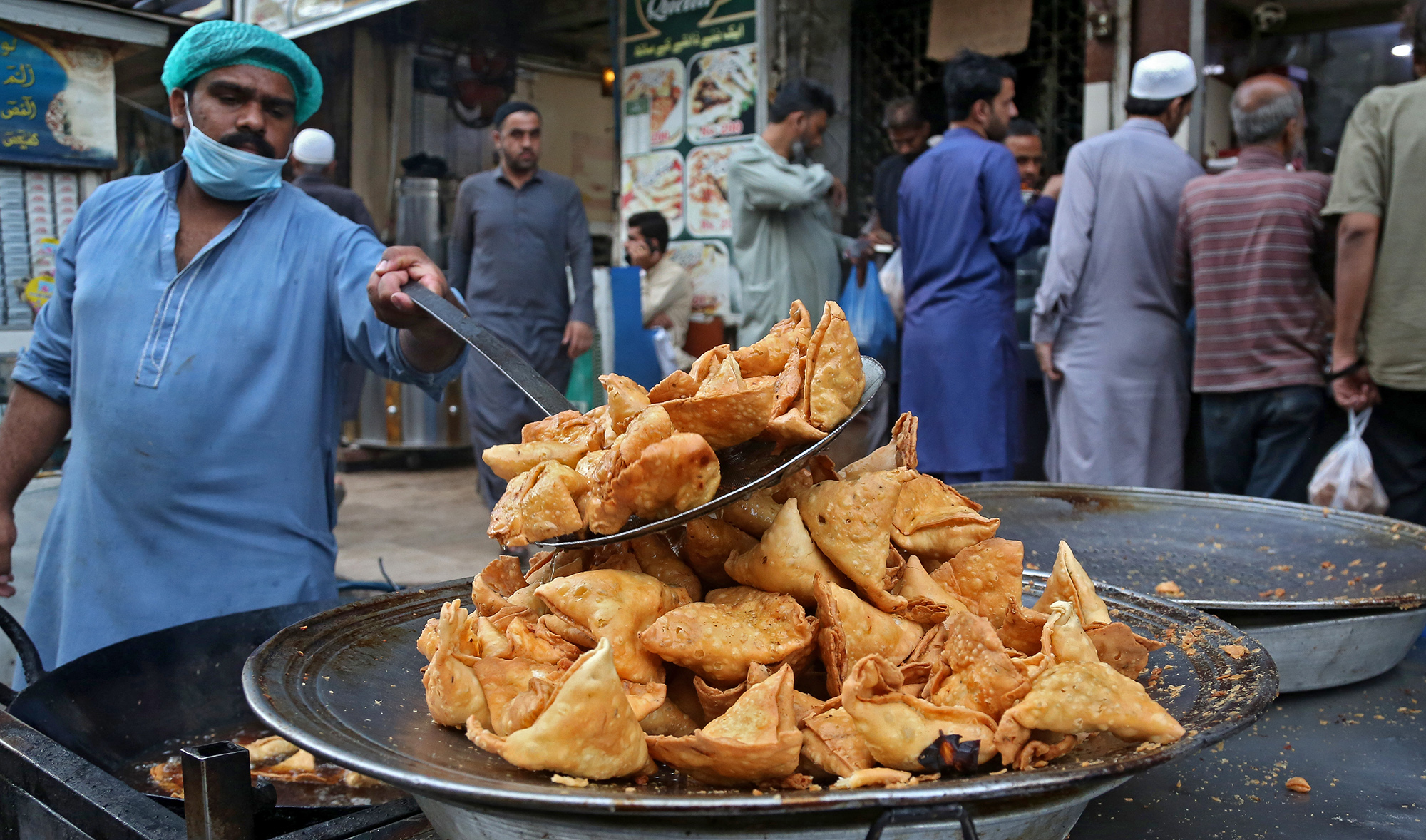
A cook at the famous Hafiz sweets shop on Burns Road prepares fresh samosas during the fasting month of Ramadan in Karachi, Pakistan, on April 5, 2022. (AN photo by S.A.Babar)
"Dahi baray, samosas, kachori and rolls become a mandatory part of our table spread during Ramadan," he told Arab News, saying while the same varieties of food could be found closer to where he lived, the taste was different.
He would come to Burns Road, he said, despite the distance and long queues outside his favorite vendors.
"I come here thrice a week at least during Ramadan and more when we have guests at home for iftar," he said as he hung food parcels on the handle bars on his motorbike and revved the engine.
"My task at Burns Road is accomplished."


