

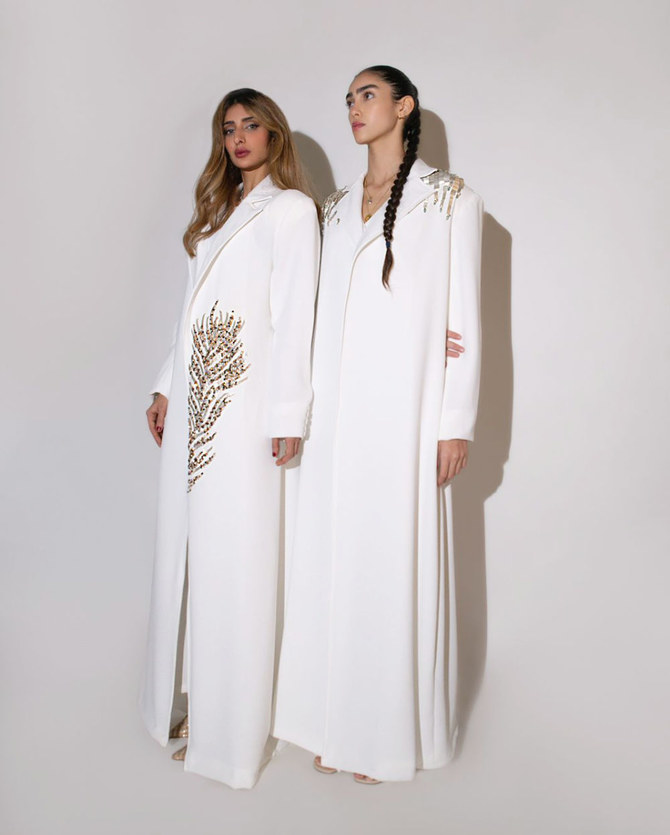


JEDDAH: Aside from the religious and spiritual duties that Muslims strive to complete during Ramadan, the fasting month is also a time for gatherings and maintaining kinship. This means it is also an occasion to dress up and look one’s best.
Women put away their jeans and shirts and put on their jalabiya or dar’aa, quintessential dresses for Ramadan.
Saudi fashion designer Wafa Al-Jaffali has created a Ramadan collection inspired by the environment.
“My design for this Ramadan season combined traditional works from the environment of the south inlaid with beads, as well as the sun's rays in many of my pieces in addition to the waves of the sea,” Al-Jaffali told Arab News. “Ramadan is the month of mercy, devotion, and closeness to the ties of kinship, which requires us to contribute in one way or another to meet the demand of female citizens and residents in a variety that uses a decorative and cultural character in our diverse homeland with its 13 regions.”
The month of Ramadan is the month of fasting and the main purpose is detachment from a materialistic life, and this reflects in the simplicity of the jalabiya and its special characteristics that it is light, comfortable, and minimal at the same time.
Lian Bahddad, Self-taught fashion designer
Women and girls had an emotional relationship when it came to clothing on special occasions, she said.
“And this is followed by the economic situation of each woman, and this puts pressure on us to go along with everyone and meet their needs.”
Her collection predominantly comprises simple materials that can be embroidered. “In our grandmothers’ era they used taffeta, rama, silk, and other fabrics, which all enabled them at the time to work manually with needles, threads, sequins, and beads from their environment, to draw patterns of palm trees, the sun, and the moon.”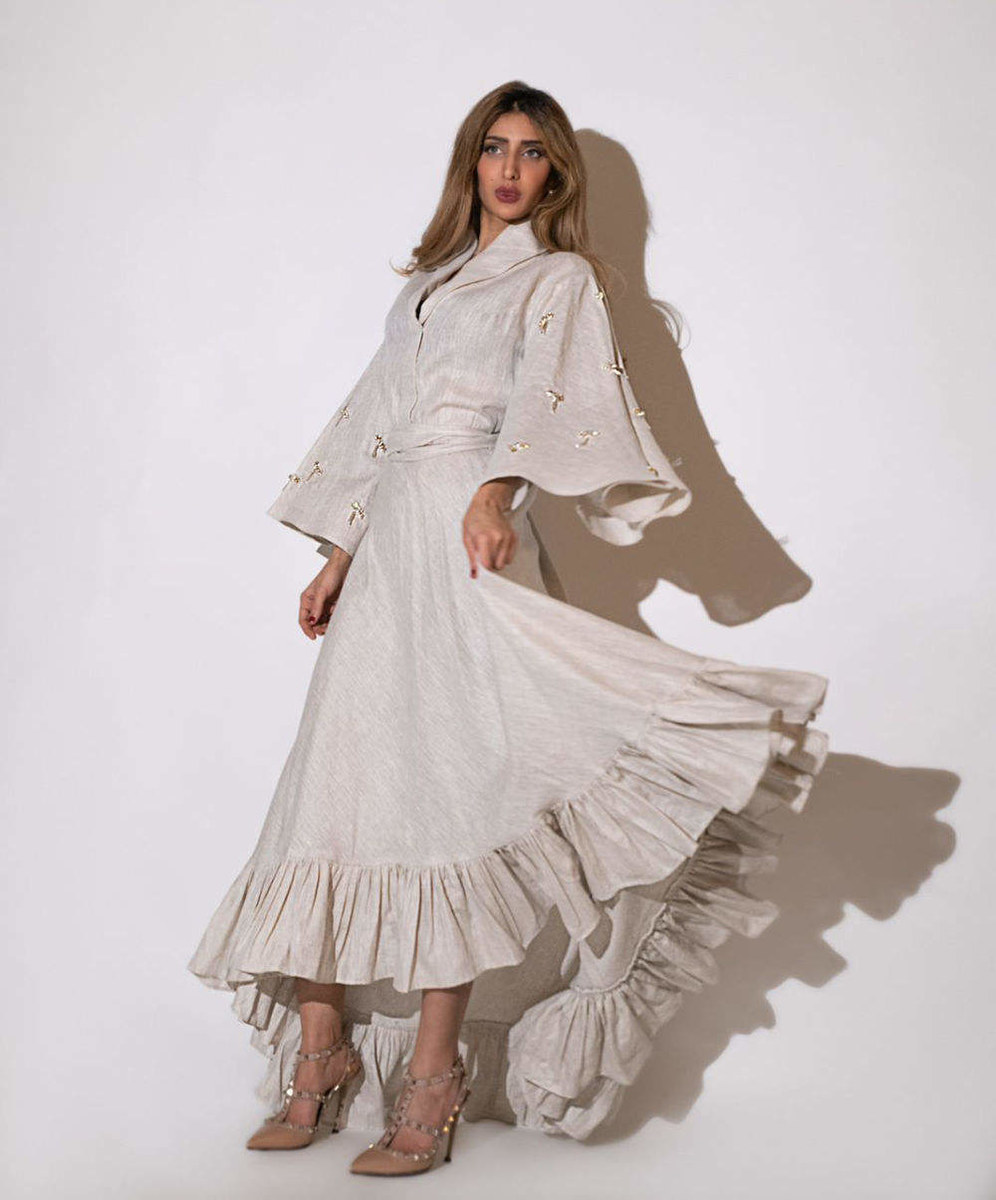
She said the jalabiya was an iconic fashion piece during Ramadan because it was how women dressed back in the day, and it was being modernized with contemporary designs.
“It’s a historic fashion item that tells the history of our mothers and grandmothers and carries pictures of the past while updating it with everything new, whether hand-sewn or made with a tailoring machine.”
Lian Bahddad, 23, is a Saudi marketing graduate who taught herself fashion design. She said fashion was an integral part of people’s culture and civilization.
“Fashion in Ramadan plays a major role in giving the season a distinctive character and a special identity that distinguishes it from the rest of the seasons,” she told Arab News, “especially in the Middle East, which is distinguished by its wide easy to wear cuts, modesty, and cool airy fabrics.”
Bahddad said the fashion industry was growing globally every year and that, not so long ago, international brands began designing Ramadan collections targeting the Arab market.
FASTFACTS
● Women put away their jeans and shirts and put on their jalabiya or dar’aa, quintessential dresses for Ramadan.
● Saudi fashion designer Wafa Al-Jaffali said the jalabiya was an iconic fashion piece during Ramadan because it was how women dressed back in the day, and it was being modernized with contemporary designs.
It was doubling in size every year, she added, with designs inspired by the jalabiya, the kaftan, the thobe, and the dar’aa. “And this would not have happened without the direction of local designers every year to add their creative touches to it, to add style to the characteristic of the fashion in Ramadan which led to the high demand.”
The young designer said the clothes people wore were an expression of their personalities and moods. “Clothes and their styling are an art in itself. A lot can be said about our appearance for each occasion. An awareness of the dress code on every occasion is important. In some cultures, it can indicate a lack of respect for the people and the occasion itself.”
She said the jalabiya started out as a men’s robe from Egypt, Sudan, and Morocco, with its origins going back to the Ottoman Empire, but that these days it was a minimalistic and loose-fitting women's outfit.
“The month of Ramadan is the month of fasting and the main purpose is detachment from a materialistic life, and this reflects in the simplicity of the jalabiya and its special characteristics that it is light, comfortable, and minimal at the same time. And the gatherings between family and friends at the time of breaking the fast is what led designers into taking advantage of this season to innovate different styles, but the concept is the same.”
Saudi freelance designer Darin Basyoni said as Ramadan was a month of gatherings, and its spiritual atmosphere gave people the energy to go out, they needed to look elegant and fashionable in a special way for these gatherings.
“To look good you need to dress nicely. Occasions usually have a special theme or spirit that gives that occasion its identity,” she told Arab News.
Her Ramadan collection is inspired by traditional Saudi patterns and the environment.
“I wanted my first collection to represent my country’s tradition, therefore, my main inspirations were the Sado pattern and nature.”


