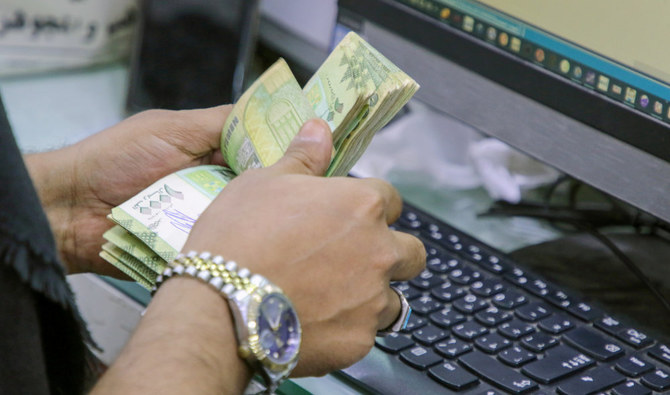

RIYADH: The Yemeni riyal on Sunday rebounded by about 13 percent on news about the UN-brokered truce and talks between rival forces in the Saudi capital.
Money traders told Arab News that the riyal rose for the first time in months, from 1260 to 1070 in government-controlled areas.
The riyal also recovered in Houthi-controlled areas, reaching 575 to the dollar, compared to 602 a week ago.
The rapid surge in the riyal has prompted some local money exchange firms to suspend the selling of hard currencies.
“People hastily sell their Saudi riyals and the dollar. The demand for the riyal has created a liquidity crunch,” one trader said.
FASTFACT
Saudi Ambassador to Yemen Mohammed Al-Jaber said that the conference in Riyadh has brought together Yemeni figures who have been enemies for years.
The recovery of the riyal came as the internationally recognized government on Sunday accused the Iran-backed Houthis of repeatedly violating the UN-brokered humanitarian truce.
Yemen’s Defense Ministry said that army troops pushed back two attacks in the central province of Marib and outside Taiz.
The Houthis also violated the truce 40 times by attacking and shelling rival troops in Al-Bareh, west of Taiz, and in Hays, south of Hodeidah, the Joint Forces said in a statement.
On Friday, UN Yemen Envoy Hans Grundberg said that warring factions in Yemen agreed to observe a two-month truce that would come into effect Saturday.
During the truce, fuel ships would enter Hodeidah seaport, the Yemeni national airline would fly twice weekly from Sanaa airport to Jordan and Egypt, and both sides would open roads in besieged Taiz and other areas.
A Houthi-controlled oil company said on Sunday that a ship carrying fuel for plants and power stations docked in Hodeidah.
Fighting subsided during the early hours of the truce. But reports came through on Sunday morning that Houthi fighters had launched missile and drone strikes on government troops in Marib, Taiz and Hodeidah.
The Houthis have also claimed that their opponents violated the truce in contested areas across Yemen.
In Riyadh, rival Yemeni factions on Sunday resumed direct talks aimed at ending the war at the headquarters of the Gulf Council Cooperation. Attendees also discussed the humanitarian crisis and the economy.
Saudi Ambassador to Yemen Mohammed Al-Jaber said that the conference that started on Wednesday has “brought together Yemeni figures who have been enemies for years.”
He said on Twitter: “These consultations gave them an opportunity for reviewing and rapprochement in order to draw a Yemeni road map that moves brotherly Yemen from war and destruction to peace and development.”
During the talks, Yemeni leaders such as Hamed Al-Ahmer, a tribal leader and businessman, was seen shaking hands with Tareq Saleh, the nephew of the country’s former president, Ali Abdullah Saleh.
Both leaders led rival groups in armed clashes in Sanaa in 2011.
The leader of the pro-independence Southern Transitional Council Aidarous Al-Zubaidi met with rival and pro-unification figure Ahmed Saleh Al-Essi.