

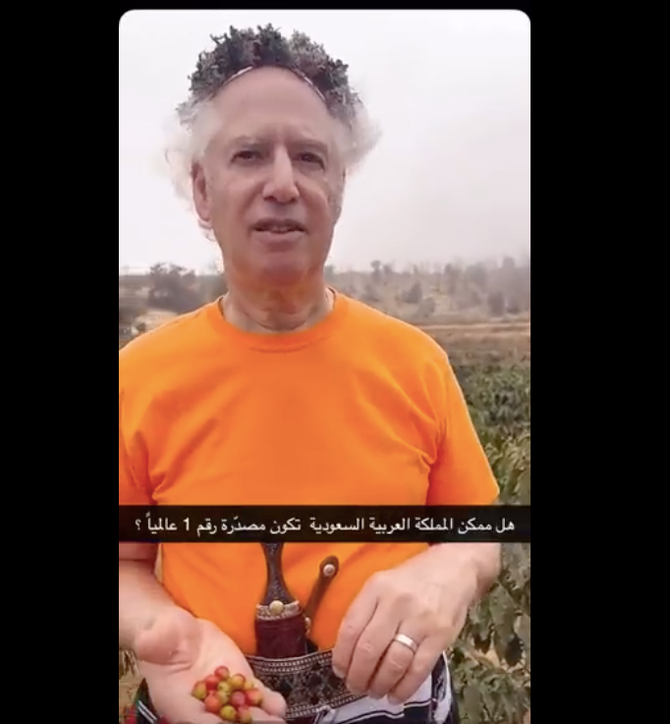



JEDDAH: The famous coffee of Saudi Arabia’s southern region has attracted the attention of the co-founder of Starbucks, whose praise for Jazan’s local variety in a video went viral.
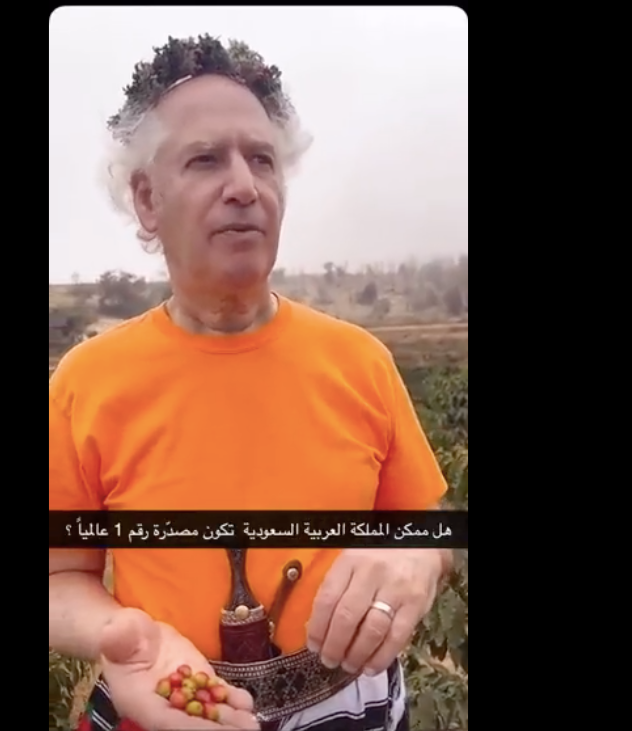
On March 27, Saudi social media influencer Ibrahim Al-Asiri shared a video on Twitter showing Zev Siegl, one of the three co-founders of Starbucks, praising the quality of Jazan’s Khawlani coffee beans.
Siegl, who was touring the region, sported traditional Jazan attire, including a wizrah (skirt), a shirt and a belt containing a janbiya (dagger), as well as a wreath of fresh flowers.
He said: “Saudi Khawlani coffee is going to be one of the wonderful exports in the Kingdom of Saudi Arabia.”
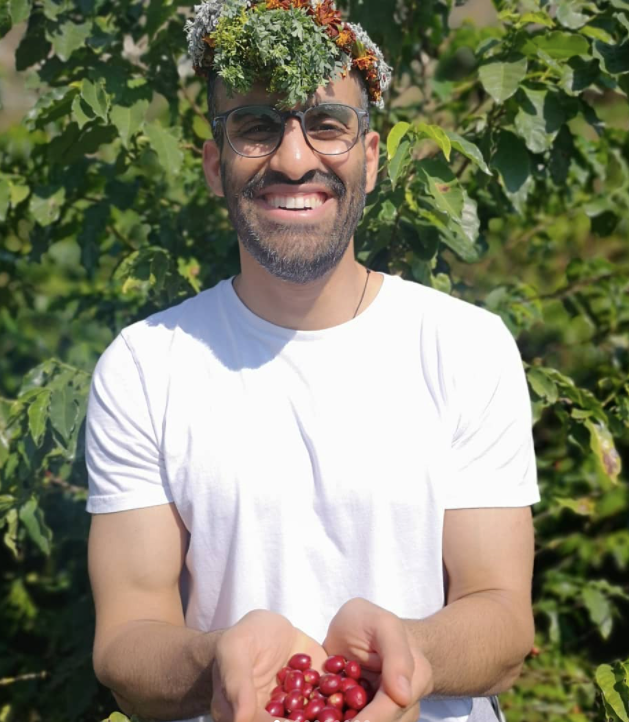
Jazan’s most popular coffee variety, Khawlani is dubbed the “green gold” and “pampered tree,” and is found nestled deep in forests on fertile Earth.
In the video, Siegl, holding crimson-colored Khawlani coffee beans, said that the variety’s reddish color represents an ideal level of sweetness.
According to his website, Siegl co-founded the world’s most famous coffee chain in 1971, serving as director and vice-president of retail until 1980.
In an interview with Arab News, Almohanad Al-Marwai, co-founder and CEO of the Arabian Coffee Institute, said: “The flavor notes of Khawlani usually are more of dried fruit, raisins, dates, spicy notes, cardamom, cinnamon and dark chocolate.”
With 12 years of experience in the coffee industry, Al-Marwai is also a licensed Q Arabica grader, Q Processor and an authorized Specialty Coffee Association trainer.
Despite Khawlani bean production falling short of the demands of the Saudi domestic market, Al-Marwai said that the Kingdom is aiming to become a leading coffee-producing country. “We are also experimenting with Saudi coffee beans with different processing methods. The Middle East has always been a hub of coffee, and Saudi Arabia is planning to revive that and bring back the greatness again.”
He added that the quality of the beans is “just one factor among many” in producing highly rated coffee. Other factors include roasting, handling and processing until the finished product is ready for consumption.
Saudi Minister of Culture Prince Badr bin Abdullah bin Farhan announced earlier this year that 2022 will be the “Year of Saudi Coffee.”
For centuries, the drink has played a central part in Saudi Arabia’s deep-rooted culture and traditions. It is embedded in the Saudi values of hospitality, as well as in music and poetry, to the point that it is recognized as a core element of Saudi folk heritage. Coffee has also been associated with the dates produced by Saudi palm trees.
According to recent statistics, domestic production of Arabic coffee in Jazan, Al-Baha, and Asir has reached 1,810 tons annually, with the number of farms totaling 2,535, including 398,000 coffee trees.
The Ministry of Environment, Water and Agriculture is looking to designate 13 governorates in the southwestern part of the Kingdom as important sources of coffee production.
It also aims to increase the percentage of coffee production in the Kingdom in support of the national economy, according to the objectives of Vision 2030 reform plan.


