

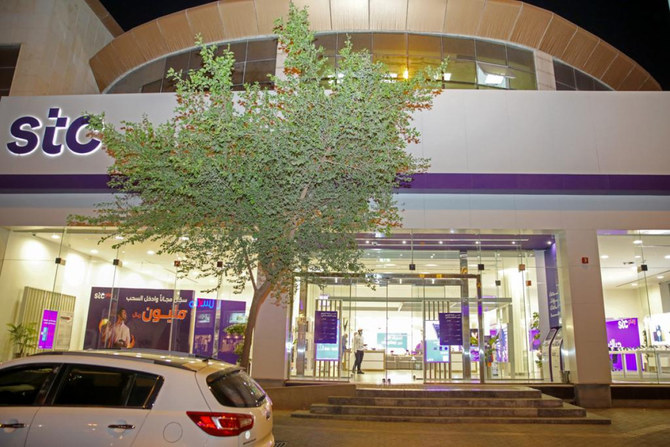
Telecom giant stc, PIF partner in $131m deal to establish IoT JV

Short Url
Updated 01 April 2022
Follow

Telecom giant stc, PIF partner in $131m deal to establish IoT JV

RIYADH: Saudi Telecom Co., known as stc, has partnered with its largest shareholder, the Public Investment Fund, in a SR492 million ($131 million) deal to support internet-connected devices, known as the internet of things.

In a bid to meet the rising demand for internet of things — also known as IoT — services and products, the parties agreed to establish an equally owned joint venture, telecom giant stc said in a filing.

The new venture’s initial capital can be expanded up to SR900 million three years from establishment, based on business requirements.

Local market studies indicate vast growth in the size of the IoT market in the Kingdom to potentially reach SR10.8 billion by 2025 with an annual growth rate of 12.8 percent.

stc expects the transaction to positively impact its financial statements, as it aligns with its growth strategy and a Kingdom-wide vision for a connected nation.

Yazeed AlHumied, deputy Ggovernor and head of Middle East and North Africa Investment at PIF, said: “Partnering with stc as one of the National Champions in the Information Communication Technology sector will help unlock this promising sector and contribute to PIF’s efforts to localize cutting-edge technology and knowledge in Saudi Arabia and further develop a digital economy, in line with Vision 2030 objectives.

“The Company will create significant business opportunities, high quality jobs, and improve productivity and efficiency for entities adopting IoT solutions in their operations.”

Olayan Al Wetaid, CEO of stc Group, said: “Internet of things has been identified in stc's ‘DARE 2.0’ strategy among the five strategic areas of investment. It is at our core and aligns with Saudi Arabia’s digital transformation initiatives, supported by PIF.

“Together we seek to gradually progress toward becoming a regional center for the connected digital communities in the MENA.”


Egypt inflation slows to 10.1% in January: CAPMAS  

Updated 16 sec ago
Follow

Egypt inflation slows to 10.1% in January: CAPMAS  

JEDDAH: Egypt’s annual inflation eased to 10.1 percent in January from 10.3 percent a month earlier, while consumer prices rose sharply on a monthly basis, highlighting persistent pressure on household costs. 

The consumer price index climbed to 268.1 points in January from 264.2 in December, the Central Agency for Public Mobilization and Statistics, also known as CAPMAS, said. Monthly inflation accelerated to 1.5 percent, compared with 0.1 percent in December. 

The government has stressed measures to contain inflation, with directives from President Abdel Fattah El-Sisi calling for coordination between the Central Bank of Egypt and the Ministry of Finance. 

Earlier, Prime Minister Mostafa Madbouli said these efforts aim to curb inflation pressures, support economic stability and encourage private sector growth. 

In its latest report, CAPMAS stated: “Among the most important indicators in price changes.... an increase in the prices of the grains and bread group by 0.1 percent, the meat and poultry group by 5.1 percent, the fish and seafood group by 1.7 percent, the dairy, cheese, and eggs group by 0.5 percent, the oils, and fats group by 0.2 percent.”  

Price movements in January contrasted with patterns seen in December 2025. Essential food and beverage categories recorded significant increases after some declines in the previous month. The meat and poultry group rose 5.1 percent in January following a 1.1 percent decline in December. 

Vegetables increased by 8.5 percent after falling 2 percent in December, while coffee, tea, and cocoa rose by 6.7 percent, up from 0.1 percent. Fish and seafood increased by 1.7 percent, dairy, cheese, and eggs by 0.5 percent, grains and bread by 0.1 percent, and tobacco and oils and fats rose by 0.7 percent and 0.2 percent, respectively. 

Housing-related costs continued to rise, with actual rents up 1.6 percent, imputed rents up 1.9 percent, and housing maintenance and repair up 0.8 percent. 

The report also showed hospital services increased by 3.4 percent, while outpatient clinic services rose by 1.0 percent, compared with December increases of 1.8 percent and 1.0 percent, respectively. 

Other consumer categories recorded moderate increases. Clothing and accessories rose by 1.4 percent, ready-made clothing by 1.1 percent, footwear by 0.4 percent, and cleaning, repair, and clothing rental by 1.0 percent. 

Personal care increased by 0.6 percent and transport services rose 0.3 percent, while household items and equipment rose between 0.2 percent and 0.7 percent. 

On the other hand, fruit prices decreased by 2.5 percent, and home appliances declined by 0.4 percent, continuing trends from December in some sectors.