Recognized as ‘Pride of Pakistan,’ deaf teenager spotlights unfair access to education

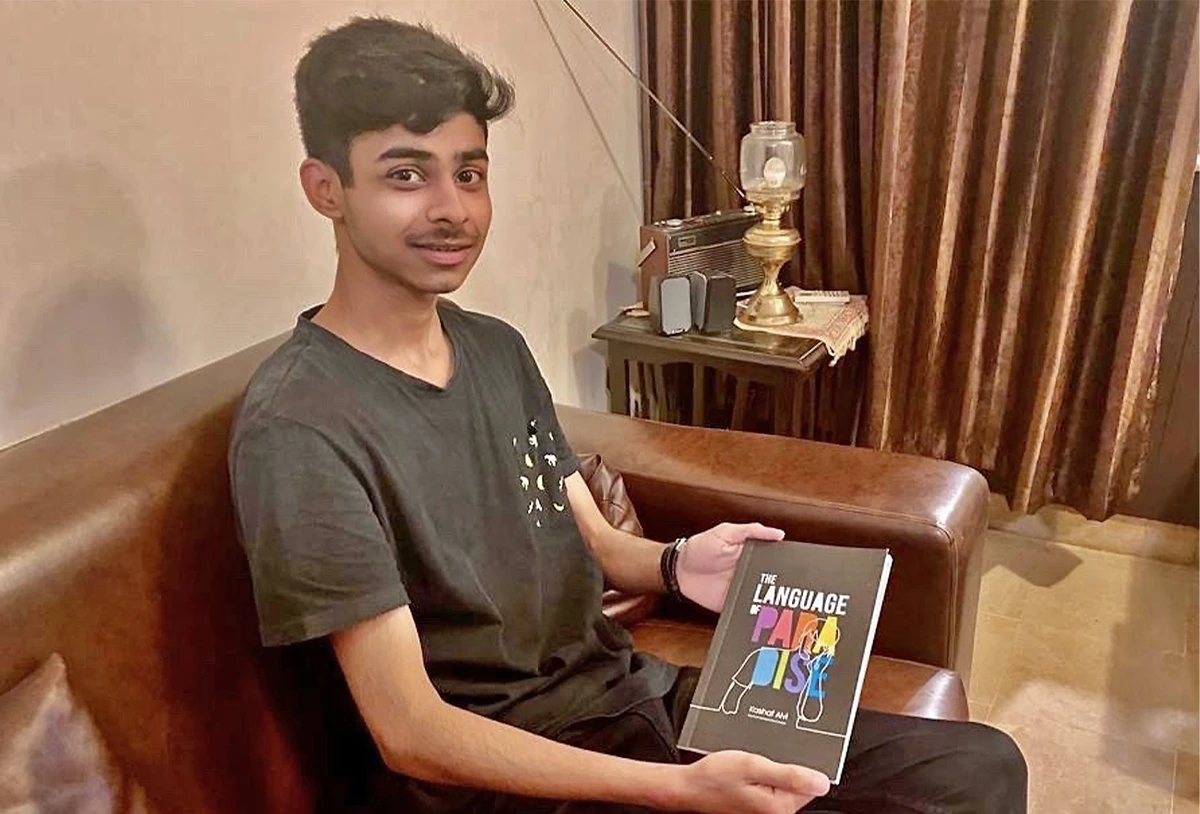
Kashaf Alvi, an 18-year-old deaf Pakistani author, holds his book, "The Language of Paradise," during an interview with Arab News in Islamabad, Pakistan, on March 26, 2022. (AN photo)
Short Url
Updated 31 March 2022
Follow

Recognized as ‘Pride of Pakistan,’ deaf teenager spotlights unfair access to education

  • Kashaf Alvi hopes to become a computer game developer, received ‘Pride of Pakistan’ award last week
  • Alvi will have to study abroad as advanced science courses are not available in Pakistan for deaf students

ISLAMABAD: When Kashaf Alvi became the first deaf Pakistani to receive Microsoft’s certified associate badge last year, it was just the beginning of the teenager’s rise to fame.
The 18-year-old has since published a book — likely becoming the youngest deaf person to do so — and last week received the Pride of Pakistan award, an accolade from the country’s powerful military that recognizes outstanding individuals.
But despite the recognition at home, Alvi, whose dream is to become a computer game developer, will have to study abroad as Pakistani universities are not equipped to accommodate courses in sign language.
“I want to study computer sciences and information technology which is not possible in Pakistan,” Alvi said in an interview with Arab News, communicating with the help of his father, Nadim Salim. “Special education institutions offer very limited courses in science and were not offering mathematics as a subject, as they didn’t have mathematics in sign language.”
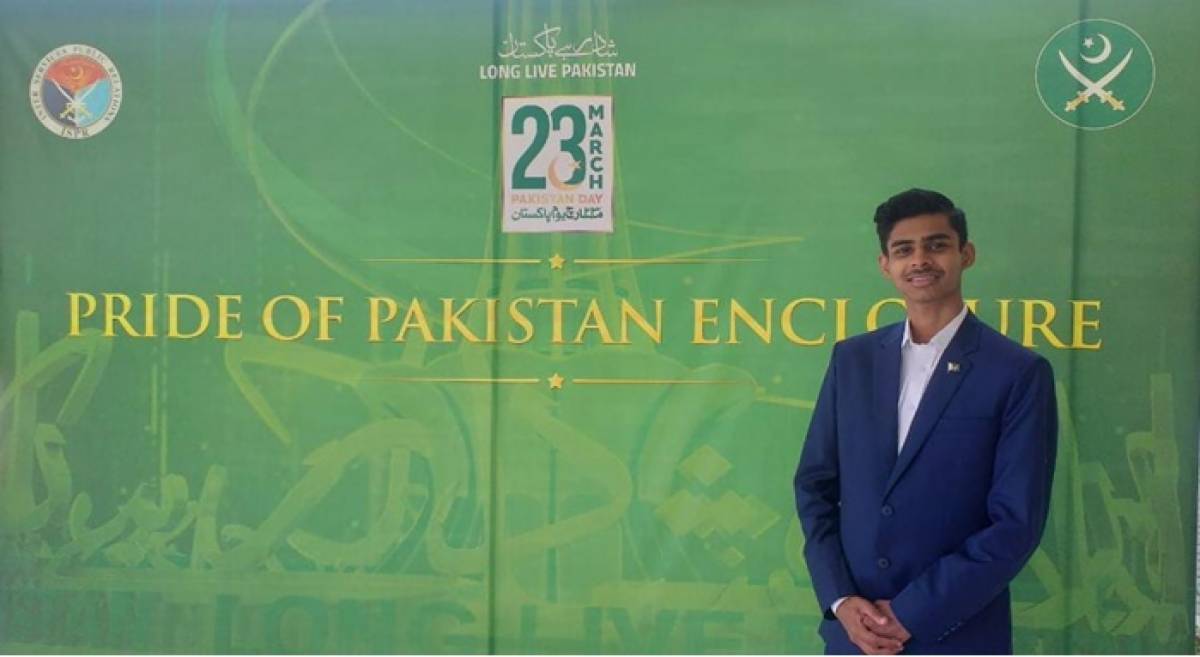


Kashaf Alvi at the “Pride of Pakistan” awards ceremony in Islamabad, Pakistan, on March 23, 2022. (Photo courtesy: Nadim Salim)

Alvi is now preparing for his English language exam and will then apply to study in Sweden.
The National Special Education Center for Hearing Impaired Children in Islamabad, where Alvi lives, offers science courses.
“We are affiliated with Punjab University, Lahore, and if there are substantial students in any subject then the university permits us to offer that subject,” the center’s director, Khalid Ranjha, told Arab News.
But he added that there were no teaching materials for specialized science subjects — and the problem was not just in offering them. 
According to Zaigham Rizvi, chairman of the Sir Syed Deaf Association, the main obstacle in facilitating deaf students was a lack of scientific terminology in Pakistan Sign Language.
“We are trying to get it from Gallaudet University in the USA,” he added. “They have prepared all these signs in medicine, mathematics, and other sciences.”
Even when sign language — used by approximately 10 million hearing impaired Pakistani citizens — is finally supplemented with scientific terms, a lack of trained instructors would be the next obstacle.
Alvi has written about the challenges he has faced as a deaf person in his book, “The Language of Paradise,” which was published by Liberty Books and launched by the wife of the Pakistani president, Samina Alvi, last December.
“The major problem faced by hearing impaired people is a lack of awareness about sign language,” he said. “Even instructors in special education institutions did not have command of it.”
“The book contained my experiences about life, achievements, challenges, and feelings. I wanted to share it with the world to motivate other people like me to come forward and work hard to achieve their goals.”
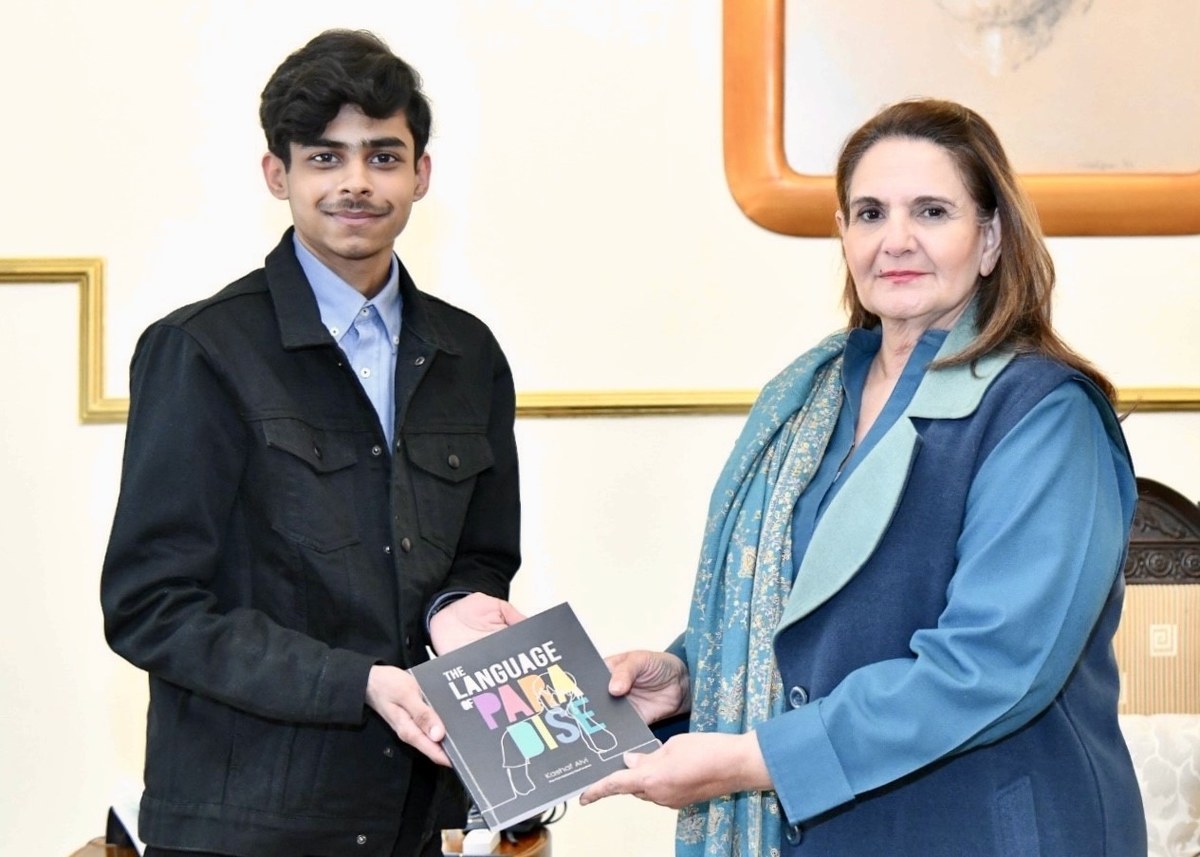


Kashaf Alvi presents his book to Samina Alvi, the wife of Pakistani President Arif Alvi, in Islamabad, Pakistan, on December 19, 2021. (Photo courtesy: Nadim Salim)

Alvi’s current goals, besides higher education, are to support the deaf community.
“I am working to develop a mobile application for hearing and speech impaired people to contact emergency services as there is no such thing,” he said. “I am also making a video to interpret the constitution of Pakistan into sign language to help my community. First, I will convert sections related to persons with disabilities.”

Islamabad says surge in aircraft orders after India standoff could end IMF reliance

Updated 22 min 17 sec ago
Follow

Islamabad says surge in aircraft orders after India standoff could end IMF reliance

  • Pakistani jets came into the limelight after Islamabad claimed to have shot down six Indian aircraft during a standoff in May last year
  • Many countries have since stepped up engagement with Pakistan, while others have proposed learning from PAF’s multi-domain capabilities

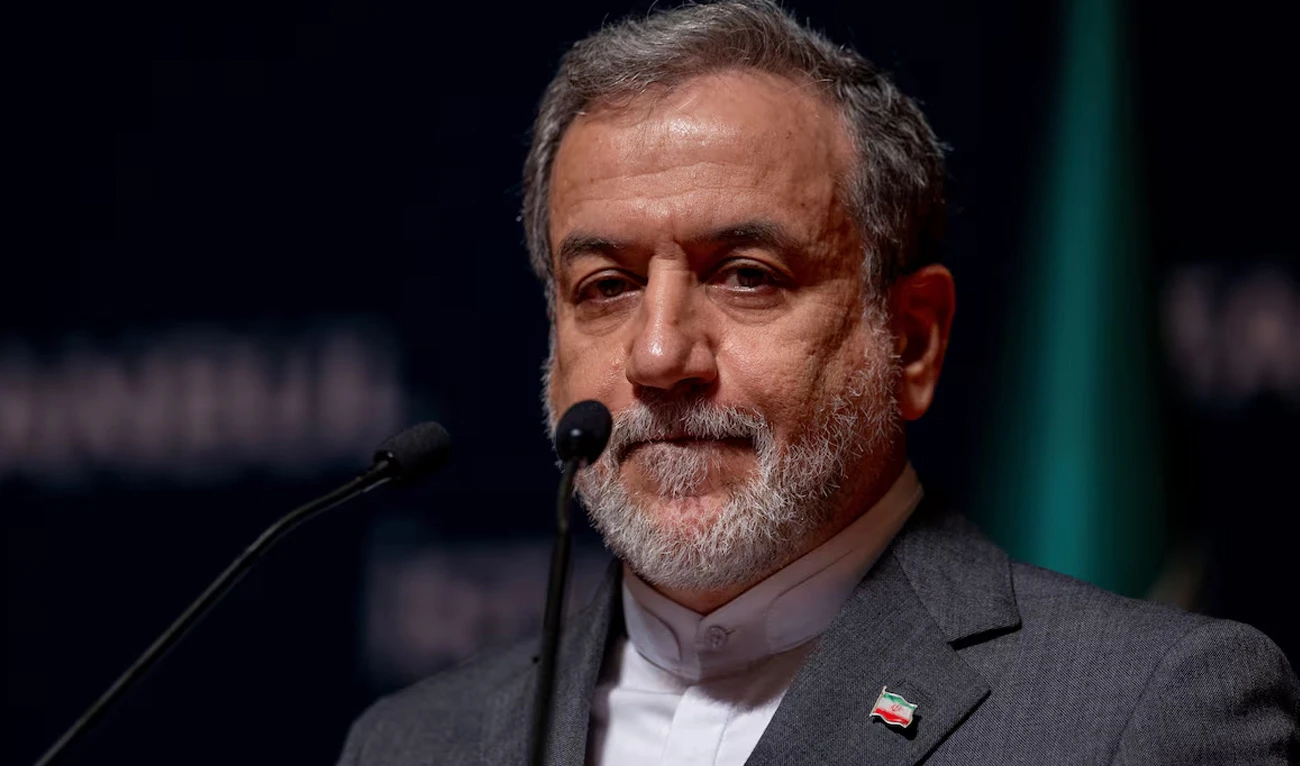
ISLAMABAD: Defense Minister Khawaja Asif on Tuesday said Pakistan has witnessed a surge in aircraft orders after a four-day military standoff with India last year and, if materialized, they could end the country’s reliance on the International Monetary Fund (IMF).

The statement came hours after a high-level Bangladeshi defense delegation met Pakistan’s Air Chief Marshal Zaheer Ahmed Baber Sidhu to discuss a potential sale of JF-17 Thunder aircraft, a multi-role fighter jointly developed by China and Pakistan that has become the backbone of the Pakistan Air Force (PAF) over the past decade.

Fighter jets used by Pakistan came into the limelight after Islamabad claimed to have shot down six Indian aircraft, including French-made Rafale jets, during the military conflict with India in May last year. India acknowledged losses in the aerial combat but did not specify a number.

Many countries have since stepped up defense engagement with Pakistan, while delegations from multiple other nations have proposed learning from Pakistan Air Force’s multi-domain air warfare capabilities that successfully advanced Chinese military technology performs against Western hardware.

“Right now, the number of orders we are receiving after reaching this point is significant because our aircraft have been tested,” Defense Minister Asif told a Pakistan’s Geo News channel.

“We are receiving those orders, and it is possible that after six months we may not even need the IMF.”

Pakistan markets the Chinese co-developed JF-17 as a lower-cost multi-role fighter and has positioned itself as a supplier able to offer aircraft, training and maintenance outside Western supply chains.

“I am saying this to you with full confidence,” Asif continued. “If, after six months, all these orders materialize, we will not need the IMF.”

Pakistan has repeatedly turned to the IMF for financial assistance to stabilize its economy. These loans come with strict conditions including fiscal reforms, subsidy cuts and measures to increase revenue that Pakistan must implement to secure disbursements.

In Sept. 2024, the IMF approved a $7 billion bailout for Pakistan under its Extended Fund Facility (EFF) program and a separate $1.4 billion loan under its climate resilience fund in May 2025, aimed at strengthening the country’s economic and climate resilience.

Pakistan has long been striving to expand defense exports by leveraging its decades of counter-insurgency experience and a domestic industry that produces aircraft, armored vehicles, munitions and other equipment.

The South Asian country reached a deal worth over $4 billion to sell military equipment to the Libyan National Army, Reuters report last month, citing Pakistani officials. The deal, one of Pakistan’s largest-ever weapons sales, included the sale of 16 JF-17 fighter jets and 12 Super Mushak trainer aircraft for basic pilot training.