ISLAMABAD: Pakistan’s leading opposition figures on Wednesday asked Prime Minister Imran Khan to resign from his position ahead of a no-trust vote in parliament, saying he had lost his majority after a key coalition partner abandoned the government.
The Muttahida Qaumi Movement-Pakistan (MQM-P) party formally announced to join the opposition before the no-confidence vote against the prime minister which is expected to take place on April 3.
The MQM-P has seven lawmakers in the national assembly that has pushed the opposition’s tally to 175, three votes more than the number required to topple Khan’s administration.
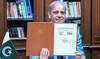
“The prime minister should set a new tradition by tendering his resignation after losing majority,” said Shehbaz Sharif, leader of the opposition in the national assembly, while addressing a joint news conference with other opposition leaders.
He maintained that “revenge was not in the [opposition’s] dictionary” while responding to a question about how the ministers and officials of the present administration would be treated after they were driven out their offices.
Earlier, two federal ministers belonging to MQM-P, Barrister Farogh Naseem and Syed Aminul Haq, resigned from their cabinet positions to join the opposition’s ranks.
“We are with you in this change and hope it will make a positive difference to the lives of people,” Dr. Khalid Maqbool Siddiqui, convener of the MQM-P, announced at the news conference.
The opposition had been struggling since March 8, when it submitted the no-confidence motion against the prime minister, to seek support of other lawmakers to reach the magical number of 172 to oust the government.
It also nominated Sharif for the coveted premiership slot after Khan’s exit.
Pakistan Peoples Party (PPP) chairman Bilawal Bhutto-Zardari also demanded the prime minister’s resignation, saying Khan had lost the majority and confidence of the house.
“Prime Minister of Pakistan Imran Khan has lost his majority,” he said. “Today, MQM Pakistan has joined the opposition ranks. Shehbaz Sharif has rightly given a challenge in the spirit of statesmanship to [PM Khan to] resign.”
Bhutto-Zardari added: “The prime minister does not have any option. Either he should resign or come to the parliamentary session tomorrow to settle this issue.”
He maintained the prime minister’s removal would help Pakistan resume its democratic journey again.
The PPP chairman also clarified his party’s working relationship with the MQM-P had nothing to do with the no-trust vote against the prime minister.
“Our conversations were underway from a long time,” he continued, adding: “We will have to work jointly for the prosperity of Karachi and Pakistan.”
Speaking on the occasion, Maulana Fazlur Rehman of the Jamiat-e-Ulama-e-Islam (JUI-F) rejected the prime minister’s claim that a foreign-funded conspiracy was behind the opposition’s efforts to topple the ruling administration.
“We want to become a nation,” he maintained. “Our aim is to achieve prosperity and stability in the country and we will work for it.”
The MQM-P signed two separate “charters of rights” with Bhutto-Zardari and Sharif in front of the media that included various demands, including the withdrawal of “false and fabricated” cases against them.
“We hope these agreements will stay and be implemented in letter and spirit,” Sharif said.
Political analysts said the prime minister should “show sportsman spirit” and resign from his position.
“The opposition has attained a majority in the national assembly without dissident lawmakers of the ruling party,” Zahid Hussain, a political analyst, told Arab News. “So, the prime minister should gracefully resign now.”


![]()

Opposition demands PM Khan’s resignation after PTI administration loses parliamentary majority

Short Url
https://arab.news/c366e
Opposition demands PM Khan’s resignation after PTI administration loses parliamentary majority
- The opposition has gone beyond the magical number of 172 required to topple the government with MQM-P’s support
- Political analysts say the prime minister should ‘gracefully resign’ from his position after losing his key coalition partner
Latest updates



© 2026 SAUDI RESEARCH & PUBLISHING COMPANY, All Rights Reserved And subject to Terms of Use Agreement.