


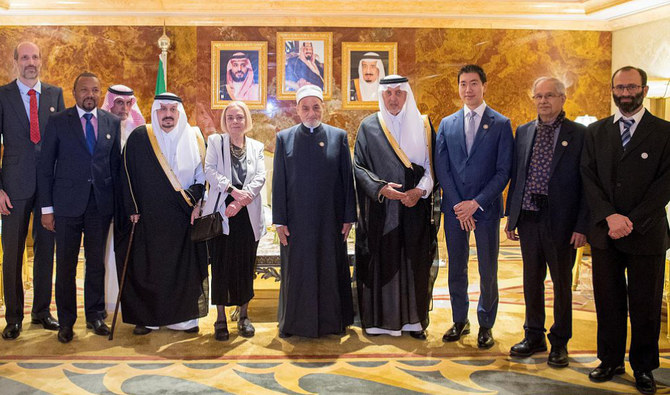

RIYADH: The winners of this year’s King Faisal Prize on Tuesday received their awards at a glittering ceremony staged in Riyadh.
The annual gongs — held under the auspices of King Salman — are the most prestigious in the Muslim world and recognize outstanding achievement in services to Islam, Islamic studies, Arabic language and literature, medicine, and science. 
The service to Islam prize was jointly awarded to former Tanzanian President Ali Hassan Mwinyi and Egyptian scholar Prof. Hassan Mahmoud Al-Shafei.
FASTFACT
Since 1979, the King Faisal Prize has awarded 282 laureates of 44 different nationalities who have made distinguished contributions to serving Islam, and humanity at large.
The Arabic language and literature award went to Prof. Suzanne Stetkevych and Prof. Muhsin Al-Musawi from the US.
American Prof. David Liu secured the medicine prize while the science accolade was shared by Prof. Martin Hairer of the UK and Prof. Nader Masmoudi of Tunisia. 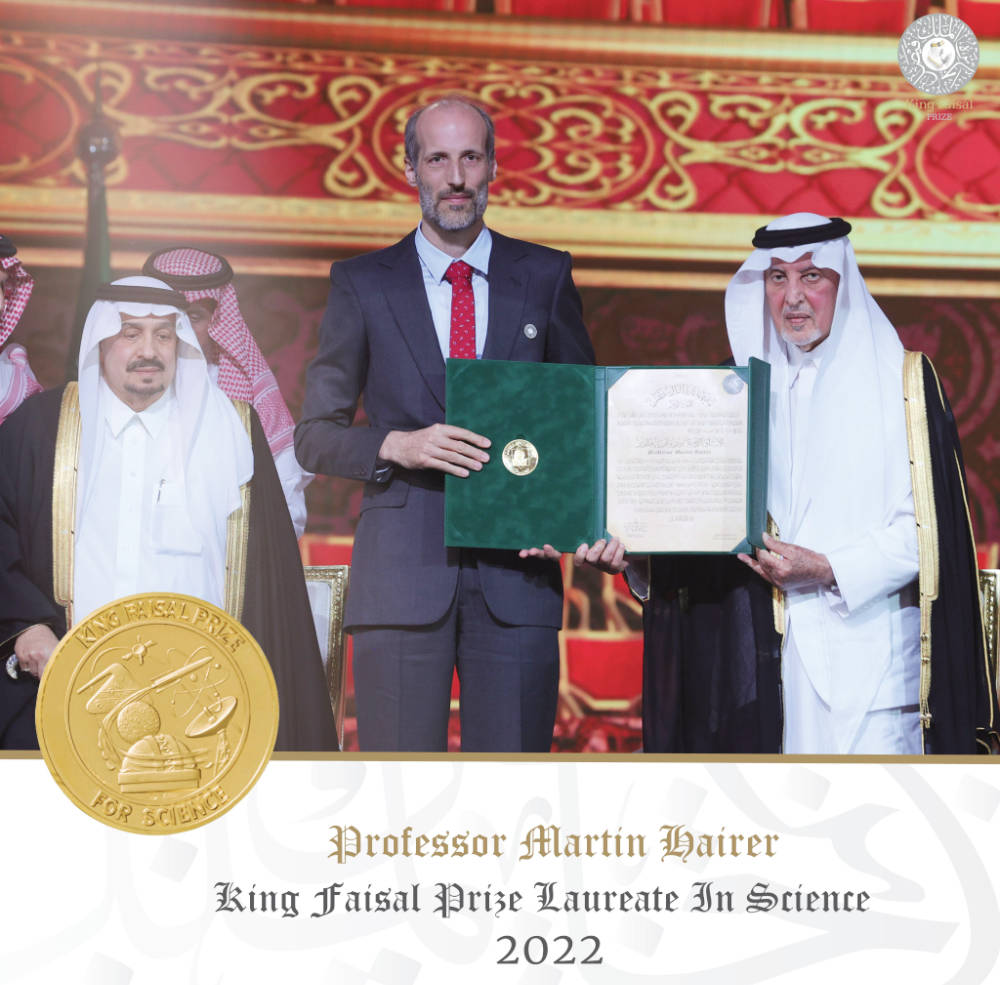
The Islamic studies prize, that this year focused on the Islamic heritage of Al-Andalus, was withheld because the nominated works did not meet the necessary criteria.
Mwinyi was honored for actively participating in Islamic advocacy and promoting religious tolerance. He established Islamic schools and translated many resources and references in hadith, jurisprudence, and the Prophet Mohammad’s biography into Swahili, the language spoken by millions of people in East Africa.
Al-Shafei, who was president of the Academy of the Arabic Language in Cairo from 2012 to 2020, held several academic positions and established a series of institutes concerned with Al-Azhar. He also contributed to the establishment of the International Islamic University in the Pakistani capital Islamabad.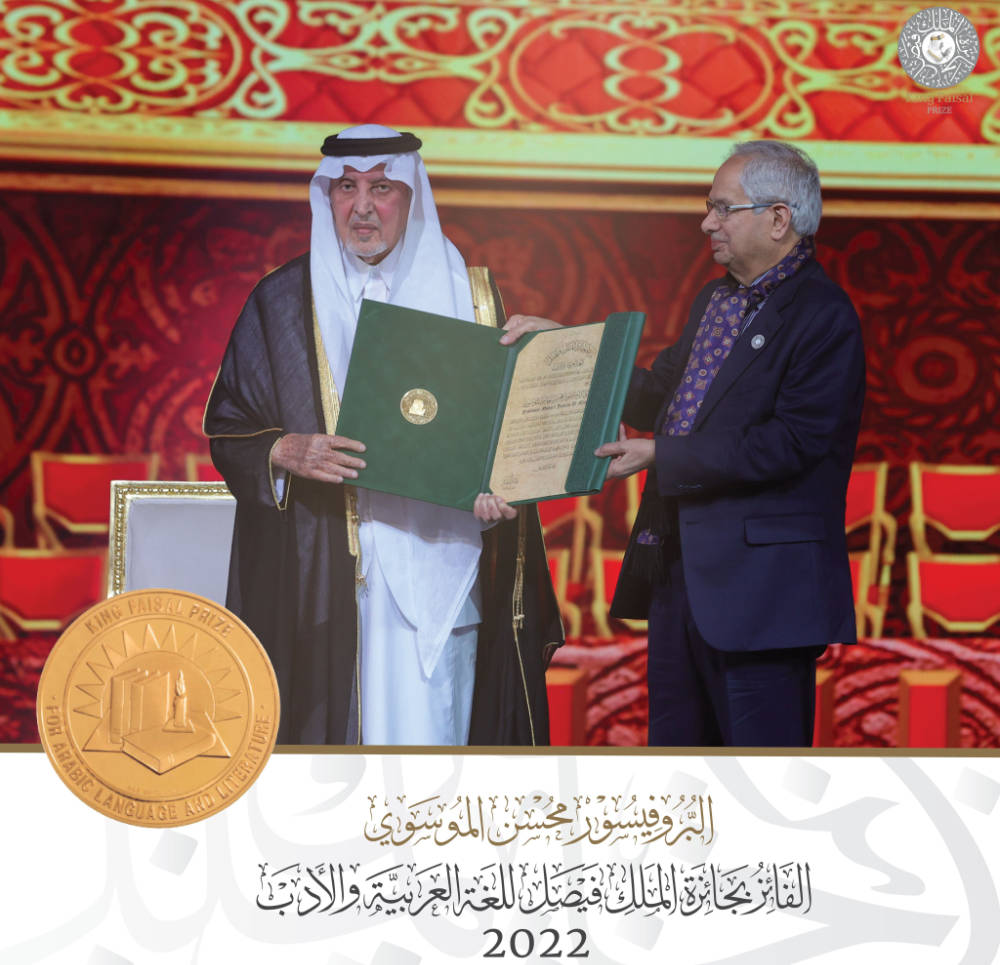
The Arabic language and literature prize was jointly presented to Stetkevych, chair of the department of Arabic and Islamic studies at Georgetown University, and Al-Musawi, professor of Arabic and comparative literary studies at Columbia University.
Stetkevych’s extensive research and numerous works have analyzed Arabic literature with unmatched depth from the pre-Islamic period to the Nahda/revivalist period. Her research approach, which is characterized by its application of varied methodologies, resulted in the renewal of the critical perspective and methods of studying classical Arabic poetry.
The research and studies of literary critic and novelist Al-Musawi have had a great impact on Arabic studies students and researchers in the Arab world and the West, through his distinctive methods of presentation, analysis, critical interpretation, and openness to Arab and international creative texts in prose and poetry.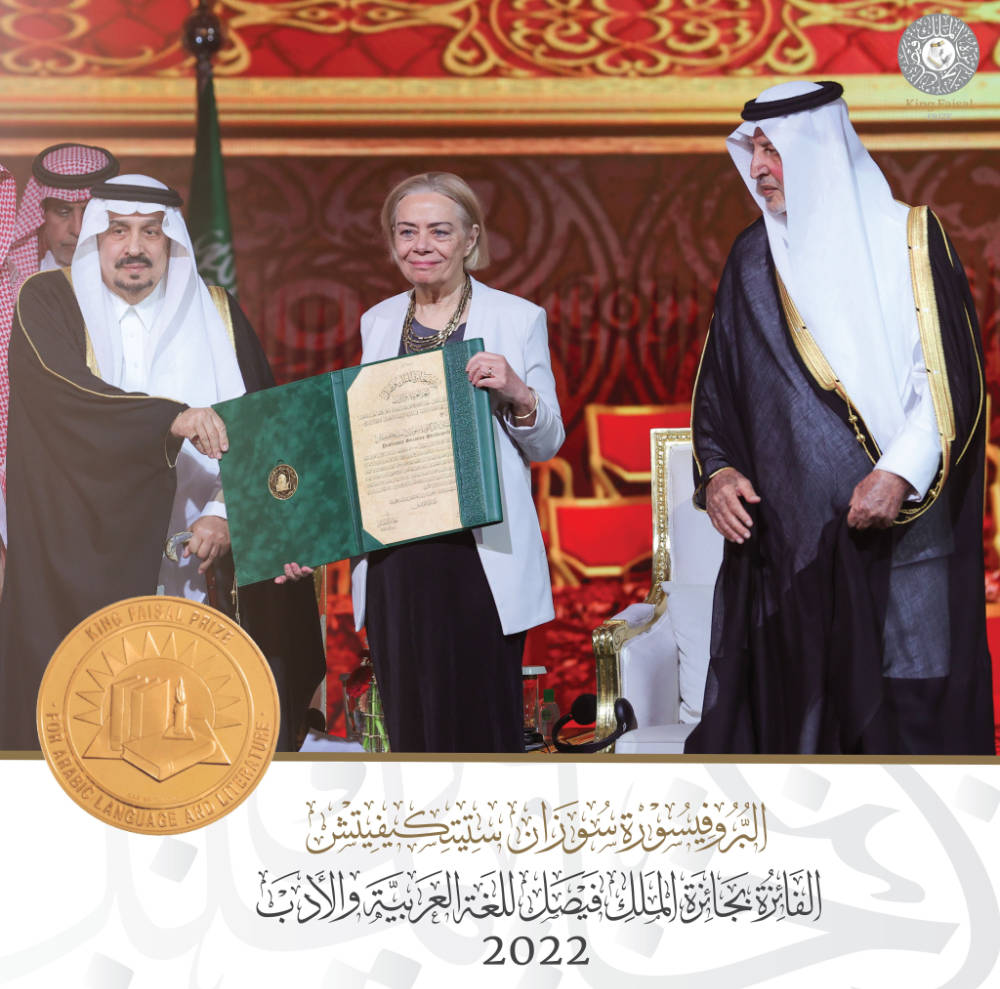
Meanwhile, the medicine prize concentrated on gene-editing technologies. Its winner Liu, director of the Merkin Institute for Transformative Technologies in Healthcare, invented the first so-called base editor to make alterations on DNA and genes by replacing letters in the DNA base.
Hairer, chair in probability and stochastic analysis at Imperial College’s mathematics department, was one of the science prize recipients. His work has been in the general area of probability theory with a focus on the analysis of stochastic partial differential equations. He recently developed the theory of regularity structures which gave a precise mathematical meaning to several equations that were previously outside the scope of mathematical analysis.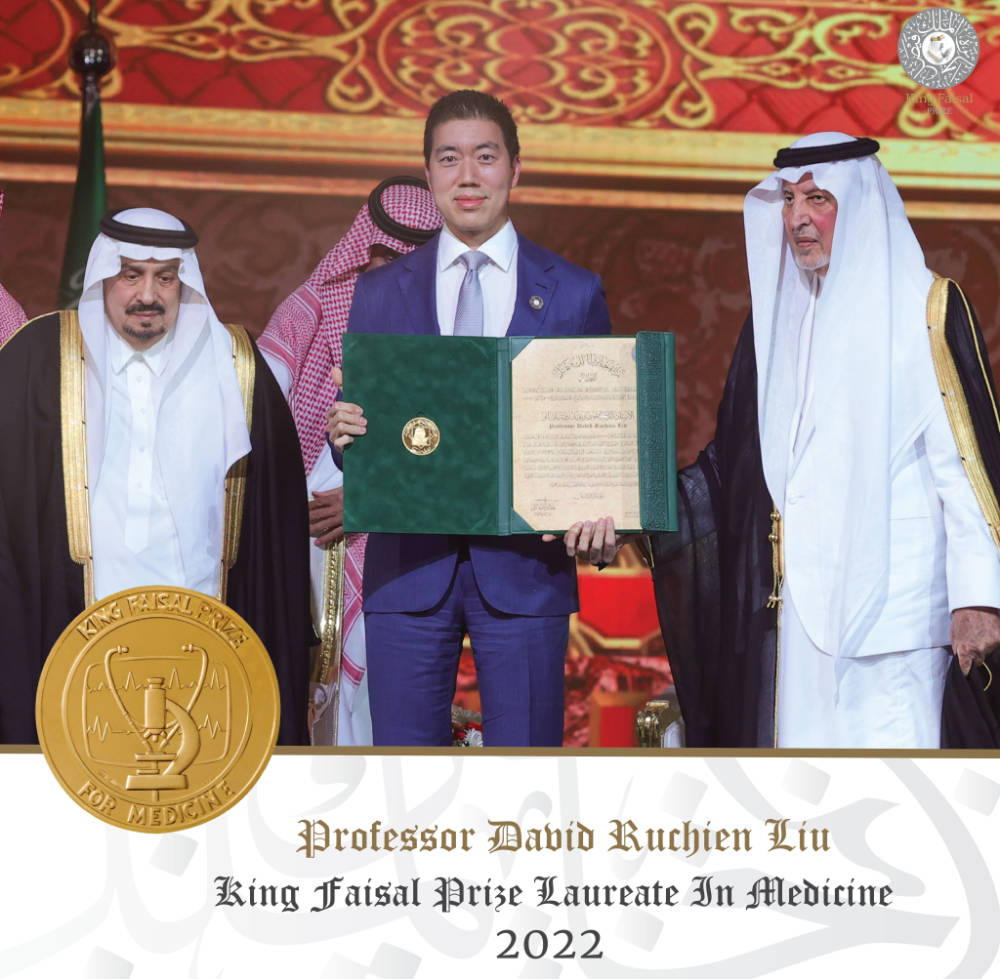
The other joint science award winner, Masmoudi, a professor of mathematics at the New York University of Abu Dhabi, unlocked the mystery surrounding many physics problems which have remained unsolved for centuries.
He found a flaw in (Leonhard) Euler’s mathematical equations, which for more than two centuries had described the motions of fluids under any circumstance. Masmoudi discovered that the equations did not apply to all circumstances, as previously thought, and his findings helped to solve a raft of conundrums related to fluid-modeling, such as weather predictions.
Since 1979, the King Faisal Prize has awarded 282 laureates of 44 different nationalities who have made distinguished contributions to serving Islam, and humanity at large.
Each winner received a $200,000 prize, a 24-carat gold medal, and a certificate written in Arabic calligraphy signed by chairman of the prize board, Prince Khalid Al-Faisal.


