

Oil drops $2 on positive signals from Russia-Ukraine peace talks

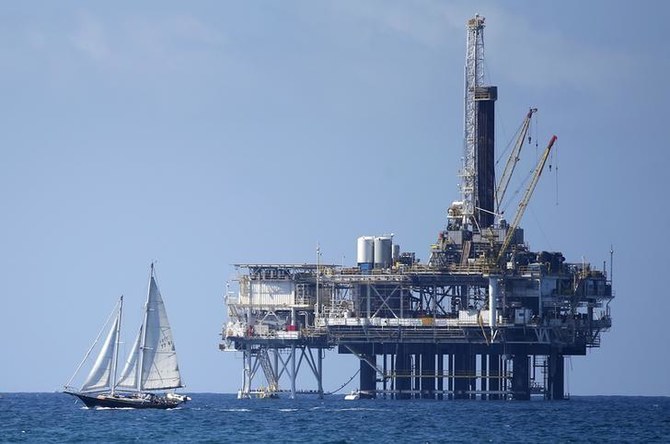
Brent crude settled down $2.25, or 2 percent, at $110.23 a barrel, while US West Texas Intermediate crude was down $1.72, or 1.6 percnt, at $104.24. Reuters/File
Short Url
Updated 29 March 2022
Follow

Oil drops $2 on positive signals from Russia-Ukraine peace talks

  • Shanghai lockdown expected to hit Chinese oil demand
  • Pipeline outage forces Kazakhstan to cut output by a fifth

HOUSTON: Oil prices closed down $2 on Tuesday, as talks progressed between Russia and Ukraine to end their weeks-long conflict, though Moscow negotiators said a promise to scale down some military operations did not represent a ceasefire.

Further weighing on oil futures, new lockdowns in China to curb the spread of the coronavirus prompted concerns that fuel demand could take a hit.

Brent crude settled down $2.25, or 2 percent, at $110.23 a barrel, while US West Texas Intermediate crude was down $1.72, or 1.6 percnt, at $104.24.

Each benchmark fell 7 percent on Monday and was down as much as 7 percent again early on Tuesday before bouncing off session lows.

Ukrainian and Russian negotiators met in Turkey for the first face-to-face discussions in nearly three weeks. The top Russian negotiator said the talks were “constructive.”

Russia promised to reduce its military operations around Kyiv and northern Ukraine; Ukraine proposed adoption of neutral status but with international guarantees that it would be protected from attack.

Oil came off session lows when Moscow’s lead negotiator cautioned that Russia’s promise to decrease military operations did not represent a ceasefire and a formal agreement with Kyiv had a long way to go.

New lockdowns in Shanghai to curb rising coronavirus cases also pressured prices on Tuesday as the market worried about a falloff in Chinese demand. Shanghai accounts for about 4 percent of China’s oil consumption, ANZ Research analysts said.

Lockdowns have dampened consumption of transportation fuels in China to a point where some independent refiners are trying to resell crude purchased for delivery over the next two months, traders and analysts said.

“China’s zero-COVID policy is bringing some relief to the oil market, albeit involuntarily, which is very tight due to the supply outages from Russia,” said Commerzbank analyst Carsten Fritsch.

Weakness in global oil demand is expected to persist through April and May, said Rystad Energy’s senior vice president of analysis, Claudio Galimberti, citing the Russia-Ukraine tensions, high oil prices and China’s COVID-19 situation.

Early in the session, oil prices rose almost $2 on continued disruption of Kazakhstan’s supplies and as major producers showed no sign of rushing to boost output significantly.

Kazakhstan is set to lose at least a fifth of its oil production for a month after storm damage to mooring points used to export crude from the Caspian Pipeline Consortium, the Energy Ministry said.

The OPEC+ producer group is expected to stick to its plan for a modest output rise in May despite high prices and calls from the US and other consumers for more supply.


SAL agrees $30m Aviapartner Liege acquisition to expand into Europe 

Updated 8 sec ago
Follow

SAL agrees $30m Aviapartner Liege acquisition to expand into Europe 

RIYADH: SAL Saudi Logistics Services Co. has agreed to acquire Belgium-based Aviapartner Liege SA for €28 million ($30.3 million), giving the Saudi logistics firm a foothold at one of Europe’s major air cargo hubs. 

Under a sale and purchase agreement signed with Aviapartner Belgium NV and Aviapartner Holding NV, SAL will acquire 100 percent of the company’s share capital on a cash-free, debt-free basis, according to a filing on Saudi Exchange. 

The acquisition gives SAL a full operational presence at Liege Airport in Belgium, a key European cargo hub, and is expected to support the company’s long-term growth strategy. 

SAL, which provides cargo handling and logistics services across Saudi airports, has been expanding its service portfolio as the Kingdom invests heavily in aviation and supply-chain infrastructure under Vision 2030. 

In the Tadawul filing, the company stated: “This acquisition supports SAL’s international expansion strategy by establishing an operational footprint at a key European cargo hub, expanding its cargo ground handling and logistics service offerings at international airports, geographically diversifying its revenue streams, and leveraging operational synergies through access to established infrastructure, airline relationships, and a mature operating environment.” 

The deal is strategically significant because Liege Airport has emerged as one of Europe’s most important air cargo hubs and a rapidly expanding gateway for global freight flows. 

The Belgian airport is the fifth-largest cargo airport in Europe and has recorded strong growth in recent years, handling more than 1.3 million tonnes of cargo in 2025 as volumes rose about 14 percent year on year. 

The transaction will be financed through the company’s available cash resources and remains subject to customary closing conditions and regulatory approvals. 

Aviapartner Liege, based in Liege, Belgium, primarily provides ground handling and cargo services. 

Financial disclosures show Aviapartner Liege generated revenues of €24.7 million in 2023, rising to €28.6 million in 2024 before declining to €24.3 million in 2025. 

SAL said it expects the transaction to have a positive long-term impact on its financial performance following completion and consolidation of the acquired company’s financial results.  

The company added that no related parties were involved in the transaction, which was signed on March 4.