

KSrelief, UNICEF in $7m program to support Yemeni children

1 / 2
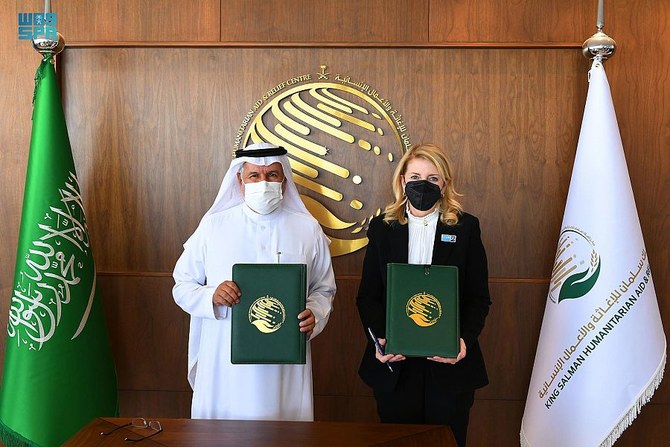
KSrelief on Tuesday signed a $7 million joint cooperation agreement with UNICEF to support Yemeni children’s access to quality education. (SPA)
2 / 2
KSrelief on Tuesday signed a $7 million joint cooperation agreement with UNICEF to support Yemeni children’s access to quality education. (SPA)
Short Url
Updated 29 March 2022
Follow

KSrelief, UNICEF in $7m program to support Yemeni children

  • Almost 600,000 children and 7,000 teachers, as well as 54,000 Yemeni people, will benefit from services provided under the agreement
  • Children will receive support for their psychological and physical well-being

RIYADH: Saudi Arabia’s King Salman Humanitarian Aid and Relief Center on Tuesday signed a $7 million joint cooperation agreement with the UN aid organization UNICEF to support Yemeni children’s access to quality education.

Almost 600,000 children and 7,000 teachers, as well as 54,000 Yemeni people, will benefit from services provided under the agreement.

KSrelief so far has implemented 26 educational projects worth almost $122 million in Yemen, in addition to implementing several joint projects with the UN and international organizations to support the country’s educational sector.

Under the agreement, an educational strategy is expected to be developed for displaced children in the conflict-racked country to ensure they receive quality education in safe environments.

Children will receive support for their psychological and physical well-being, while training programs will help teachers deal with those affected by the war.

The two sides were represented in the agreement by Abdullah Al-Rabeeah, KSrelief supervisor general, and Catherine Russell, UNICEF executive director.

As part of the agreement, a campaign will seek to raise parents’ awareness of the importance of returning their children to school to build their future through education.

Al-Rabeeah said that the agreement is an extension of the Kingdom’s humanitarian efforts to support the educational sector in Yemen, and to promote “this important and vital sector as it is a main engine for the prosperity of societies and a main artery toward the progress of nations.”

He added that the center, in partnership with UNICEF, continues to support and provide care for Yemeni children.

KSrelief and the UN organization have helped millions of children in Yemen and other countries where the two sides work closely together, he said.


Saudi Arabia protects rare marine ecosystems with 2 new reserves

Updated 12 November 2025
Follow

Saudi Arabia protects rare marine ecosystems with 2 new reserves

  • Aim to protect 30% of Saudi by 2030
  • Unique biodiversity and tourism value

RIYADH: Saudi Arabia’s Council of Ministers has included the Ras Hatiba and Blue Holes marine areas on the Kingdom’s national list of reserves, the Saudi Press Agency reported recently.

The move reflects Saudi Arabia’s commitment to protecting biodiversity and advancing sustainable development goals under Vision 2030, the SPA reported.

Mohammed Qurban, CEO of the National Center for Wildlife, said the decision followed extensive biological, natural, and social studies confirming the two reserves’ unique biodiversity, and economic and tourism value.

Located northwest of Jeddah, Ras Hatiba covers 5,715 sq. km and features coral reefs, mangroves, and seagrass beds — key habitats for green turtles, dugongs, whales, dolphins, and sharks.

The Blue Holes areas are rich in marine life, including turtles, fish, mammals, and invertebrates. Their discovery was first announced in 2022 after 20 such formations were found along the southern Red Sea coast.

With the addition of these two protected areas, the Kingdom’s nature reserves now cover 16.1 percent of its territory, up from 6.5 percent, and moving closer to the national goal of 30 percent by 2030.