KABUL, Afghanistan: A news presenter on Afghanistan’s TOLO TV wept as he read the announcement. Images of girls crying after being turned back from school flooded social media. Aid groups and many others remained baffled.
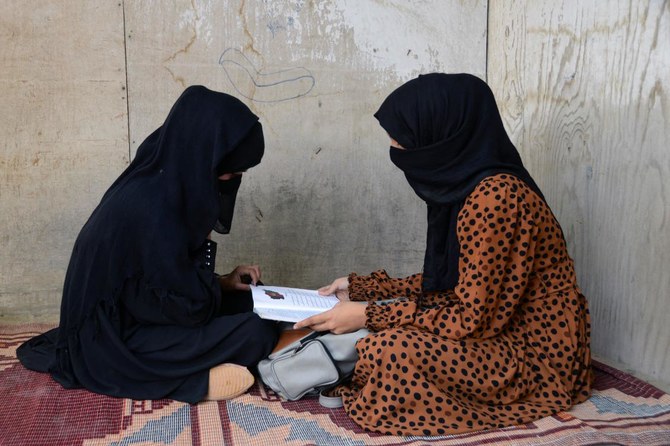
The Taliban have so far refused to explain their sudden decision to renege on the pledge to allow girls to go to school beyond sixth grade. Schools were supposed to reopen to older girls on Wednesday, the start of the new school year.
The ban caught even the Taliban-appointed Education Ministry unprepared. In many places across Afghanistan, some girls in higher grades returned to schools, only to be told to go home.
The move may have been designed to appease the Taliban’s hard-line base but it came at the expense of further alienating the international community, which has been reluctant to officially recognize Afghanistan’s new rulers, concerned the Taliban would impose similar harsh measures and restrictions — particularly limiting women’s rights to education and work — as when they previously ruled the country in the late 1990s.
The United Nations children’s agency told The Associated Press on Thursday they were blindsided by the announcement.
“I think that yesterday was a very confusing day for all of us,” said Jeannette Vogelaar, UNICEF’s chief of education in Afghanistan.
“We were blindsided,” said Sam Mort, UNICEF’s communications chief in Afghanistan. “All the messages, all the actions that had been taking place led us to believe that schools were opening, and as we understand it, that’s what our counterparts in the Ministry of Education believed as well.”
Ahead of the planned reopening, in remote and deeply conservative villages — where women teachers may not have been available to educate girls — arrangements were made for older male teachers, who were considered acceptable, to step in and teach all-girls classes beyond sixth grade.
Coincidentally or not, the Taliban leadership was summoned on Wednesday to southern Kandahar province amid rumors of a Cabinet shuffle, which was later denied. Still, reports have persisted of declining health of the elderly, Taliban-appointed Prime Minister Hasan Akhund, a hard-liner.
Since the Taliban seized power in mid-August during the last weeks of the chaotic withdrawal of US and NATO forces from Afghanistan, there have been reports of divisions among Taliban leaders, with lines drawn between the hard-liners and pragmatists.
It’s unclear whether a tussle among the Taliban on how to rule the country could have contributed to Wednesday’s ban but Torek Farhadi, an analyst who has advised past Afghan governments, called it a misfire.
“They really messed up by not keeping their word,” he said of the Taliban.
Afghanistan’s PenPath Volunteers, a group that works to promote education programs for all in rural areas, is planning to launch demonstrations against the Taliban ban, said Matiullah Wesa, the organization’s founder.
Started in 2009 by two brothers from the Taliban heartland of southern Kandahar, the organization has secret schools and thousands of volunteers distributing schools supplies across the country.
In Kabul on Wednesday, sisters Raihana Mirzakhail, 18, and Suria Mirzakhail, 17, showed up at their Mawlana Jalaluddin Mohammad Balkhi School. Their teacher started taking down attendance for the eleventh grade, when another teacher came into the classroom and told all the girls to go home.
“We were told this is not our school anymore,” said Suria. “We became so hopeless.” She and her sister had dreams to go to university.
“They broke our hearts ... we have nothing else to do at home,” Raihana said. “Other Islamic countries allow their boys and girls to be educated and that is why they are able to progress.”
On TOLO TV, announcer Sebghat Sepehr broke down Wednesday as he interviewed Soraya Paikin, a former deputy higher education minister, and rights activist Mahboba Siraj about the ban.
His voice broke, he started to cry and struggled to finish his question.


![]()

Many baffled by Taliban reneging pledge on girls’ education
Short Url
https://arab.news/myack
Many baffled by Taliban reneging pledge on girls’ education
- The Taliban have so far refused to explain their sudden decision to renege on the pledge to allow girls to go to school beyond sixth grade
- Schools were supposed to reopen to older girls on Wednesday, the start of the new school year


Latest updates


© 2026 SAUDI RESEARCH & PUBLISHING COMPANY, All Rights Reserved And subject to Terms of Use Agreement.