‘A revolution:’ In a first for Pakistan, woman becomes chief of Sindh's Soho tribe

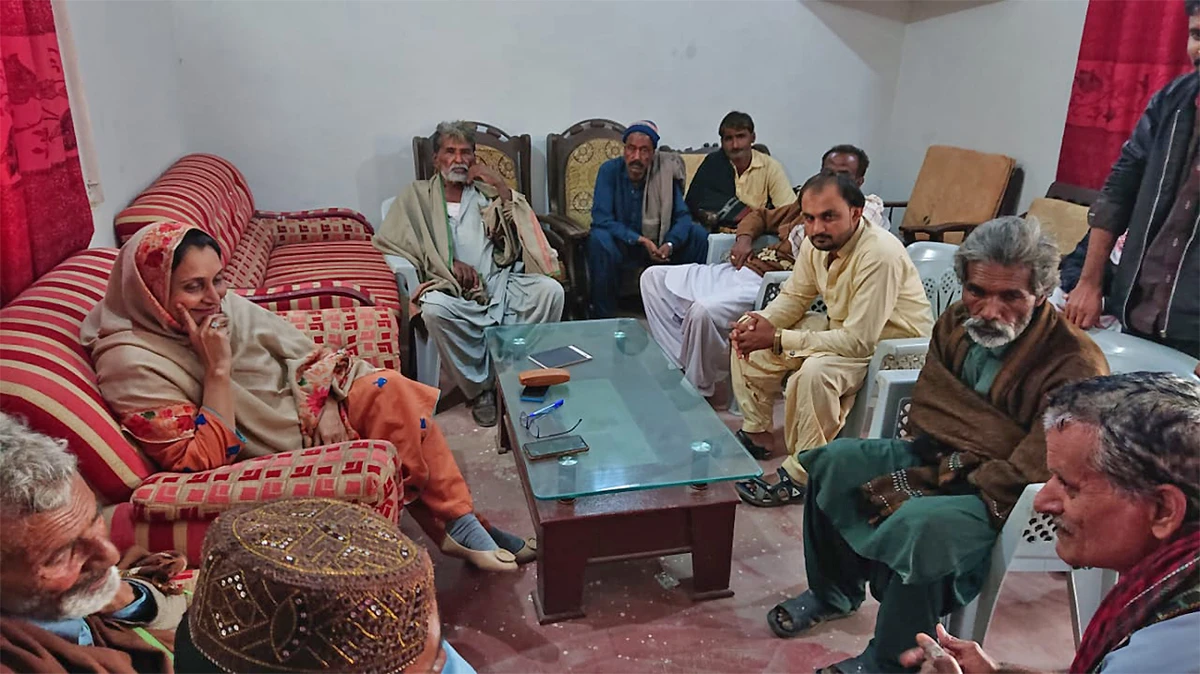
Heer Ismail Soho (left), a lawmaker at the provincial assembly of Sindh, chairs a public gathering in her constituency, Sujawal, Pakistan, on January 8, 2022. (@HeerSoho/Twitter)
Short Url
Updated 23 March 2022
Follow

‘A revolution:’ In a first for Pakistan, woman becomes chief of Sindh's Soho tribe

  • The Soho tribe’s chieftain, Muhammad Ismail Soho, died of the coronavirus in February
  • His daughter Heer Ismail Soho will assume the title at condolence reference for her father in May

KARACHI: A woman who has been appointed the chief of her tribe in the southern Sindh province, a first for Pakistan, called it a “huge honour” and said she had the backing of her family and community members in running the affairs of the clan.
The Soho tribe is spread across Sindh but dominates the Mirpur Bathoro area of the Sujawal coastal district. It's chieftain, Muhammad Ismail Soho, died of the coronavirus in February. His clan subsequently chose his daughter Heer Ismail Soho, a lawmaker at the provincial assembly of Sindh, as its new chief.
Sindh, where tribalism is rampant, does not have a tradition of women being appointed chiefs of clans. On the contrary, women education and employment rates are low. According to a survey by the Sindh-based Sindh Suhai Sath rights advocacy group, 128 women were killed in the province in 2021 in incidents of honour killing, in which family members believe they are restoring their honour by killing women who have eloped or had an unsanctioned relationship outside marriage.
“This is a huge honour for me but a big challenge as well as I will need to resolve the issues of my community, which lives in the coastal belt mostly and is faced with many problems,” Soho told Arab News in a telephone interview, calling her appointment a “revolution.”
Outlining some of the main problems of her community, she said her top priorities were the provision of drinking and agriculture water and opening of schools.
Soho’s uncle Ghulam Rasool Soho said the decision to choose a woman as the tribal chief was taken because of Soho's leadership qualities and as an attempt to change rigid mindsets in the region.
“Heer is chosen because she is politically active and can better lead and guide the tribe,” Ghulam said. “While a man can lead a tribe, a woman can lead and guide her people in a much better manner.” 
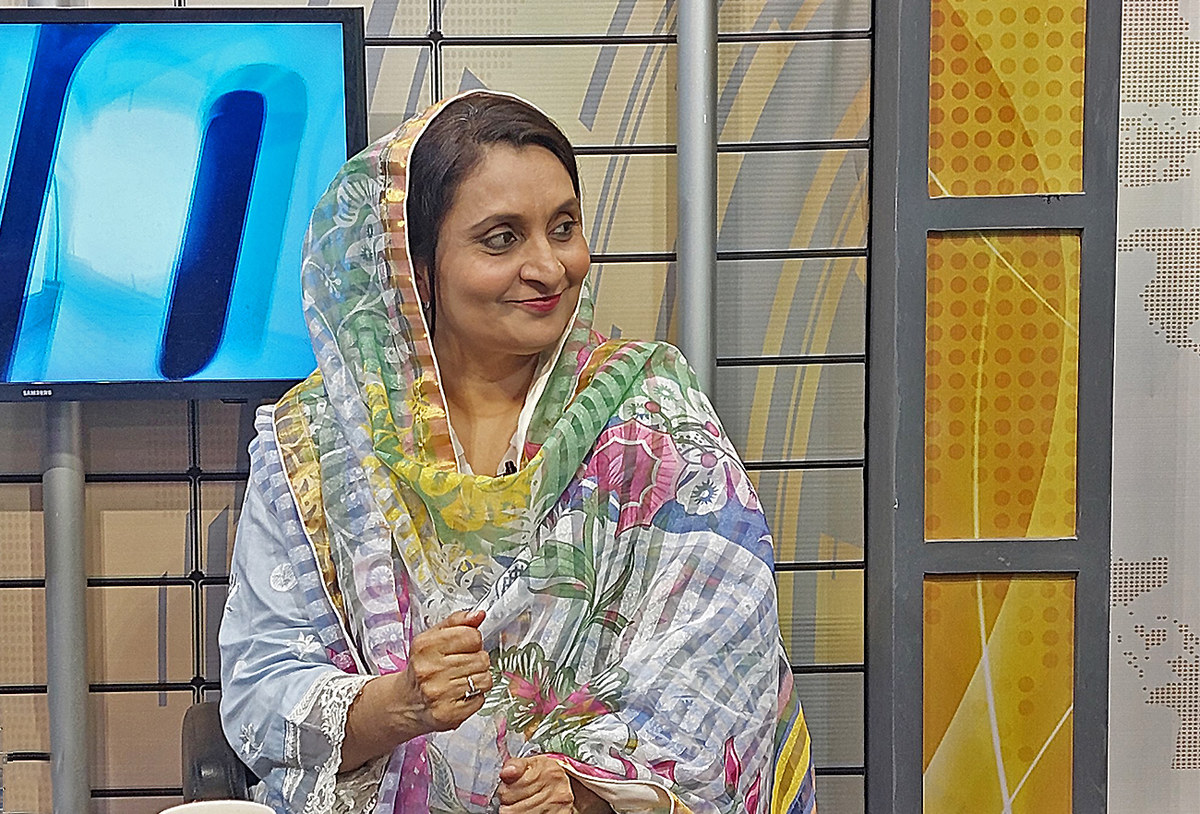


Heer Ismail Soho, a lawmaker at the provincial assembly of Sindh, gestures during a talkshow in Karachi, Pakistan, on January 19, 2022. (@HeerSoho/Twitter)

He said the decision was taken before the death of his brother and had the backing of the tribe’s spiritual leader, Hafiz Ghulam Muhammad Soho, a top cleric in the province who holds massive influence over tribesmen as well in the area's social, political and religious circles.
“My elder brother, Muhammad Ismail Soho, who was the sardar (chief) of the tribe, consulted us brothers before his death and it was our consensus decision to appoint my niece Heer Ismail Soho as the head of the tribe,” Ghulam Rasool said.
Heer will formally assume the title at a condolence reference for her father scheduled to be held after the Eid holiday in May, her uncle said, adding that she would wear the traditional turban, worn by tribal leaders.
Ghulam Rasool said the decision to make Heer the chieftain was also important in the context of the Sindh province, where women were frequently killed for so-called honour and not given their due rights.  
“The selection of a woman as the tribe’s head in Sindh is a blessing and it will set a brilliant tradition for others and change the mindsets,” he said. “Our society and our country will start progressing once we start giving leadership roles to competent woman.”  
Heer, an active political figure, was first elected as a member of the provincial assembly from the Muttahida Qaumi Movement (MQM) party in 2002. She unsuccessfully contested for the national and provincial assemblies in 2008 and 2013 respectively.
In 2018, Heer quit the MQM and joined the Pakistan Peoples Party (PPP), which rules the province, and was nominated as a member of the Sindh Assembly on a seat reserved for women.

Pakistan offers Kyrgyzstan Arabian Sea access as two states sign 15 cooperation accords

Updated 05 December 2025
Follow

Pakistan offers Kyrgyzstan Arabian Sea access as two states sign 15 cooperation accords

  • Pakistan and Kyrgyzstan sign MOUs spanning trade, energy, agriculture, ports, education, security cooperation
  • Kyrgyz president is on first visit to Pakistan in 20 years as both sides push connectivity and CASA-1000 power links

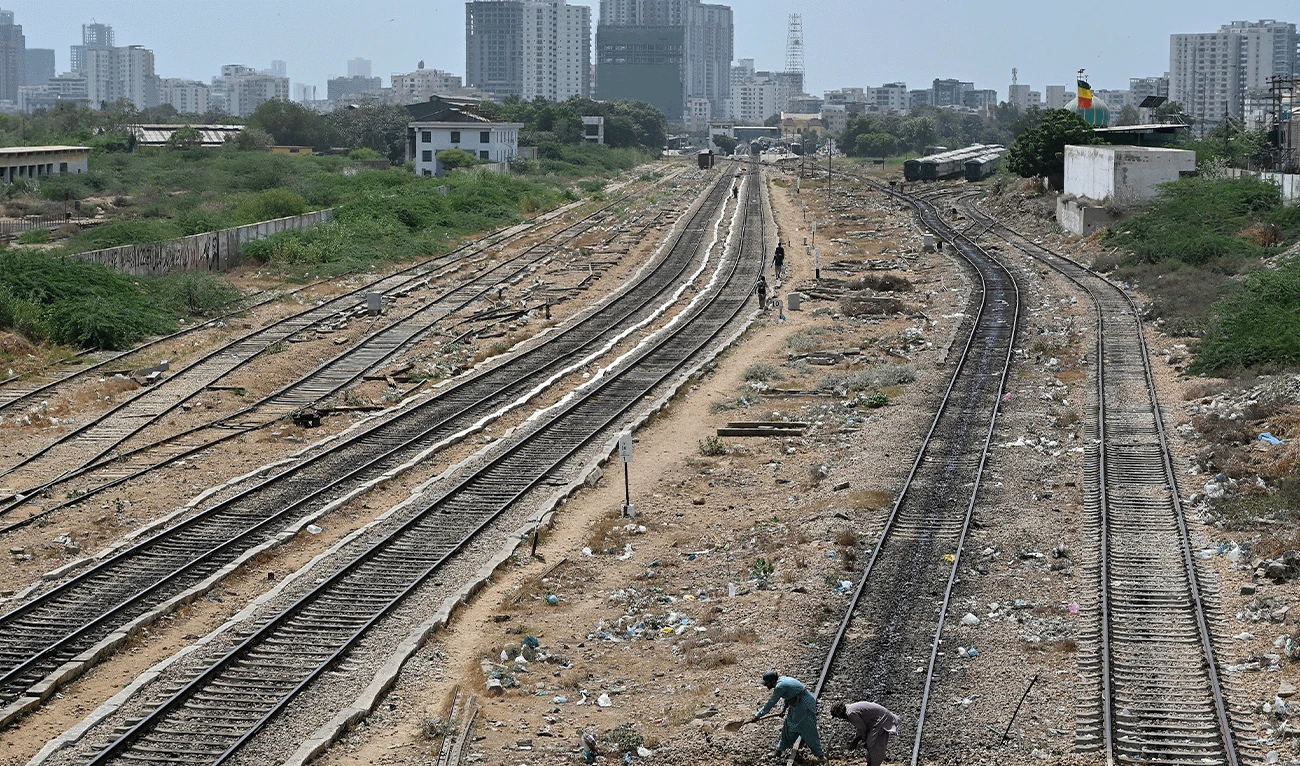
ISLAMABAD: Pakistan on Thursday offered Kyrgyzstan the shortest and most economical route to the Arabian Sea as the two countries signed 15 agreements and memoranda of understanding aimed at boosting cooperation across trade, energy, agriculture, education, customs data-sharing and port logistics.

The accords were signed during a visit to Islamabad by President Sadyr Zhaparov, the first by a Kyrgyz head of state to Pakistan in two decades, and part of Islamabad’s renewed push to link South Asia with landlocked Central Asian economies through ports, power corridors and transport routes.

For Pakistan, Kyrgyzstan offers access to hydropower through CASA-1000, a $1.2 billion regional electricity transmission project designed to carry surplus summer electricity from Kyrgyzstan and Tajikistan through Afghanistan into Pakistan. For Bishkek, Pakistan provides overland access to warm-water ports on the Arabian Sea, creating a shorter commercial route to global markets.

“President Asif Ali Zardari has reiterated Pakistan’s readiness to offer Kyrgyzstan the shortest and most economical route to the Arabian Sea,” Radio Pakistan reported after Zhaparov met the Pakistani president. 

The two leaders also discussed expanding direct flights to deepen business, tourism and people-to-people ties.

Zardari welcomed Kyrgyzstan’s completion of its segment of the CASA-1000 project and “reaffirmed Pakistan’s commitment to completing its part of the project, which is now at an advanced stage,” the state broadcaster said. 

Zhaparov thanked Islamabad for supporting Bishkek’s candidacy for a non-permanent UN Security Council seat and invited Zardari to visit Kyrgyzstan at a time of his convenience. Both sides expressed satisfaction with progress under the Quadrilateral Traffic in Transit Agreement, designed to facilitate road movement between Pakistan, Kyrgyzstan, Kazakhstan and China.

Earlier, both governments exchanged 15 sectoral cooperation documents covering commerce, mining, geosciences, power, agriculture, youth programs, the exchange of convicted persons, customs electronic data systems and a sister-city linkage between Islamabad and Bishkek.

According to APP, the MOUs were signed by ministers representing foreign affairs, commerce, economy, energy, power, railways, interior, culture, health and tourism. Agreements also covered cooperation between Pakistan’s Foreign Service Academy and the Diplomatic Academy of Kyrgyzstan, as well as collaboration between universities, youth ministries and cultural institutions.

“Our present mutual trade, comprising of about $15–16 million will be enhanced to $200 million in the next two years,” Prime Minister Shehbaz Sharif said after the agreements were signed, calling them “a framework for structured, result-oriented engagement and closer institutional linkages.”

Sharif said Pakistan was ready to serve as a maritime outlet for the landlocked Central Asian republic, offering access to Karachi, Port Qasim and Gwadar to help Kyrgyz goods reach regional and global markets.