

Wildlife center releases gazelles, oryxes into King Khalid Royal Reserve

1 / 2
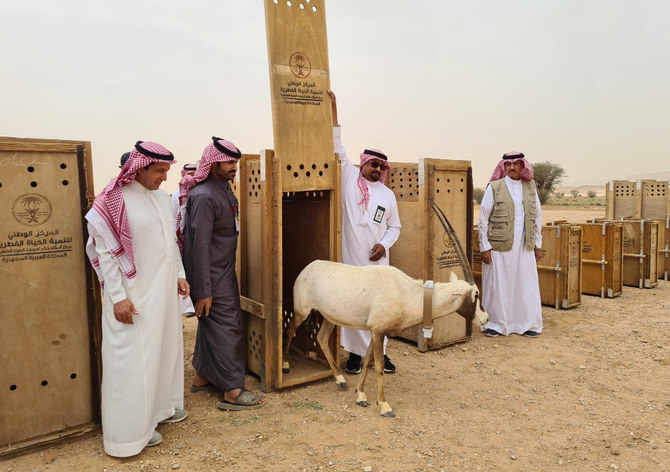
Dr. Talal AlHarigi (Right), and Ahmed Al-Touq (Left), Director General of Studies at the National Center for Wildlife, moments after opening the doors for the oryx to return to its original habitat. (SPA)
2 / 2
Dr. Talal AlHarigi (Right), and Ahmed Al-Touq (Left), Director General of Studies at the National Center for Wildlife, moments after opening the doors for the oryx to return to its original habitat. (Supplied/NCW)
Short Url
Updated 21 March 2022
Follow

Wildlife center releases gazelles, oryxes into King Khalid Royal Reserve

  • Reintroduction of 50 antelopes part of wider program to protect endangered species
  • Move will help to restore biodiversity, improve environmental balance, center’s CEO says

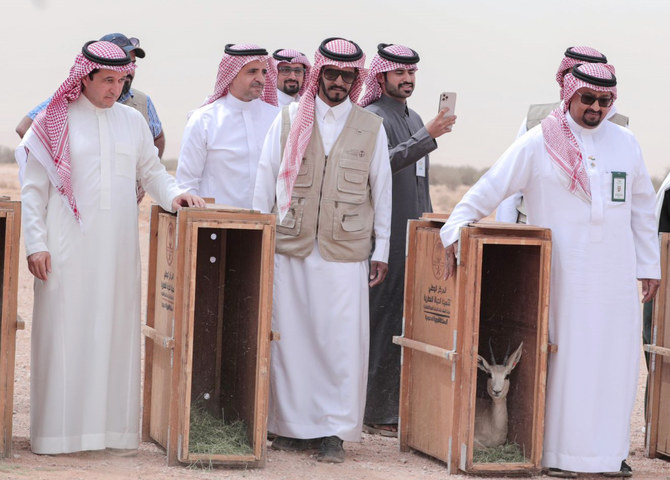
RIYADH: The National Center for Wildlife on Monday released 20 Arabian oryxes and 30 rhim gazelles into King Khalid Royal Reserve as part of a program to reintroduce endangered species to their natural environments across the Kingdom.

The move was in collaboration with the Imam Abdul Aziz bin Mohammad Royal Reserve Development Authority.

Dr. Muhammad Ali Qurban, the center’s CEO, said the reintroduction of local species threatened with extinction would help to restore biodiversity, improve the environmental balance and solidify the concept of environmental sustainability.
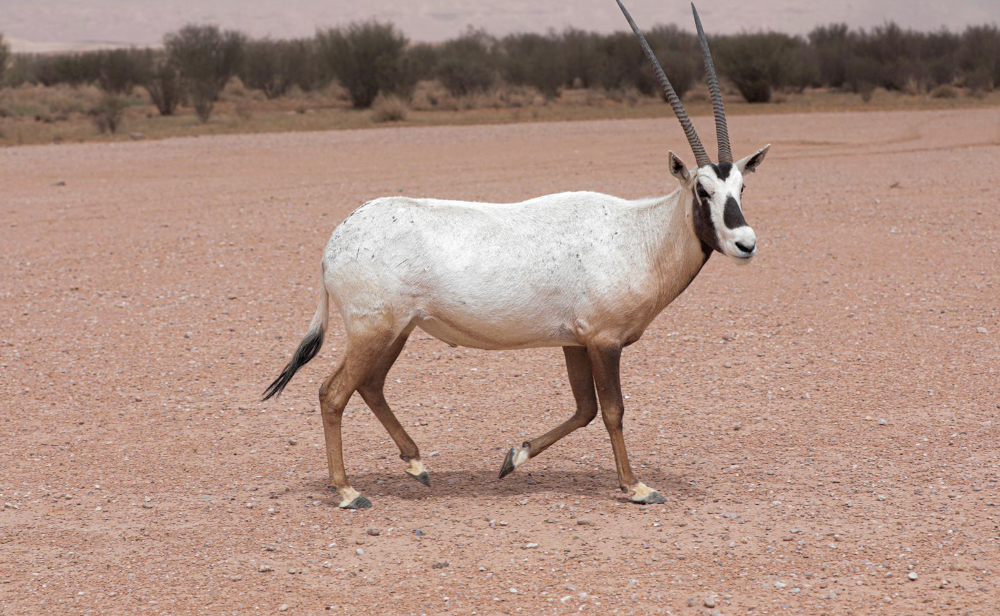
The program is part of the Kingdom’s Vision 2030, which aims to create a better environment and improve living standards.

Qurban said the wildlife center had researched the best time to reintroduce the gazelles and oryxes. As well as the animals, it aimed to reintroduce more than 1,000 fungal organisms this season across all reserves and national parks, he added.

The center uses the latest technology to monitor animal populations and collect data about the biodiversity in each of the reserves.

The IARDA, which oversees two royal reserves — the Imam Abdul Aziz bin Muhammad Royal Reserve and King Khalid Royal Reserve — also aims to maintain ecological balance and restore biodiversity.
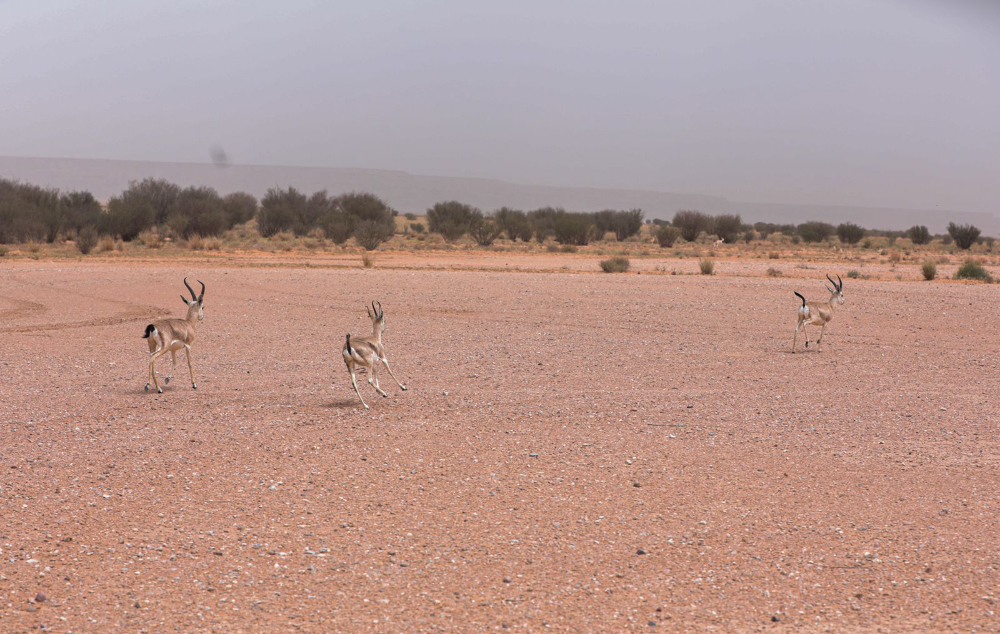
The two reserves, which cover about 12,000 sq. km northeast of Riyadh, are similar in topography and both are crossed by the Urmah mountains. These play a central role in supporting the ecosystems of the two reserves by creating beautiful wadis and balanced habitats for the many species that are found there.

“The two most difficult challenges those (antelope) species have faced in the wild is overhunting and loss of habitat,” Dr. Talal Al-Harigi, IARDA’s CEO, said.

“The effect of both challenges has caused a decrease of species abundance in the area.”

Al-Harigi told Arab News that the development authority was working to eliminate threats through four main initiatives. These are: rewilding wildlife species with an emphasis on endangered ones, increasing vegetation coverage, promoting environmental awareness, and managing and regulating hunting and grazing activities.


Ithra will bring Spain to life for 2-week cultural celebration

Updated 08 January 2026
Follow

Ithra will bring Spain to life for 2-week cultural celebration

  • Ithra Cultural Days will unfold across the plaza, museum, theater, lush garden, library, idea lab, cinema, children’s museum, energy exhibit and Ithra tower

DHAHRAN: Visitors to the King Abdulaziz Center for World Culture (Ithra) can enjoy a taste of Spanish culture from Jan. 12-31.

Under the banner “Live Spain,” spaces at Ithra will be transformed to give a glimpse of life in this vibrant European country.

Ithra Cultural Days will unfold across the plaza, museum, theater, lush garden, library, idea lab, cinema, children’s museum, energy exhibit and Ithra tower, with exhibitions dedicated to Spanish photography, fashion and sports. There will also be Spanish cuisine and interactive installations exploring historical and linguistic connections between Arab and Spanish traditions.

There will be live performances across various stages, with a production of “Carmen” among the highlights.

“Cultural exchange is a core part of Ithra’s approach to programming. Celebrating Spain’s culture and history reflects this focus, particularly as this year’s Cultural Days take on a distinctive character by exploring Spain’s cultural heritage,” Noura Alzamil, program manager at Ithra, said.

“Visitors to Ithra will experience an exciting program in every sense, given the scale and variety of events designed to appeal to all tastes and interests.”

Cinema showings will feature Spanish short and feature films, accompanied by post-screening discussions to provide additional cultural context, while talks and sessions in the idea lab and library will explore architecture, literature and creative practice.

Hands-on workshops will invite visitors to engage directly with Spanish crafts and creative traditions, from visual arts and design to food-related practices.

A dedicated program for children and youth will run alongside with storytelling, creative workshops and performances among the attractions. Food and market experiences in Ithra’s public spaces will reflect the important social role played in the country by food.

Ithra Cultural Days present international cultures through immersive, public-facing experiences. This year’s focus on Spain follows the success of last year’s Japan edition, which welcomed more than 200,000 visitors in just two weeks.