JEDDAH: Concerns grew on Friday that the US planned to remove the Islamic Revolutionary Guard Corps from its blacklist of terrorist organizations as part of a revived nuclear deal with Iran.
The IRGC has been subject to US sanctions since 2007 as part of the US Specially Designated Global Terrorist list, and in 2017 it became the first national military to be designated by the US as a Foreign Terrorist Organization.
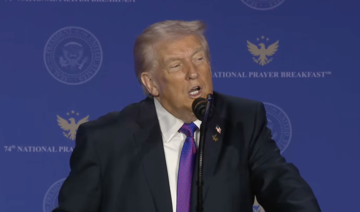
“The IRGC is the Iranian government’s primary means of directing and implementing its global terrorist campaign,” President Donald Trump said at the time.
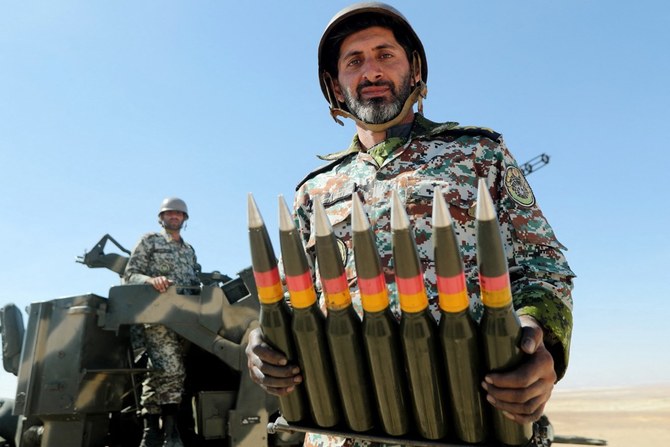
The Revolutionary Guards control a business empire in Iran, as well as military and intelligence forces responsible for terrorist attacks throughout the world.
Analysts now believe the US plans to remove the terrorist designation in return for Iranian assurances about reining in the IRGC. It is thought to be the last and most troublesome issue in wider indirect talks on reviving the 2015 nuclear deal.
Such a move would be fiercely opposed by the Gulf states, and Israel made its concern known in a joint statement on Friday by Prime Minister Naftali Bennett and Foreign Minister Yair Lapid. “The attempt to delist the IRGC as a terrorist organization is an insult to their victims and would ignore documented reality supported by unequivocal evidence,” they said.
“We find it hard to believe that the IRGC’s designation as a terrorist organization will be removed in exchange for a promise not to harm Americans. The US will not abandon its closest allies in exchange for empty promises from terrorists.”


Fears grow over possible removal of Iran’s Revolutionary Guard from US terror list
https://arab.news/vh5cm
Fears grow over possible removal of Iran’s Revolutionary Guard from US terror list


US condemns RSF drone attack on World Food Programme convoy in Sudan’s North Kordofan
WASHINGTON: The US has condemned a drone attack on a World Food Programme (WFP) convoy in Sudan’s North Kordofan state that killed one person and injured three others.
“The United States condemns the recent drone attack on a World Food Program convoy in North Kordofan transporting food to famine-stricken people which killed one and wounded many others,” US Senior Adviser for Arab and African Affairs Massad Boulos wrote on X.
“Destroying food intended for people in need and killing humanitarian workers is sickening,” the US envoy wrote.
“The Trump Administration has zero tolerance for this destruction of life and of U.S.-funded assistance; we demand accountability and extend our condolences to all those affected by these inexcusable events and terrible war,” he added.
The United States condemns the recent drone attack on a World Food Program convoy in North Kordofan transporting food to famine-stricken people which killed one and wounded many others. This follows an attack earlier this week in Blue Nile state that injured a @WFP staff member.…
— U.S. Senior Advisor for Arab and African Affairs (@US_SrAdvisorAF) February 6, 2026
Since April 2023, the conflict between Sudan’s army and the paramilitary Rapid Support Forces (RSF) has killed tens of thousands, displaced 11 million and which the UN has described as one of the world’s worst humanitarian crises.
An alert issued by the Integrated Food Security Phase Classification (IPC), confirmed famine conditions in El-Fasher and Kadugli, the capital of South Kordofan, about 800 kilometers to the east.
The IPC said that 20 more areas in Sudan’s Darfur and neighboring Kordofan were at risk of famine.
The Sudan Doctors Network said the convoy was struck by RSF drones in the Allah Karim area as it headed toward displaced people in El-Obeid, the state capital, Anadolu Agency reported.
The network described the attack as a “clear violation of international humanitarian law,” warning that it undermines efforts to deliver life-saving aid to civilians amid worsening humanitarian conditions across the country.
There was no immediate comment from the rebel group.
Of Sudan’s 18 states, the RSF controls all five states in the western Darfur region, except for parts of North Darfur that remain under army control. The army holds most areas of the remaining 13 states across the south, north, east and center of the country, including the capital, Khartoum.
The conflict between the army and the RSF, which erupted in April 2023, has killed thousands of people and displaced millions.