JEDDAH: Concerns grew on Friday that the US planned to remove the Islamic Revolutionary Guard Corps from its blacklist of terrorist organizations as part of a revived nuclear deal with Iran.
The IRGC has been subject to US sanctions since 2007 as part of the US Specially Designated Global Terrorist list, and in 2017 it became the first national military to be designated by the US as a Foreign Terrorist Organization.
“The IRGC is the Iranian government’s primary means of directing and implementing its global terrorist campaign,” President Donald Trump said at the time.
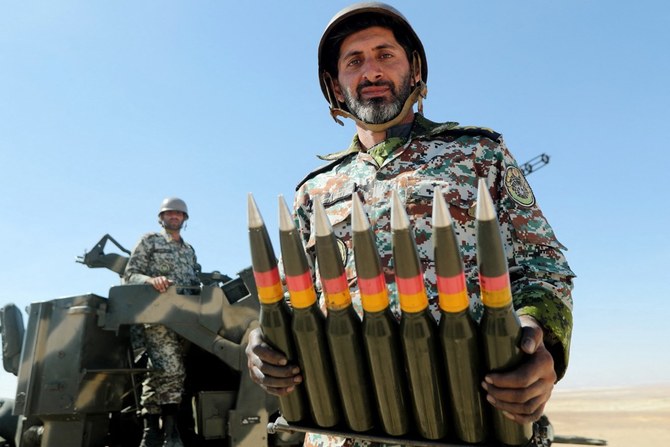
The Revolutionary Guards control a business empire in Iran, as well as military and intelligence forces responsible for terrorist attacks throughout the world.
Analysts now believe the US plans to remove the terrorist designation in return for Iranian assurances about reining in the IRGC. It is thought to be the last and most troublesome issue in wider indirect talks on reviving the 2015 nuclear deal.
Such a move would be fiercely opposed by the Gulf states, and Israel made its concern known in a joint statement on Friday by Prime Minister Naftali Bennett and Foreign Minister Yair Lapid. “The attempt to delist the IRGC as a terrorist organization is an insult to their victims and would ignore documented reality supported by unequivocal evidence,” they said.
“We find it hard to believe that the IRGC’s designation as a terrorist organization will be removed in exchange for a promise not to harm Americans. The US will not abandon its closest allies in exchange for empty promises from terrorists.”

Fears grow over possible removal of Iran’s Revolutionary Guard from US terror list
https://arab.news/vh5cm
Fears grow over possible removal of Iran’s Revolutionary Guard from US terror list
UN warns of abuse of Palestinians returning to Gaza through Rafah crossing
- Human Rights Office describes pattern of ill-treatment, abuse and humiliation of returnees by Israeli forces, and by armed Palestinians allegedly backed by Israeli military
- Meanwhile, reports continue of airstrikes, gunfire and shelling across Gaza, and Israeli forces demolish a UN-run school
NEW YORK CITY: The Rafah crossing on the border between Gaza and Egypt opened for a fourth consecutive day on Thursday, allowing a limited number of people to pass through.
However, the UN voiced concerns about reported mistreatment of Palestinians returning to the war-ravaged enclave.
The UN’s Office for the Coordination of Humanitarian Affairs also said reports continue across civilian areas in Gaza of airstrikes, gunfire and shelling, resulting in casualties and damage to infrastructure.
And Israeli forces on Wednesday demolished Jabalya Preparatory Boys’ School in northern Gaza, OCHA said. Run by the UN Relief and Works Agency for Palestine Refugees, it was the last remaining school in a compound of six. Its destruction means the entire educational complex has been razed to the ground.
A limited flow of people were allowed to use the Rafah crossing, Gaza’s main physical connection to the outside world, for four days in a row since it reopened on Monday, OCHA said. Only 98 returnees were received by UN teams inside Gaza between Monday and Thursday, it added, and the crossing remains closed on Fridays.
The UN Human Rights Office warned of what it described as a pattern of ill-treatment, abuse and humiliation of returnees by Israeli forces, and by armed Palestinians allegedly backed by the Israeli military.
According to accounts collected by the UN’s Human Rights Office, armed Palestinians handcuffed and blindfolded returnees, threatened and intimidated them, conducted searches and stole personal belongings and money. Returnees also reported violence, degrading interrogations and invasive body searches upon arrival at Israeli checkpoints.
The accounts point to conduct that violates the rights of Palestinians to personal security and dignity, and freedom from torture and other ill-treatment, the Human Rights Office said.
Meanwhile, the UN said it attempted to coordinate 11 humanitarian missions with the Israeli authorities on Wednesday and Thursday. Six were fully facilitated, but four faced lengthy delays at holding points along designated routes. Two of those missions were only partially completed, the other two eventually went ahead despite the delays.
A mission to monitor humanitarian cargo at the Kissufim crossing, east of Khan Younis, was denied on Wednesday after the crossing was closed.
The purposes of the missions included the collection of water, sanitation supplies, fuel and other items, medical evacuations through the Rafah crossing, and the transportation of returnees to Nasser Hospital in Khan Younis, OCHA said.


