
ISLAMABAD: A group of senior federal ministers said on Thursday Prime Minister Imran Khan would not compromise on principles after a local news channel aired videos of dissident lawmakers belonging to the ruling party at Sindh House in Islamabad which the government had described as the “hub of horse trading.”
Earlier, Pakistan’s information minister Chaudhry Fawad Hussain said the government was planning “strong action” on Sindh House after Pervaiz Elahi, the central leader of the Pakistan Muslim League-Quaid (PML-Q), a key coalition partner of the ruling Pakistan Tehreek-e-Insaf (PTI) party, said nearly 12 government lawmakers were in the opposition’s “safe custody.”
Prime Minister Imran Khan also said during a public rally this week that Islamabad’s Sindh House had become the “hub of horse trading,” referring to reports that the opposition was bribing lawmakers from the ruling party as well as its coalition partners to vote against him in a no-confidence motion, expected to be held later this month.
Sindh House is an official building in Islamabad dedicated to the government of the southern Sindh province, which is ruled by the Pakistan Peoples Party (PPP). The PPP has denied it is using “unfair means” to buy the loyalties of lawmakers.
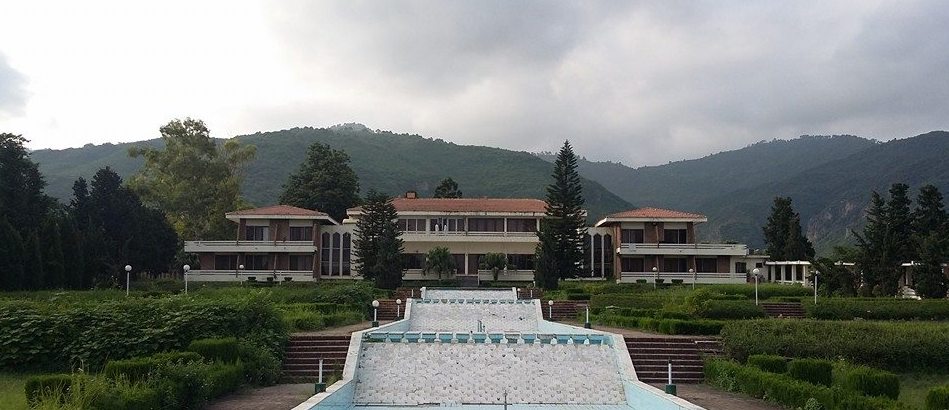
The undated photograph shows Sindh House in Islamabad, Pakistan. (Online)
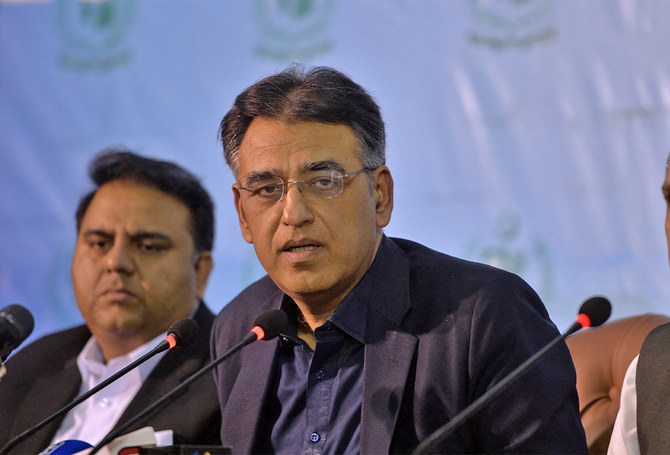
“Imran Khan is not going to budge an inch from his principles,” said the country’s planning minister Asad Umar while addressing a news conference. “The opposition is doing business in the name of democracy. We want to send a message to all PTI workers and the masses that Imran Khan will not let you down.”
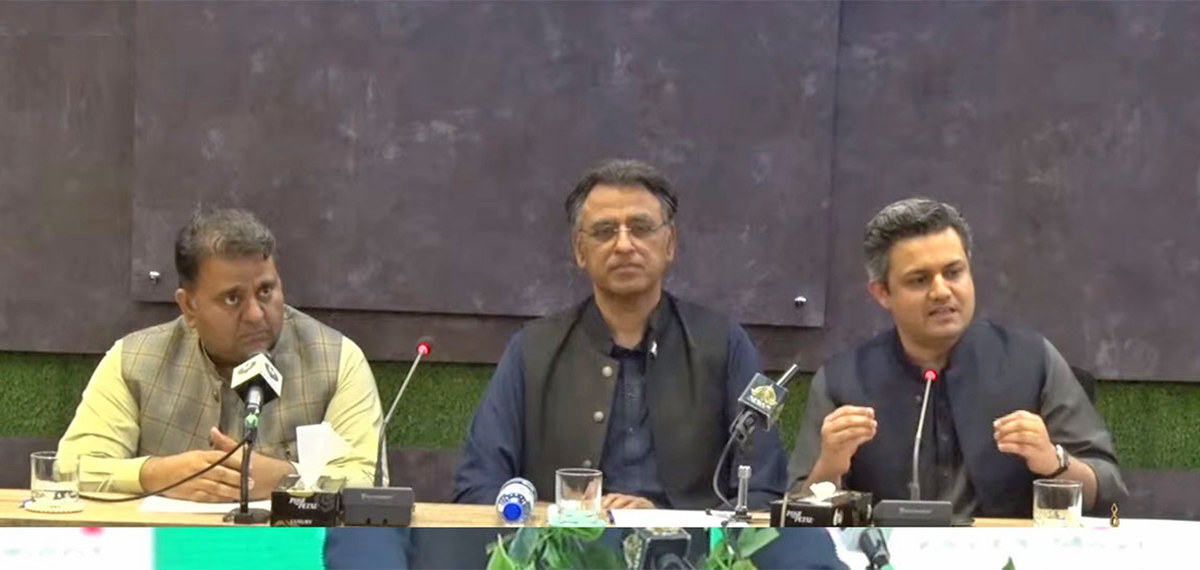
Pakistan’s information minister Chaudhry Fawad Hussain (left), Asad Umar (center) and Hammad Azhar address a press conference in Islamabad, Pakistan, on March 17, 2022. (APP)
Prior to the media briefing, Geo News aired video clips of dissident lawmakers belonging to the ruling party at Sindh House.
“We will respond to our voice of conscience while voting [during the no-confidence session],” said Raja Riaz, a prominent PTI member who joined the dissident group of Jahangir Tareen who was once a close aide of PM Khan. “We have taken this decision since we have developed differences with the prime minister.”
Justifying his presence in Sindh House, Riaz maintained he had moved out of Parliamentary Lodges in Islamabad after a recent “police raid,” adding that all the lawmakers would move back if the prime minister guaranteed they would be free to vote during the no-trust motion.
Asked about the total number of disgruntled lawmakers at Sindh House, he said there were “about two dozen of them.”
Another dissident PTI lawmaker Malik Nawab Sher Waseer objected to the derogatory use of language by government ministers who, he said, were describing their own party members as horses and mules.
Later, the information minister told the joint news conference with the planning minister that the two main opposition parties – the PPP and Pakistan Muslim League-Nawaz (PML-N) – were into buying and selling of lawmakers since the 1990s, a period he described as the “decade of darkness.”
“I would like to request PTI workers not to take law into their hands,” he said. “But, of course, it is your right to protest.”
Hussain alleged that a female PTI lawmaker was offered Rs70 million to vote against the prime minister, adding that a huge amount of cash was flowing through the federal capital ahead of the no-confidence vote.
The ministers said the government was currently focusing on its March 27 rally in front of the parliament building, adding it would be a “historical gathering.”
They also maintained the government would resort to all legal and constitutional options, including the initiation of legal proceedings against dissident lawmakers under Article 63-A.
Responding to a question, Umar said the government had not discussed imposing governor’s rule in Sindh.
However, Hussain maintained the recommendation had been made by interior minister Sheikh Rashid Ahmed, adding it would be taken seriously.
“This is important and we will hold deliberations over it,” he added.