

Suez Canal Authority deals with Russia-Ukraine crisis impartially: Chairman

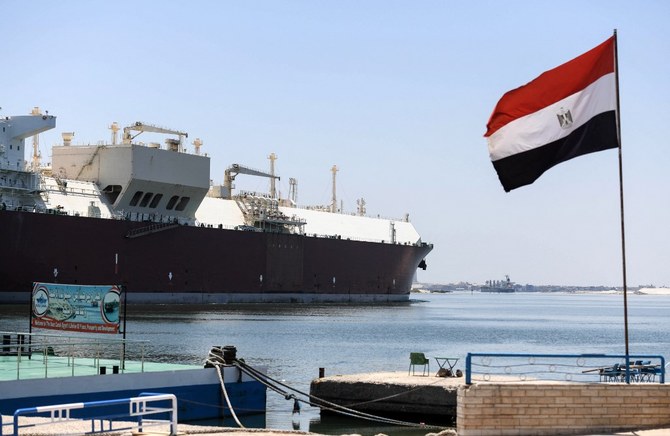
Egypt’s Suez Canal is one of the world’s busiest waterways and the shortest shipping route between Europe and Asia. (AFP)
Short Url
Updated 17 March 2022
Follow

Suez Canal Authority deals with Russia-Ukraine crisis impartially: Chairman

  • Egyptian-European Business Council raises fears over impact on energy, wider economy
  • Envoys to Cairo demand greater international cooperation to tackle fallout from the war

CAIRO: Osama Rabie, chairman of the Suez Canal Authority, confirmed that the authority is dealing with the Russian-Ukrainian crisis impartially, in accordance with the Constantinople Agreement.

During a meeting of the Egyptian-European Business Council, Rabie said: “We perform all services to ensure the passage of all ships in complete safety and in a period of time not exceeding 11 hours.”

The chairman of the council, Mohamed Abou El-Enein, said: “The Russian-Ukrainian crisis has caused economic losses that have affected all countries of the world, including an energy crisis, a food crisis, and global inflation.”

Global GDP losses so far exceed the economic losses caused by the coronavirus disease pandemic, he added, whilst touching upon how the crisis has impacted the world’s energy industry. “In the past period (the world) had fears of climate change and began to expand the new and renewable clean energy system, and the rate of demand for conventional fuel declined,” he said.

El-Enein, a member of Egypt’s House of Representatives, also noted “possibilities for a decline in global growth rates and losses estimated at a trillion dollars,” and said there was “the need to find a political and diplomatic solution soon to stop the losses and focus efforts to reach solutions that achieve the interests of all, especially the Ukrainian people.”

The German Ambassador to Cairo Frank Hartmann stressed that the Russian-Ukrainian war cast shadows beyond Europe across the world.

“The impact was not limited to the economic aspect only, but also extended to the political aspect,” he said, noting that the war has resulted in the influx of many Ukrainian refugees to different countries on a scale not seen since the Second World War.

He stressed the need for the cooperation of various countries to expand new and renewable energy, especially in light of the war’s impact on energy prices.

The French Ambassador to Cairo Marc Baretti said: “After the Second World War, the countries of the world began to chart a new path based on peace, coexistence and cooperation.”

Hong Jin-wook, South Korea’s envoy in the Egyptian capital, agreed with him, pointing out that the whole world would suffer from the Russian-Ukrainian crisis, expressing his concern that the war was the beginning of a catastrophe.

He stressed that his country’s position “rejects any acts of war and aggression against civilians and neighboring countries,” emphasizing the need for states to work together to take strong decisions on sanctions against aggressors.

“South Korea has so far not had clear relations with the countries concerned with the crisis, but we are trying to help with everything we have to stop the war,” he said.


Marine insurance companies are considering canceling, repricing policies in the Middle East

Updated 6 sec ago
Follow

Marine insurance companies are considering canceling, repricing policies in the Middle East

RIYADH: Marine insurance companies are considering canceling or repricing policies in the Middle East, according to the Financial Times

This comes after the US and Israeli strikes on targets inside Iran, followed by missile attacks and retaliatory military actions in several countries in the region.

Marine brokers expect insurance premiums for ships to rise by up to 50 percent, given the region’s classification as a “war zone.”

Ship owners are considering rerouting their vessels to avoid the Strait of Hormuz and reduce risks to crews and cargo.

20% of the global oil supply passes through the Strait of Hormuz.

Regarding oil prices, a rise is expected as 20 percent of global oil supply passes through the Strait of Hormuz, amid concerns about continued tensions in the region.

Air traffic in the Middle East was severely disrupted after several countries closed their airspace completely or partially, while regional and international airlines suspended or rescheduled flights.

On the morning of March 1st,  the Iranian capital, Tehran, witnessed several large explosions following Israel's announcement of what it described as a “preemptive strike.”

Flights to countries in the region suspended due to attacks

In a video message, US President Donald Trump announced that the US had begun “major combat operations” in Iran, asserting that the goal was to defend the American people by neutralizing what he described as the “imminent threat” from the Iranian regime.

Several regional and international airlines announced the suspension of their flights to some countries in the region due to the attacks.

These military developments come at a time when major shipping companies had already avoided the Red Sea and Suez Canal routes due to security tensions, reverting to the Cape of Good Hope route, which increases shipping costs and puts pressure on global supply chains.

With the closure of airspace in several countries in the region, the risk of disruption to air traffic and trade is increasing, while oil markets are watching closely for any signs of potential supply disruptions from a region that is one of the world's most important energy production hubs.