

EU blacklists Abramovich, targets energy, luxury sectors with new Russia sanctions

Short Url
Updated 15 March 2022
Follow

EU blacklists Abramovich, targets energy, luxury sectors with new Russia sanctions

  • Investment in Russia’s energy sector banned

BRUSSELS: The EU on Tuesday launched a new barrage of sanctions against Russia for its invasion of Ukraine, including bans on Russian energy sector investments, luxury goods exports to Moscow and imports of steel products from Russia.

The sanctions also freeze the assets of more business leaders who support the Russian state, including Chelsea football club owner Roman Abramovich and the head of Russian state TV Channel One Konstantin Ernst, who were added to a blacklist that already includes dozens of wealthy Russians.

The latest sanctions follow three rounds of punitive measures which included freezing of assets of the Russian central bank, the exclusion from the SWIFT banking system of some Russian and Belarusian banks, and the freeze of assets of oligarchs and top politicians, including Russia’s President Vladimir Putin and Foreign Minister Sergey Lavrov.

The European Commission said the sanctions included “a far-reaching ban on new investment across the Russian energy sector.”

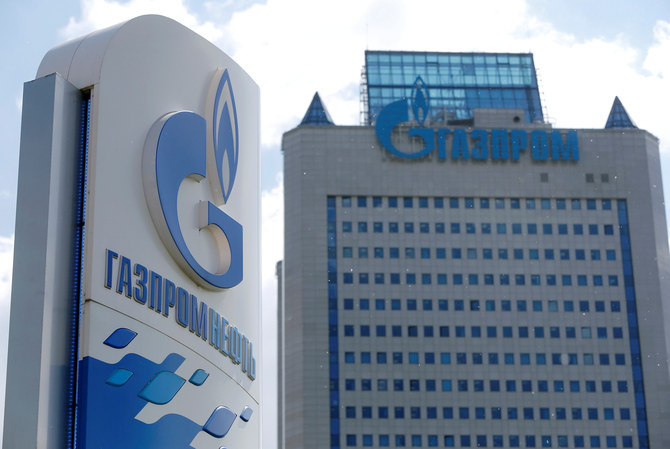
The measures will hit Russia’s oil majors Rosneft, Transneft and Gazprom Neft, who will be subjected to a transactions ban, but EU members will be still able to buy oil and gas from them.

Investment in energy projects within Russia run by other Russian companies, including gas giant Gazprom, will also be banned.

The investment ban applies to the whole energy sector, excluding nuclear energy, because some EU countries still rely on technology provided by Moscow for Russian reactors on their soil, the official said. Russia’s exports of several raw minerals, including fossil fuels and palladium, remain possible.

There will also be a total ban on transactions with some Russian state-owned enterprises linked to the Kremlin’s military-industrial complex.

The EU is trying to bolster exchange of information among EU states to facilitate seizures, as some members have limited staff and may also lack the political will.

The ban on Russian steel imports is estimated to affect €3.3 billion ($3.6 billion) worth of products.

EU companies will also be no longer allowed to export to Russia any luxury goods worth more than €300. Exports of cars costing more than €50,000 will also be banned.

One EU official said the EU was in advanced talks with Washington for the adoption of similar measures by the US which is home to the world’s top agencies, “otherwise the measure will have very little effect.”

The EU also agreed to strip Russia of its “most-favored nation” trade status, opening the door to punitive tariffs on Russian goods or outright import bans.


First EU–Saudi roundtable on critical raw materials reflects shared policy commitment

Updated 16 January 2026
Follow

First EU–Saudi roundtable on critical raw materials reflects shared policy commitment

RIYADH: The EU–Saudi Arabia Business and Investment Dialogue on Advancing Critical Raw Materials Value Chains, held in Riyadh as part of the Future Minerals Forum, brought together senior policymakers, industry leaders, and investors to advance strategic cooperation across critical raw materials value chains.

Organized under a Team Europe approach by the EU–GCC Cooperation on Green Transition Project, in coordination with the EU Delegation to Saudi Arabia, the European Chamber of Commerce in the Kingdom and in close cooperation with FMF, the dialogue provided a high-level platform to explore European actions under the EU Critical Raw Materials Act and ResourceEU alongside the Kingdom’s aspirations for minerals, industrial, and investment priorities.

This is in line with Saudi Vision 2030 and broader regional ambitions across the GCC, MENA, and Africa.

ResourceEU is the EU’s new strategic action plan, launched in late 2025, to secure a reliable supply of critical raw materials like lithium, rare earths, and cobalt, reducing dependency on single suppliers, such as China, by boosting domestic extraction, processing, recycling, stockpiling, and strategic partnerships with resource-rich nations.

The first ever EU–Saudi roundtable on critical raw materials was opened by the bloc’s Ambassador to the Kingdom, Christophe Farnaud, together with Saudi Deputy Minister for Mining Development Turki Al-Babtain, turning policy alignment into concrete cooperation.

Farnaud underlined the central role of international cooperation in the implementation of the EU’s critical raw materials policy framework.

“As the European Union advances the implementation of its Critical Raw Materials policy, international cooperation is indispensable to building secure, diversified, and sustainable value chains. Saudi Arabia is a key partner in this effort. This dialogue reflects our shared commitment to translate policy alignment into concrete business and investment cooperation that supports the green and digital transitions,” said the ambassador.

Discussions focused on strengthening resilient, diversified, and responsible CRM supply chains that are essential to the green and digital transitions.

Participants explored concrete opportunities for EU–Saudi cooperation across the full value chain, including exploration, mining, and processing and refining, as well as recycling, downstream manufacturing, and the mobilization of private investment and sustainable finance, underpinned by high environmental, social, and governance standards.

From the Saudi side, the dialogue was framed as a key contribution to the Kingdom’s industrial transformation and long-term economic diversification agenda under Vision 2030, with a strong focus on responsible resource development and global market integration.

“Developing globally competitive mineral hubs and sustainable value chains is a central pillar of Saudi Vision 2030 and the Kingdom’s industrial transformation. Our engagement with the European Union through this dialogue to strengthen upstream and downstream integration, attract high-quality investment, and advance responsible mining and processing. Enhanced cooperation with the EU, capitalizing on the demand dynamics of the EU Critical Raw Materials Act, will be key to delivering long-term value for both sides,” said Al-Babtain.

Valere Moutarlier, deputy director-general for European industry decarbonization, and directorate-general for the internal market, industry, entrepreneurship and SMEs at European Commission, said the EU Critical Raw Materials Act and ResourceEU provided a clear framework to strengthen Europe’s resilience while deepening its cooperation with international partners.

“Cooperation with Saudi Arabia is essential to advancing secure, sustainable, and diversified critical raw materials value chains. Dialogues such as this play a key role in translating policy ambitions into concrete industrial and investment cooperation,” she added.