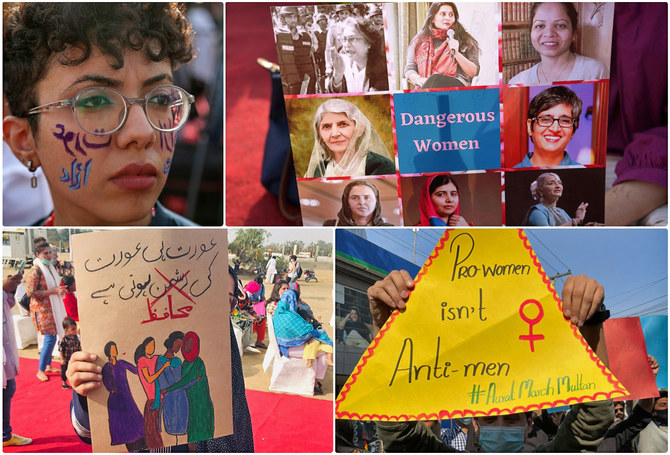

ISLAMABAD: Women from all walks of life gathered in Islamabad and other major cities in Pakistan on Tuesday for the country’s largest women’s rights event, the Aurat March.
Aurat March, using the Urdu word for women, has been attended by tens of thousands since March 2018 to mark International Women’s Day on March 8.
In the past, the march has been threatened by the Pakistani Taliban and there has been an uproar in conservative circles over slogans used at past events, including “My body, my choice”, “My body is not your battleground” and “Stop being menstrual phobic”.
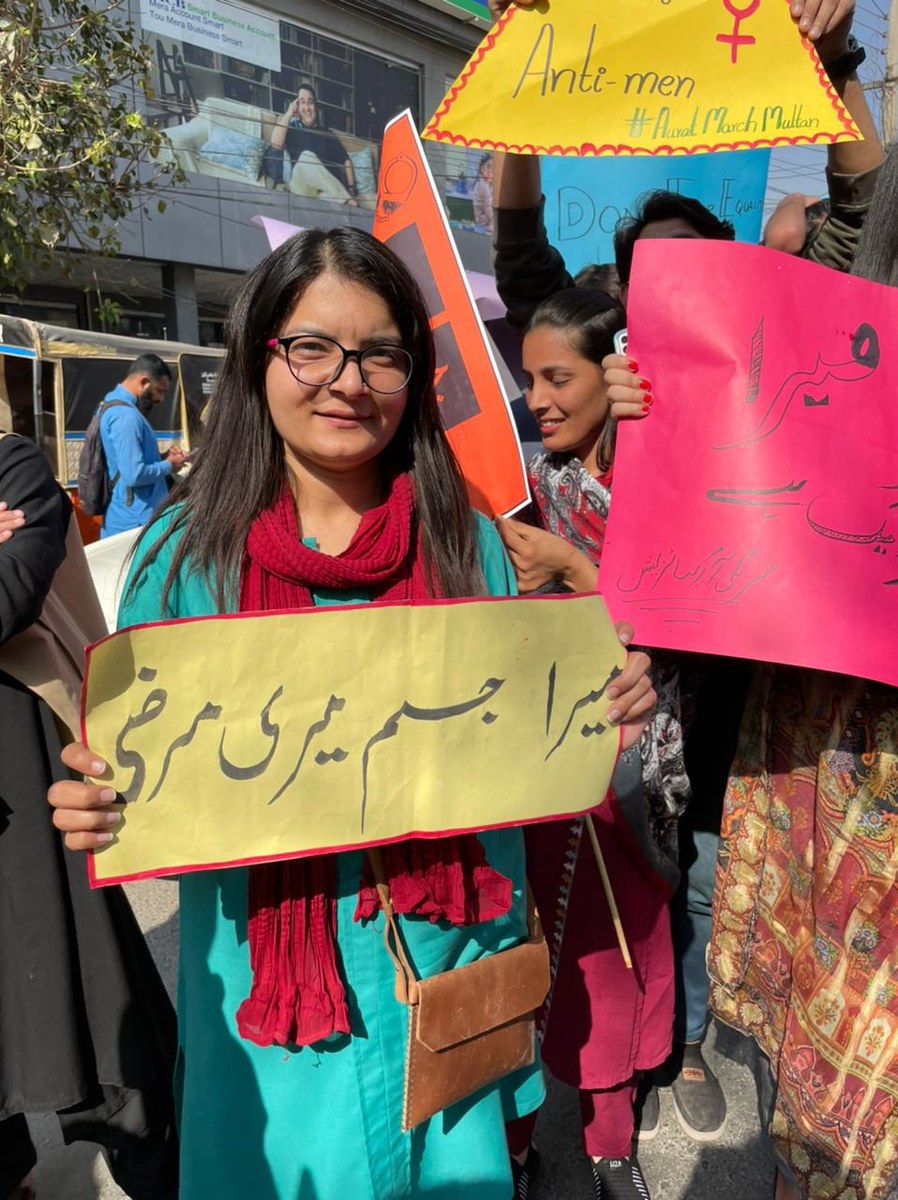
A protestor holds “My body, my choice” placard at Aurat March to mark the International Womens Day in Multan, Pakistan, on March 8, 2022. (Aurat March Organizers)
While opponents say the event has an agenda to spread “vulgarity” and is anti-Islam, organizers say they try to highlight “real issues” faced by women such as violence and sexual exploitation, and have faced a backlash, including murder and rape threats.
This year too, the president of a major religious party, the Jamiat Ulema-e-Islam-Fazl (JUI-F), voiced opposition to Aurat March at a public gathering and threatened to stop the event with a “baton.”
“Some religious parties threatened to attack us, organizing this march this year was not less than a war,” march organizer and prominent human rights activist Farzana Bari told Arab News at the march. “If we cannot gather and express ourselves even on women’s day then when it will be possible?”
“It’s been 40 years I have been marching in the streets and I will not change it for anyone,” veteran rights activist Tahira Abdullah said. “We still came out to march. We are still demanding the exercise of our right of freedom of speech, assembly, and association.”
Various city chapters of Aurat March have their own manifestos. The Karachi chapter this year focused on wages, security and peace, Lahore on reimagining justice, Multan on the education system and Islamabad on justice, security and freedom.
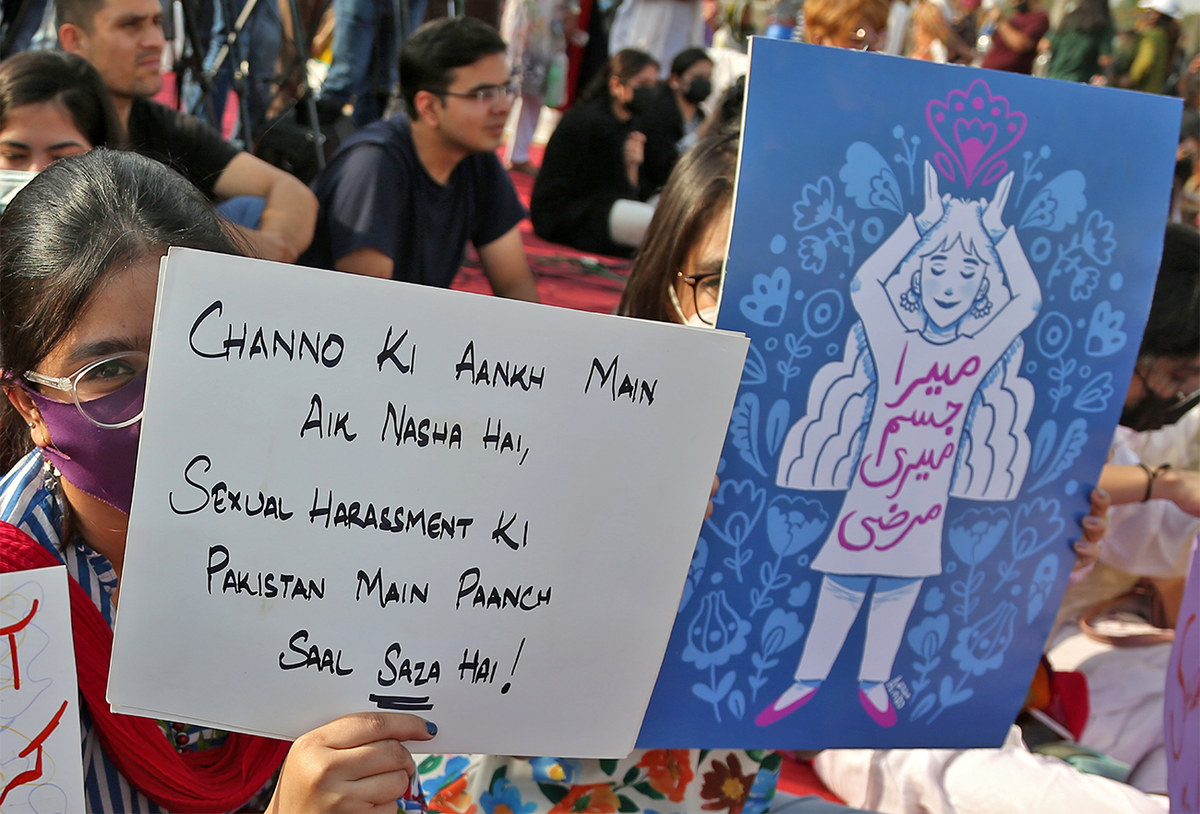
People participate in "Aurat March" to mark International Women's Day in Karachi, Pakistan, on March 8, 2022. (AN Photo)
At the Aurat March venue in Islamabad, a counter-demonstration was held by the Jamaat-e-Islami Pakistan religious party, led largely by veiled women who said they also wanted equal pay, flexible work hours and free childcare but all rights had to comply with Islamic injunctions.
“Jamaat-e-Islami is holding this rally to demand the rights provided by Islam to women as Pakistan is an Islamic country,” Ayesha Syed, an organizer of the counter-march, told Arab News.
“Pakistani women are going through a lot of problems as they have been denied their right to education, they have health problems, forced marriages, and are denied due share in inheritance,” she added, “so we are here to demand all these rights, which the constitution of Pakistan has also granted us.”
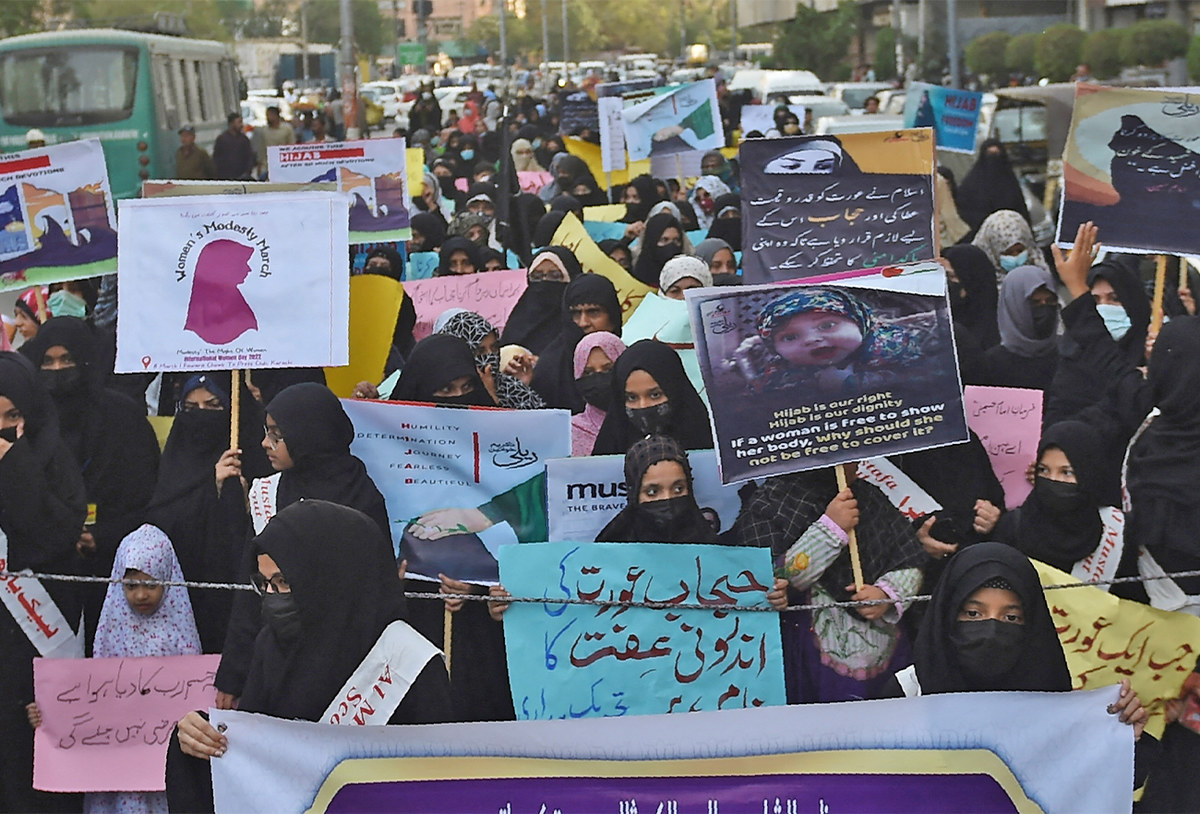
Women hold placards as they march during a rally to mark International Women's Day in Karachi, Pakistan, on March 8, 2022. (AFP)
In Karachi, the largest Pakistani metropolis, the march’s venue was changed from traditional Frere Hall to Jinnah Park, which resulted in lower number of participants but the gathering had representation from all segments of the society, from working women to fisherfolk, families of missing persons to anti-polio workers and religious minorities.
The participants said the movement had gained momentum over the years and helped raise awareness regarding the rights of women in Pakistan.
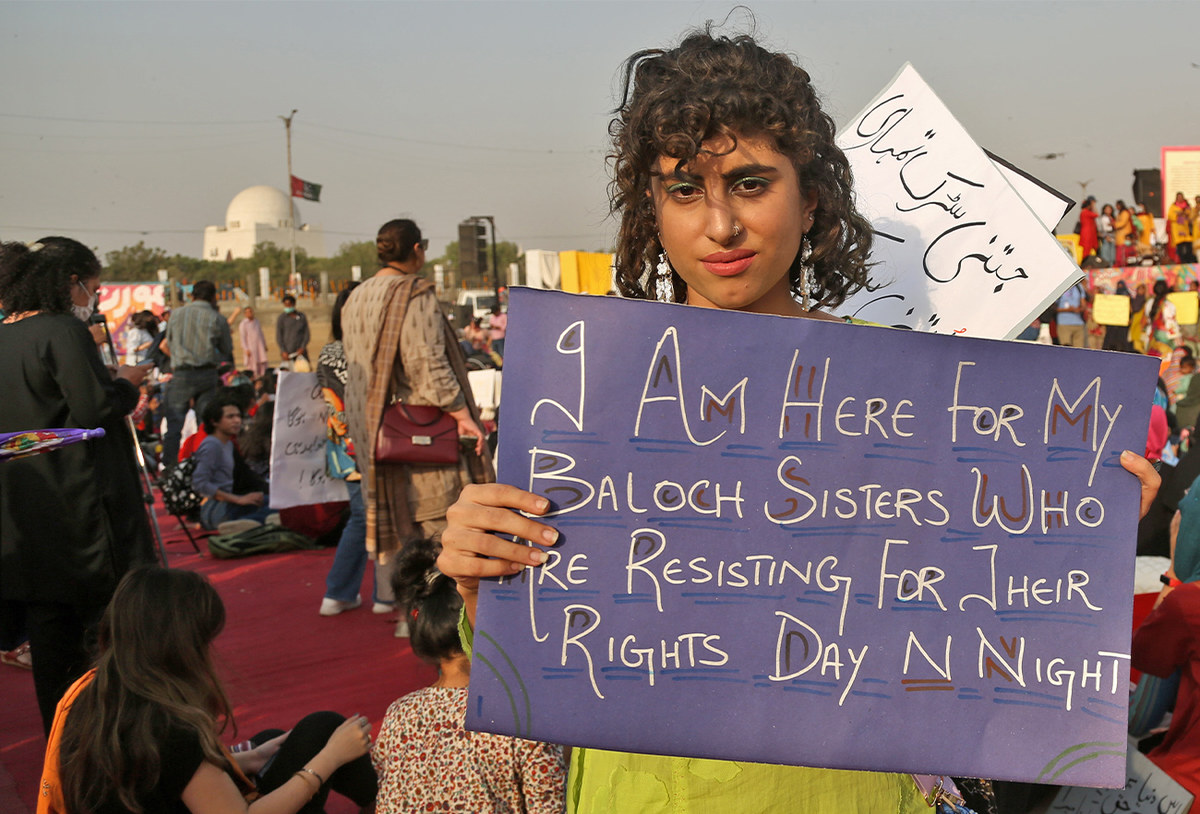
A protestor holds a placard supporting Baloch women at Aurat March to mark the International Womens Day in Karachi, Pakistan, on March 8, 2022. (AN Photo)
Munawar Aslam, a working women from Landhi, said she participated in the march because her rights were usurped by demolishing her house in a recent anti-encroachment drive.
“These are the women who are mostly impacted by the government’s actions but no one really cares about them. This march is for everyone,” she told Arab News, hoping the platform would help her get her rights.
Rubina Bux, a fisherwoman from Korangi, said the march had provided an opportunity to raise voice for the rights of her underprivileged class.
“This is a brilliant platform for the rights of women. It’s said that this march is the brainchild of the elite, which is totally wrong,” Bux said. “We don’t live in isolation, so when this march demands rights, we demand rights for all, including our men, who are poorly paid and have no jobs and life security.”
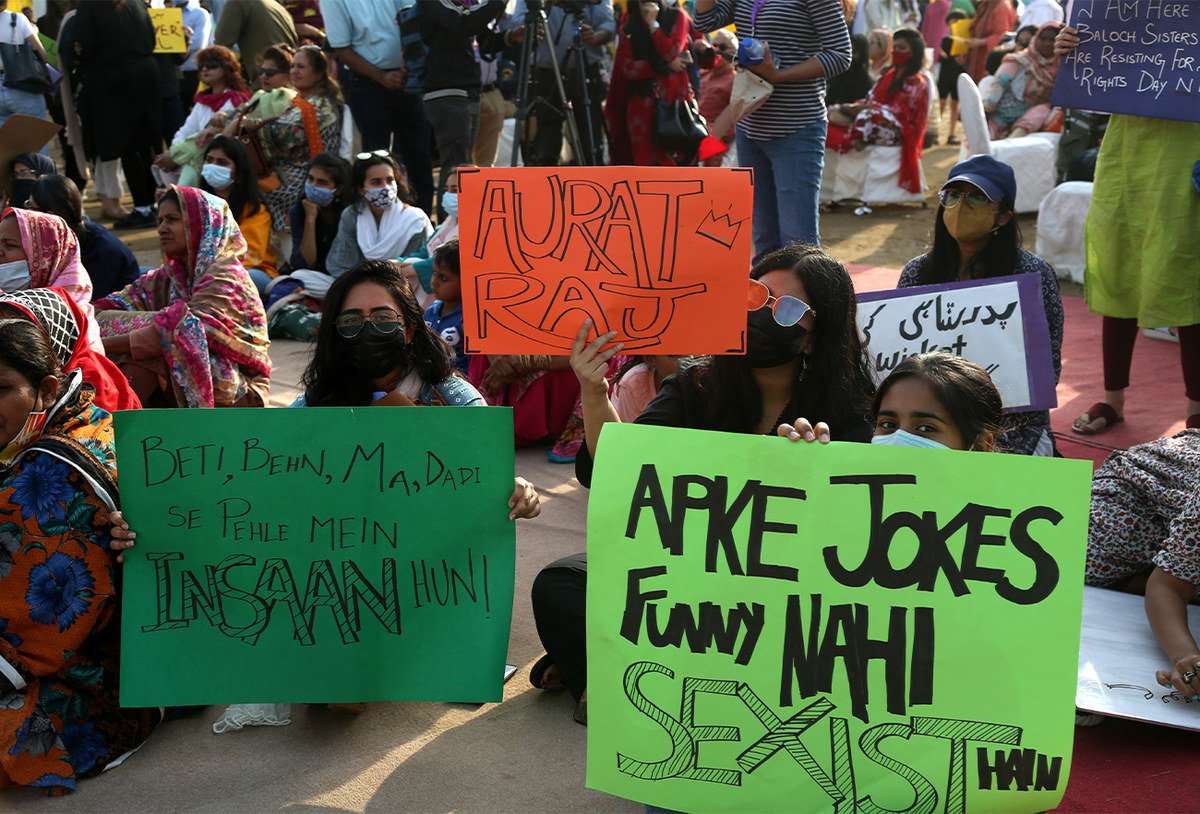
People participate in "Aurat March" to mark International Women's Day in Karachi, Pakistan, on March 8, 2022. (AN Photo)
Fashion designer Frieha Altaf said the march had already brought about a “change.”
“If we look at the women, you will find women in jeans and women in hijab and they have got together because their rights are the same,” Altaf told Arab News.
“Why are these women here? Because they all face stereotypes, they all face harassment. Knowing and fighting for rights is very important.”
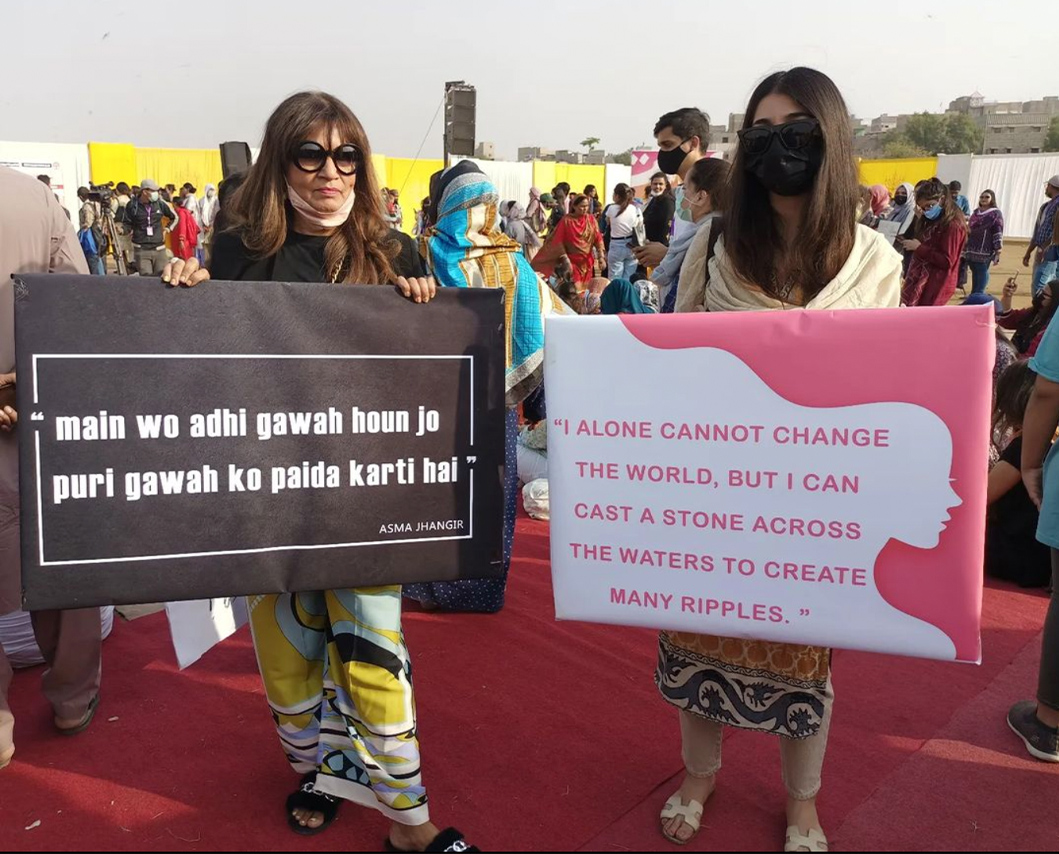
Fashion designer Frieha Altaf (left) and her daughter participate in "Aurat March" to mark International Women's Day in Karachi, Pakistan, on March 8, 2022. (Social media)
In Lahore, the second largest city of Pakistan, the organizers said the march was a “huge success” as it attracted large crowds of women and transgender persons.
Feminist tappay, a form of Indian semi-classical vocal music, and a play on the murders of transgender persons were the highlights from the march in Lahore.
The organizers also came up with the idea of reminding v-loggers and a few journalists of their “sensationalized, misrepresented” coverage, which they said “harassed” the participants last year.
“We have made cutouts of the YouTubers. The slogans in cutouts were taken out from their videos which we thought were spreading wrong news and where participants were harassed last year,” Hiba, an organizer, said. “We wanted to show them the face of their misreporting and harassment.”
The participants marched from the Lahore Press Club till the PIA office.
In Multan, the march, which began from Nawan Shehar Chowk Multan and ended at the Multan Press Club, was attended by several women, including rights activists Mukhtar Mai, Saleema Hashmi and Hina Jilani.
Laiba, an organizer of the march, told Arab News women in southern Punjab had the same issues, which they faced elsewhere in the country.
“In addition, women here also lag behind in the field of the education, which is why we thought education should be this year’s theme,” she said. “One cannot prosper without education.”