VIENNA: The UN nuclear watchdog on Sunday expressed “deep concern” over reports that communication from Europe’s largest nuclear power plant seized by Russia in Ukraine has been disrupted.
Invading Russian forces attacked and seized the Zaporizhzhia nuclear power plant in Ukraine on Friday.
The International Atomic Energy Agency (IAEA) said in a statement that Ukraine informed it that the plant management is now under orders from the commander of the Russian forces.
Ukraine has also reported that the Russian forces have switched off some mobile networks and the Internet, and that telephone lines, emails and fax were not functioning anymore.
They said mobile phone communication was still possible with poor quality, the IAEA said.
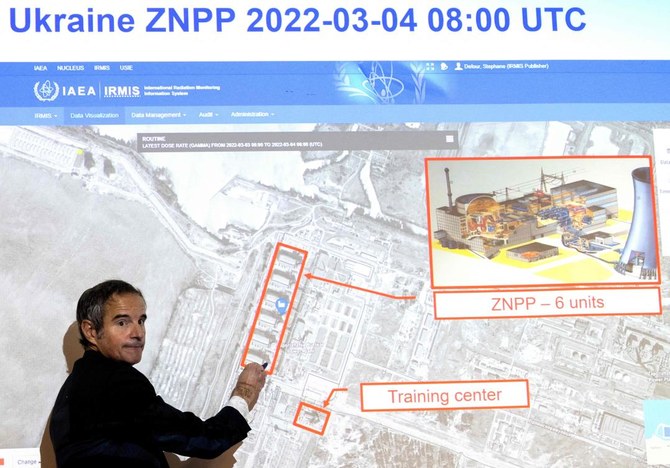
“I’m extremely concerned about these developments that were reported to me today,” IAEA Director General Rafael Grossi said.
“In order to be able to operate the plant safely and securely, management and staff must be allowed to carry out their vital duties in stable conditions without undue external interference or pressure,” he added.
He expressed “deep concern” over “the deteriorating situation regarding vital communications between the regulator and the Zaporizhzhia NPP (nuclear power plant).”
“Reliable communications between the regulator and the operator are a critical part of overall nuclear safety and security,” he said.
On Sunday, Russian President Vladimir Putin assured French President Emmanuel Macron of the “physical and nuclear safety” of the Zaporizhzhia nuclear plant, according to the Kremlin.
Grossi offered Friday to travel to Ukraine to negotiate with Kyiv and Moscow and ensure the security of Ukraine’s nuclear sites.
The offer came hours after Russian forces seized control of Zaporizhzhia after a battle with Ukrainian troops that caused a fire and fears of an accident.


![]()

UN watchdog expresses ‘deep concern’ over Ukraine nuclear power plant
Short Url
https://arab.news/rju24
UN watchdog expresses ‘deep concern’ over Ukraine nuclear power plant
- IAEA said Ukraine informed it that plant management is now under orders from commander of the Russian forces
- Grossi offered Friday to travel to Ukraine to negotiate with Kyiv and Moscow, ensure security of nuclear sites
Latest updates





© 2026 SAUDI RESEARCH & PUBLISHING COMPANY, All Rights Reserved And subject to Terms of Use Agreement.