

With cello on chest, Saudi musician brings melody to KSA’s classical music scene

1 / 3
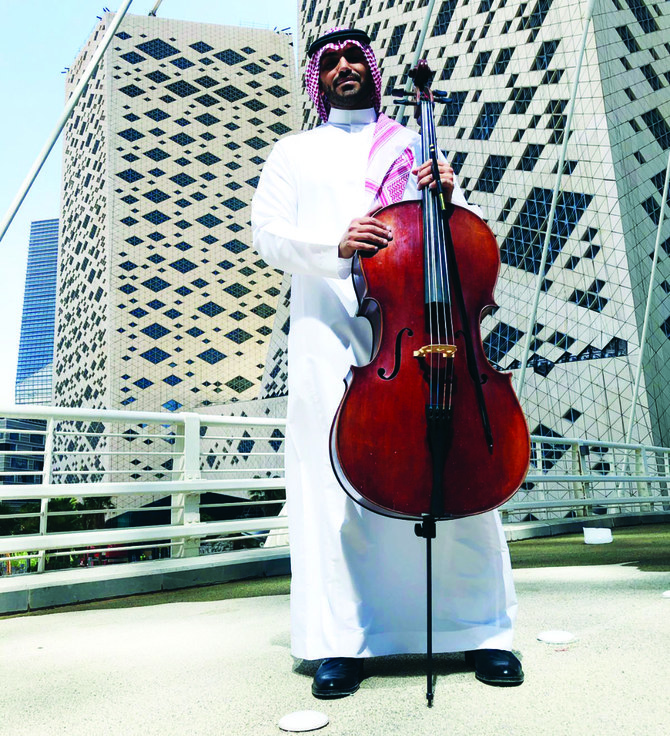
Saudi cellist Mohammed Al-Quthmi began playing the instrument in early 2019, practicing more frequently during the lockdown of 2020. (Supplied)
2 / 3
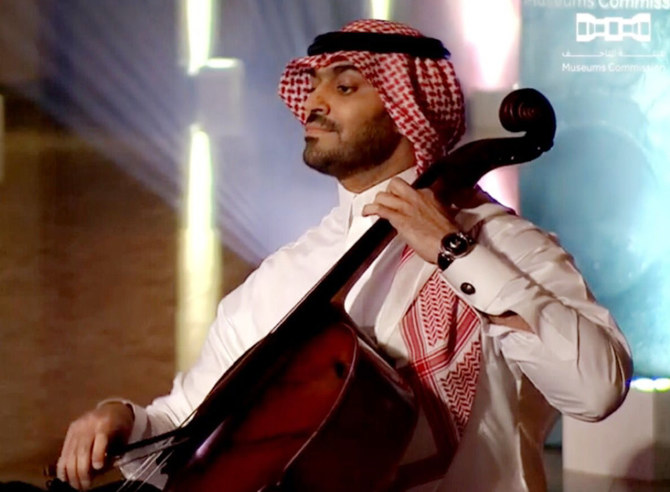
Saudi cellist Mohammed Al-Quthmi began playing the instrument in early 2019, practicing more frequently during the lockdown of 2020. (Supplied)
3 / 3
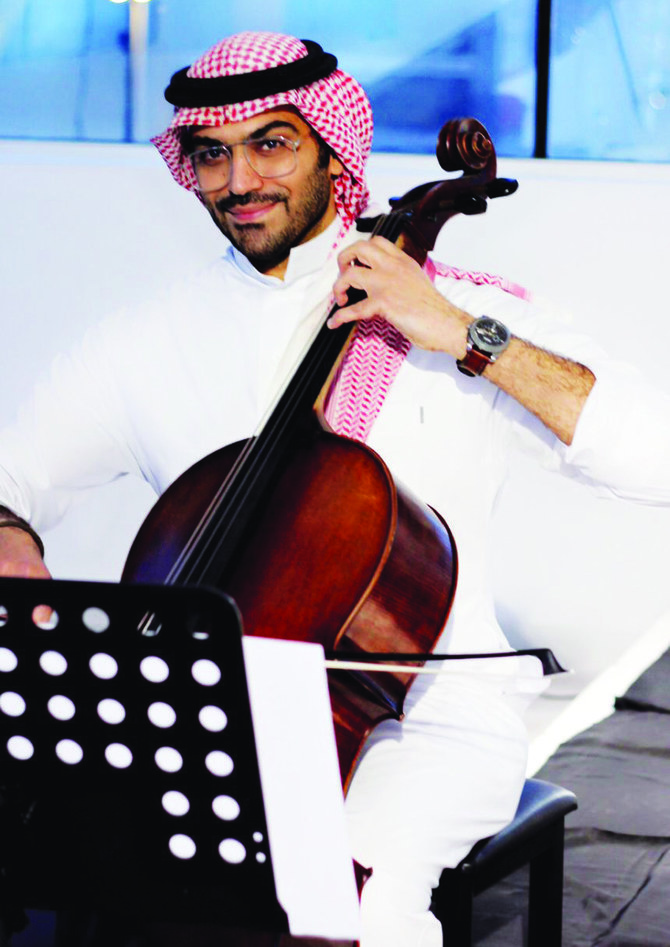
Saudi cellist Mohammed Al-Quthmi began playing the instrument in early 2019, practicing more frequently during the lockdown of 2020. (Supplied)
Short Url
Updated 06 March 2022
Follow

With cello on chest, Saudi musician brings melody to KSA’s classical music scene

  • Mohammed Al-Quthmi thanks Crown Prince Mohammed bin Salman for ‘sharing the music I love with the public’

JEDDAH: When Mohammed Al-Quthmi holds his cello and leans back with the instrument on his chest, he can feel there is something different about it. “The sound of it captures your attention. There is a depth in it, you cannot hear it or feel it with any other instruments.”

Al-Quthmi, 42, is one of a handful of Saudi cellists and part of the Kingdom’s blossoming classical musical scene.
He began playing the instrument in early 2019, practicing more frequently during the lockdown of 2020.
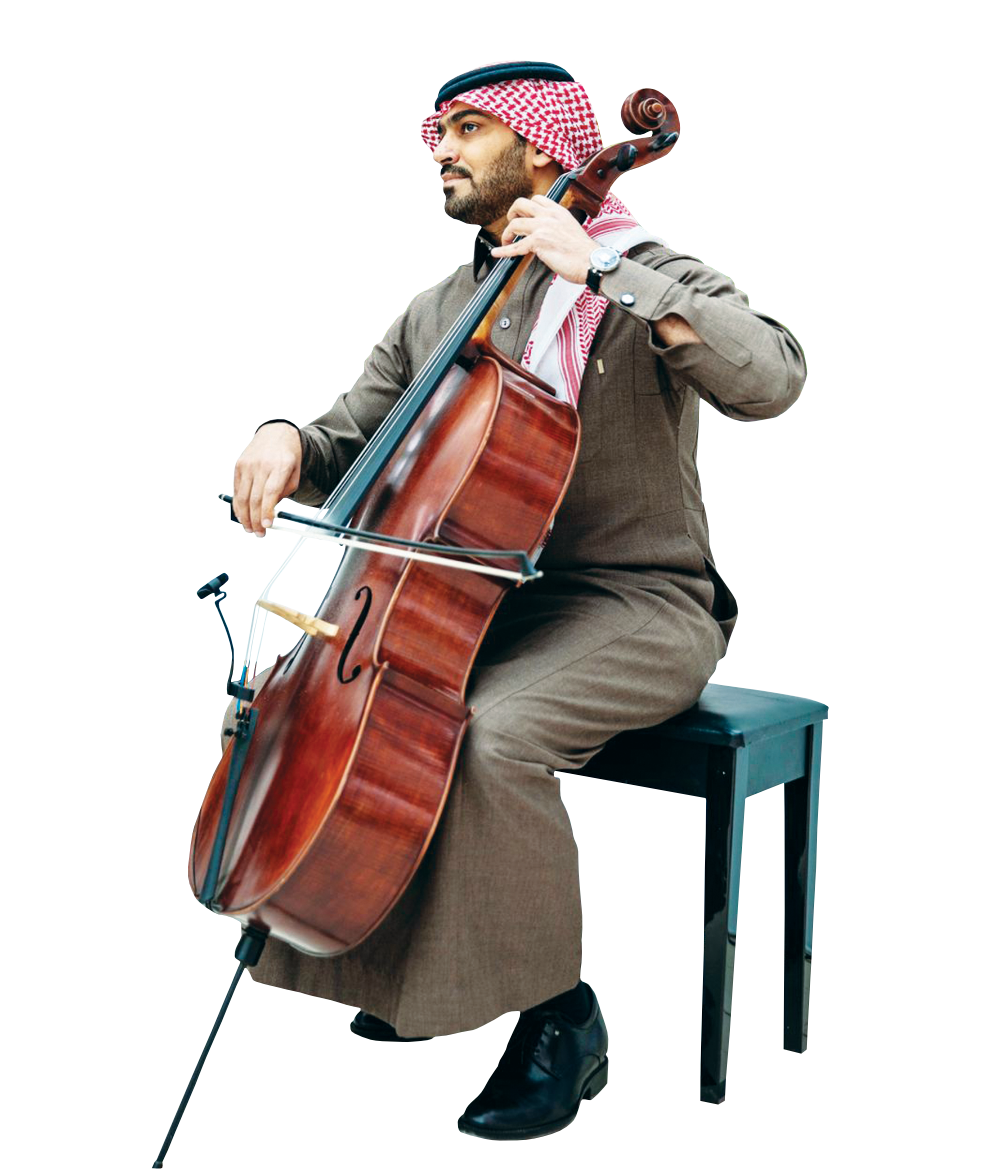


Saudi cellist Mohammed Al-Quthmi began playing the instrument in early 2019, practicing more frequently during the lockdown of 2020. (Supplied)

“The cello is not just a wooden instrument, it was my companion during the COVID-19 lockdown and our relation at that time got stronger,” Al-Quthmi told Arab News.

I myself enjoy playing classical and American pop songs, and I mostly enjoy improvisations in my own style. I play some Arabic songs but still need more time to master it as it’s not easy to play the Arabic music scales ‘Maqam’ on the cello.

Mohammed Al-Quthmi, Saudi cellist

His journey with music started in his college days. He would listen to the band Gipsy Kings and that inspired him to learn how to play the guitar.
After learning how to play the guitar, he learned the piano and the oud, with his last stop being the cello.
US cellist Adam Hurst was his main inspiration for picking up the instrument.
“He is the one who stole my senses once I heard his piece ‘Forsaken.’ At that time, I was in Dubai and went straight away to a music shop and got my first cello.”
He said that music had always been a part of Saudi culture, but had not received serious status prior to the social reforms of Saudi Vision 2030.  
“It was a bit difficult to play publicly comparing to what we have today. Thanks to our beloved crown prince, things changed 360 degrees; I get to share the music I love with the public.”
Al-Quthmi said that professional musicians should practice three to four hours a day but, in his case as an amateur cellist, he usually played one to two hours a day. “I just play what I feel and what touches my heart,” he said.
The cello is Italian in origin, but it is played globally across continents.

FASTFACTS

• Last November, Yamaha Music School Riyadh opened as the first officially authorized music education facility in the Kingdom.

• Mohammed Al-Quthmi, 42, is one of a handful of Saudi cellists and part of the Kingdom’s blossoming classical musical scene.

“I myself enjoy playing classical and American pop songs, and I mostly enjoy improvisations in my own style. I play some Arabic songs but still need more time to master it as it’s not easy to play the Arabic music scales ‘Maqam’ on the cello.”
Al-Quthmi has taken part in a number of private musical gatherings, most recently at the Syrup music lounge in Riyadh where he played the piano and cello. “It was an amazing night. Hopefully I get to redo something like it soon,” he said.
The Kingdom has recently launched a number of music institutes and initiatives.
Last November, Yamaha Music School Riyadh opened as the first officially authorized music education facility in the Kingdom.
The Ministry of Culture’s Music Commission launched Bait Al-Oud (House of Oud) in January and this is due to open in 2023.


Red Sea Global unveils scientific model for regenerative tourism worldwide

Updated 45 min 58 sec ago
Follow

Red Sea Global unveils scientific model for regenerative tourism worldwide

  • The report details the model’s rollout at “The Red Sea” and “AMAALA” destinations, backed by studies covering 8 marine habitats

TABUK: Red Sea Global (RSG) has unveiled a science-based model aimed at achieving a 30 percent net positive conservation benefit across its tourism destinations by 2040. 

The framework is now available for global adoption, according to a statement released by RSG.

Owned by Saudi Arabia’s Public Investment Fund (PIF), Red Sea Global is the multi-project developer behind ambitious regenerative tourism destinations like “The Red Sea” and “AMAALA.” 

As a cornerstone of the Kingdom’s Vision 2030, the company aims to diversify the national economy while setting new global benchmarks for sustainable, nature-positive development.

CEO John Pagano stated that openly sharing this detailed approach will help elevate the global tourism sector and secure a healthier environment for future generations.
 

Map showing the boundaries of the Red Sea Zone. (Graphic from the RSG report)

The cornerstone of this initiative is the proprietary SIIG Model, a four-step framework:
• Survey: Establish biodiversity baselines and monitor long-term changes.
• Identify: Assess risks to priority habitats and species.
• Intervene: Execute evidence-based actions, such as regulating fishing and enhancing natural habitats.
• Gain: Measure and verify biodiversity improvements.

The report details the model’s rollout at “The Red Sea” and “AMAALA” destinations, backed by extensive 2022–2023 environmental baseline studies covering eight marine habitats and priority species groups during 2022 and 2023. 

A major intervention is the 5,015-square-kilometer Fishery Management Area in Al-Wajh Lagoon. The plan reserves 38 percent of the area for priority conservation—protecting 62 percent of local coral reefs—while allocating 61 percent for sustainable fishing.

According to scientific modeling, eliminating fishing in high-protection zones could increase reef fish populations by 113 percent, sharks and rays by 72 percent, and marine mammals by 24 percent. These measures are expected to boost coral resilience, support ecosystem recovery, and protect vulnerable species like sea turtles and seabirds.
Ihab Kindi, RSG’s Red Sea Destination Executive Director, called the data-driven model a practical roadmap for large-scale marine recovery. The complete methodology is available in the new report, “The SIIG Model: A Roadmap Toward Achieving Measurable Conservation Gains.”