



DUBAI: Despite recent advancements in the Middle East, women remain massively under-represented in the fields of science and engineering across the region and more must be done to change this, say experts.
According to the 2021 UNESCO Science Report, only 33 percent of researchers worldwide are women. While gender parity has almost been achieved in the Middle East and North Africa region at the doctorate level and at the start of a scientific career, there are still considerable disparities across disciplines and between countries.
The glass ceiling remains a reality for females involved in research, where the proportion of women decreases as they advance in their careers, in all likelihood because of obstacles and barriers. Although the Gulf region is blazing a trail for women, there is still a long way to go given that they constitute only 40 percent of the STEM workforce.
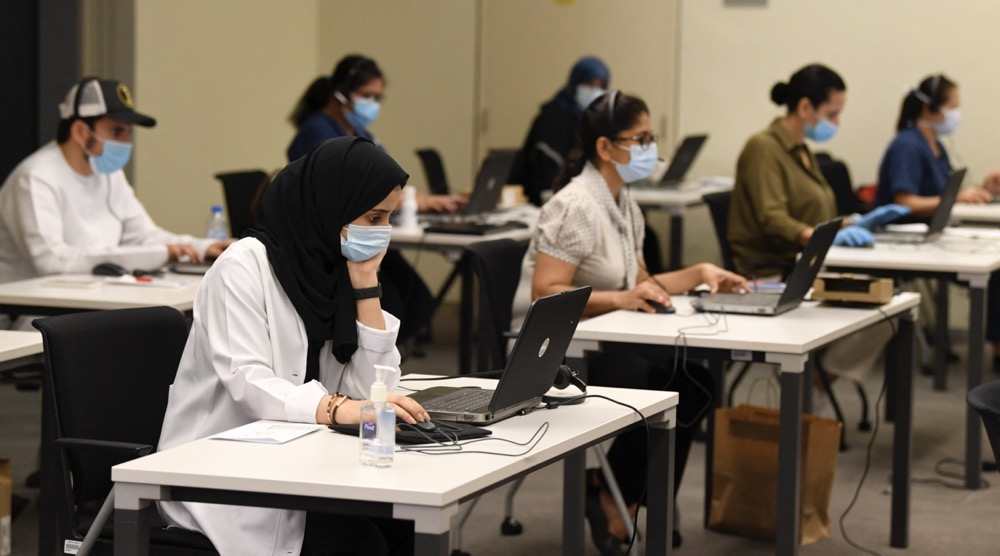
Only 33 percent of researchers worldwide are women. (AFP)
Nura Adam Mohammed, from Qatar University, believes that changing this imbalance requires collaboration among many groups, organizations and parts of society, including families, schools, universities and governments.
“Empowering women in science should start at the very early stages, as early as primary schools, and by hosting public engagements and welcoming young girls to research open days and later to volunteer in the research field,” she said.
Her work involves the development of nonconventional therapeutic tools to prevent diabetes and cardiovascular diseases, which could potentially help to solve one of the region’s biggest health challenges.
Mohammed was one of 14 Arab women honored last month at L’Oréal-UNESCO for Women in Science Middle East, a special event hosted by Expo 2020 Dubai in recognition of the work of exceptional women in the fields of life sciences, physical sciences, mathematics and computer science.
The project is part of a global initiative that since its inception in 1998 has recognized more than 3,900 researchers and 122 laureates from more than 110 countries and regions.
Another of those recognized this year was Ghada Dushaq from New York University Abu Dhabi, one of five women from the Gulf Cooperation Council area honored at the event.
She said she hopes to inspire a new generation of Arab women to take up science, a sector in which they remain under-represented, and is specifically interested in the fields of photonics and optics where the proportion is below average.
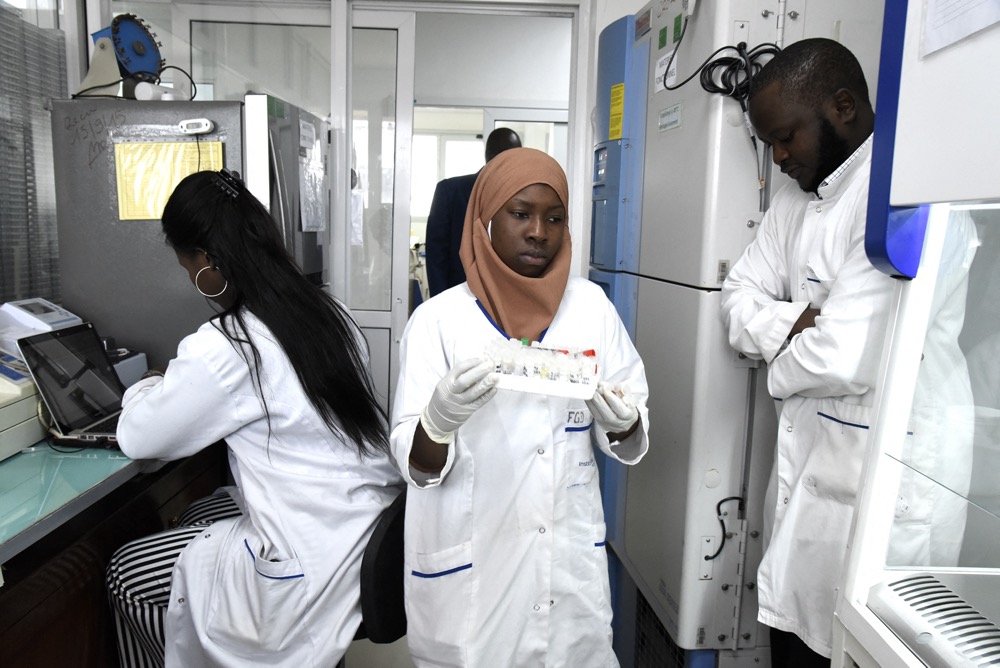
The glass ceiling remains a reality for females involved in research. (AFP)
“Innovative and ground-breaking scientific ideas require the talents of both women and men,” she said. “Achieving gender equality in science will create a balanced and holistic approach to leadership and better-educated children in future generations.”
Dushaq was recognized for her post-doctoral research on novel materials and structures in photonics to enhance the speed, capacity and accuracy of conventional technologies. She said such research has the potential to influence, and even revolutionize, other sectors such as health, space, mobility and security.
Arij Yehya, also from Qatar University and honored at the event, said that she believes more must be done to encourage women to pursue a career in science as the benefits of their work can extend far beyond the scientific community.
“Women have important social roles, such as being caregivers,” she said. “Having more women working in the field of science can provide an impact on the community through their social roles, and women in science can pave the way for a more prosperous society.”
Yehya’s research focuses on identifying factors that drive the widening of the gender gap in personality traits to further evaluate current and future gender policies.
Investigative work of this nature is complex and requires a rigorous scientific approach but most work on the subject comes from other parts of the world and it is time to bridge this gap in the region, she said, referring to the discovery of links between personality and culture.
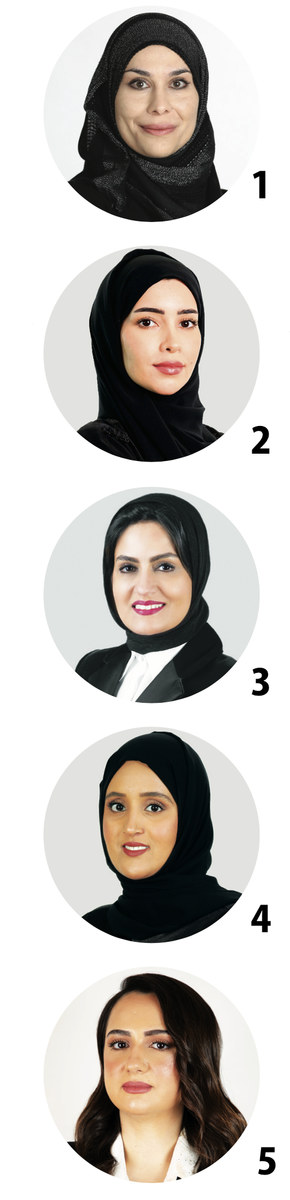
1. Ghada Dushaq, a researcher at New York University Abu Dhabi
2. Halima Al-Naqbi, an academic at Khalifa University, Abu Dhabi
3. Hend Al-Qaderi, a lecturer at Harvard School of Dental Medicine
4. Nura Adam Mohammed, a researcher at Qatar University
5. Arij Yehya, an instructor at Qatar University
“This might hinder the full understanding of the complexity of our cultures and individuals,” Yehya said. “Paving the way for younger generations will give us a good chance to build on previous findings and learn more about our cultural and individual identities.”
Halima Alnaqbi, an academic at Khalifa University, comes from a small town in the UAE where tribal marriage is considered a tradition. She told how she remembers observing, as a curious child, that some people in her community suffered from rare diseases that mostly resulted from genetics.
She later learned that more rare diseases appear in communities with certain cultural practices, such as consanguineous marriage, or marriage between close blood relatives, that increase the prevalence of recessive disorders.
“As I grew older and became a biomedical engineer,” Alnaqbi said. “I channeled my intrinsic motivation to solve challenges that impacted my society and the world.
“I particularly devoted my knowledge and skills to studying the genes that govern the immune system (immunogenetics) in the Arabian population, which play an important role in the development of autoimmune diseases.”
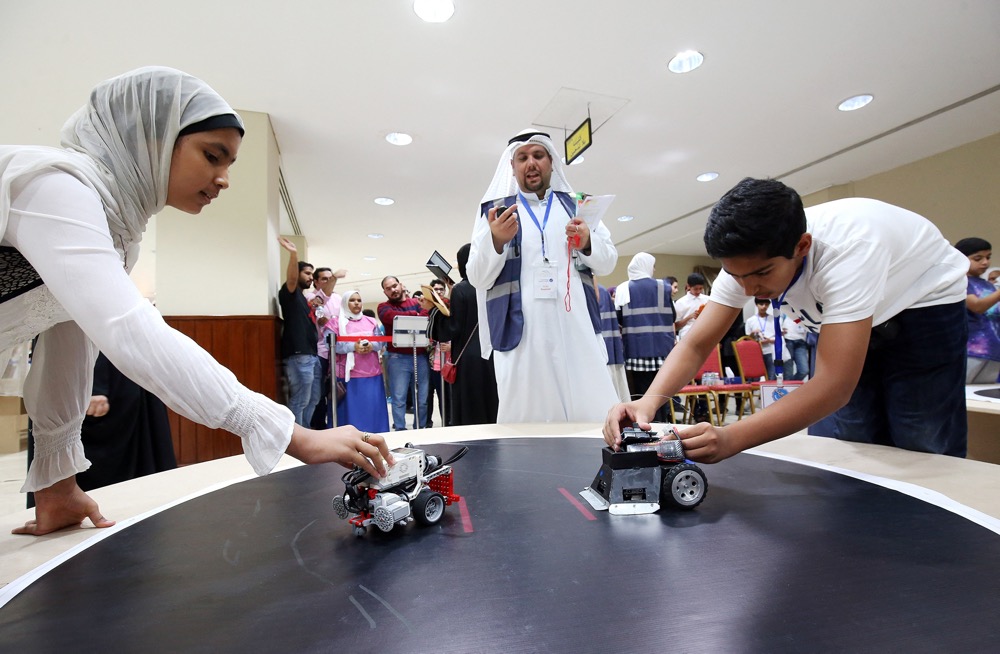
“Empowering women in science should start at the very early stages,” said Nura Adam Mohammed, from Qatar University. (AFP)
Her research into ways to enhance the organ transplantation system to better include Arab ethnic groups is crucial for the region. Due to a dearth of genome data about the Arabian population, healthcare systems in under-represented nations face unique challenges that affect the region’s capacity to integrate molecular genetic research findings into clinical applications.
“Unrelated organ donors are identified from millions of volunteers via regional networks,” Alnaqbi said. “However, there is no Arabian contribution to these international registries. My research aims to address this gap and establish a preliminary framework for organ and bone-marrow transplantation donor selection.”
With women now accounting for half of all engineers in the UAE, she added that the field of science is changing in the country, the barriers that once stood in the way of women have been removed and the image of the sector as a male-dominated domain is outdated.
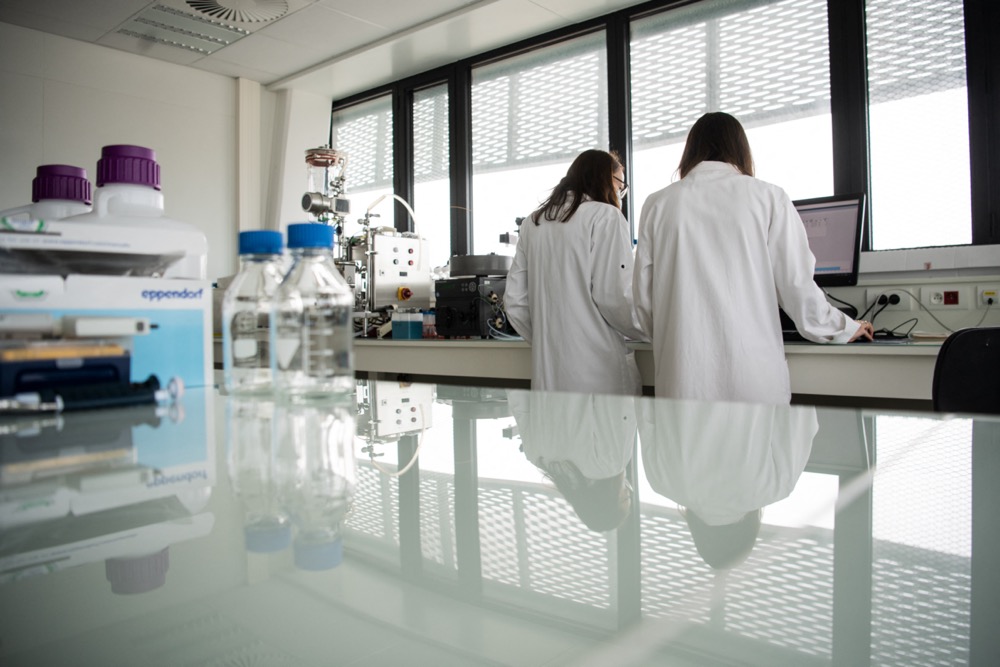
Ghada Dushaq, from New York University Abu Dhabi, said she hopes to inspire a new generation of Arab women to take up science. (AFP)
“The stereotype that working in science, and especially engineering, is only for men is changing,” Alnaqbi said. “In science, research is done in teams, and gender and specialization diversity in any team is particularly important since it encourages innovation.
“Women have previously demonstrated their ability in science topics, as more than half of engineering graduates in the UAE are female.”
Hend Alqaderi, who is from Kuwait and a lecturer at Harvard School of Dental Medicine, also believes that it is crucial to engage more women in science and said her personal experiences during the pandemic only helped to reinforce her opinion.
“Having more women in scientific research can bring diversity and make research more effective and accurate, impacting both men and women,” she said.
Her research is on the use of oral fluids as a non-invasive tool for the early diagnosis and disease management of COVID-19 and other inflammatory diseases. The work has very personal significance for her, as she was inspired to pursue it after the sudden death of her father as a result of the coronavirus.
“After the shock of losing my father, I became curious to understand how the immune system works and why some people have no symptoms while others need hospital care and some pass away,” Alqaderi said.
“I have experience studying salivary biomarkers and I wanted to expand my knowledge, so I decided to study the immune response in the oral cavity that can lead to a new understanding of COVID-19 and might lead to developing new preventative strategies. I hope my findings can help other families like mine and prevent more deaths.”
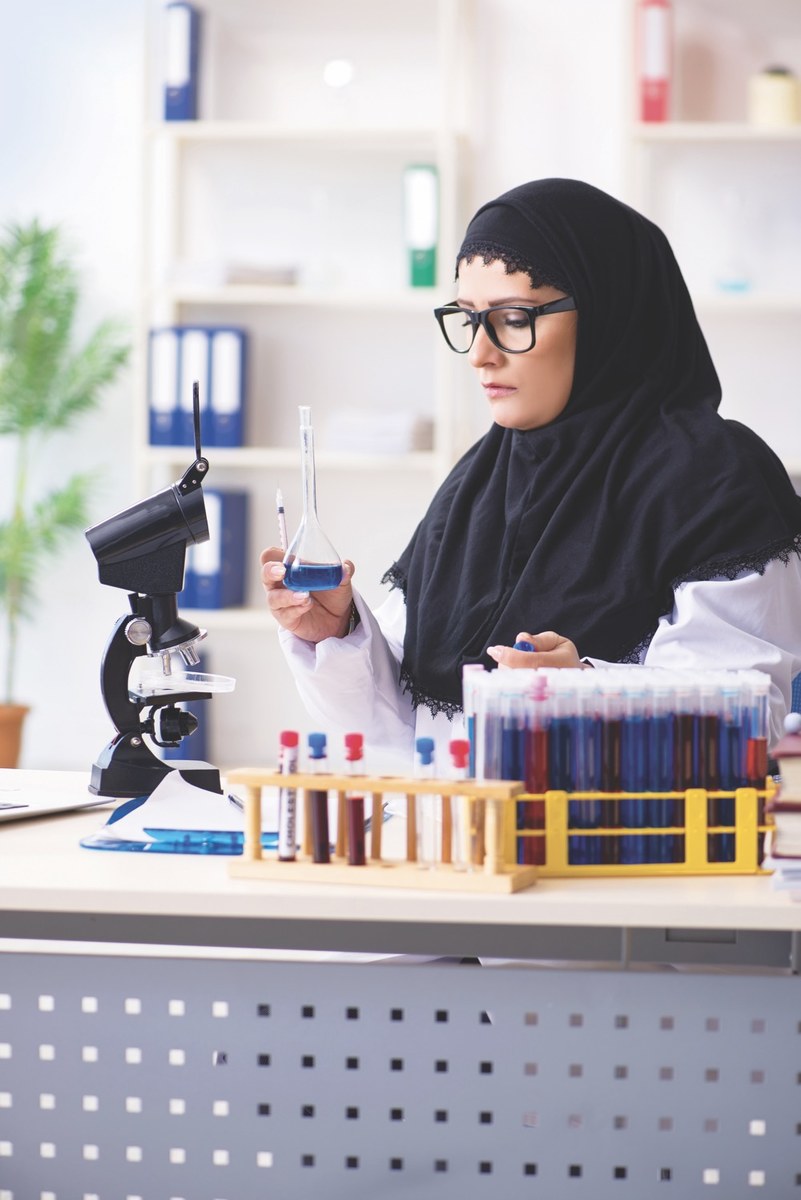
“The stereotype that working in science, and especially engineering, is only for men is changing,” said Halima Alnaqbi, an academic at Khalifa University. (Shutterstock)
Mohammed’s work on therapeutic tools to prevent diabetes and cardiovascular diseases could prove vital given that the number of people globally with diabetes is approaching 425 million and expected to top 628 million by 2045.
She is developing nano-pharmaceuticals capable not only of delivering drugs to treat diabetes but also minimizing cardiovascular complications associated with the disease, which is one of the most prevalent in the region.
“This research is gaining both national and international attention, especially as the world moves toward targeted drug delivery, personalized medicine and stem cell technologies,” Mohammed said.
“I hope to develop nano-carriers with protective properties that could enhance the loaded drug’s efficacy, and to develop better in vitro cellular and tissue models that better represent diabetes and the associated cardiovascular complications through the use of stem cell technologies.”


