

‘Vision 2030 reforms brought myriad opportunities for Saudi women in science’: petroleum engineer

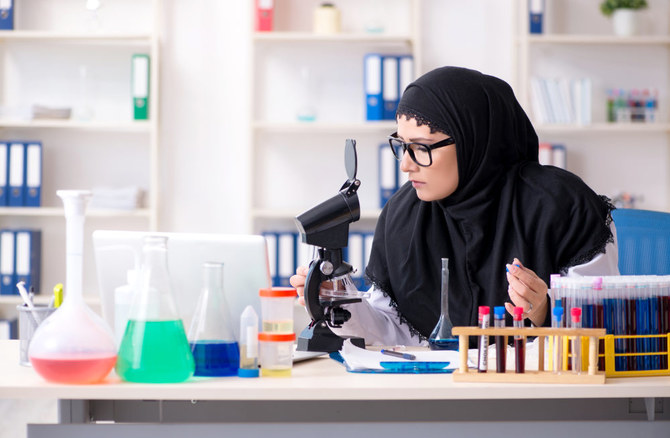
Women in Saudi Arabia continue to pursue their passion and make progress in various industries under Crown Prince Mohammed bin Salman’s Vision 2030. (Shutterstock)
Short Url
Updated 01 March 2022
Follow

‘Vision 2030 reforms brought myriad opportunities for Saudi women in science’: petroleum engineer

  • Reem Al-Sadoun chose to become a petrochemical engineer as energy and its byproducts drive global economies

JEDDAH: The encouragement of women’s exploration of the sciences is enabling young Saudi female petroleum engineers to pursue their passion and empower future generations.

Saudi Arabia is renowned for being the world’s largest oil exporter and the second-largest Organization of Petroleum Exporting Countries member country, covering 2 million square km of the Arabian Peninsula. According to the General Authority of Statistics, the Kingdom saw a 10.8 percent increase in oil-related activities in the fourth quarter of 2021 alone.
“Growing up with both parents working in the oil industry, I heard stories about the discovery of the first commercially viable well, No. 7, in the 1930s, commonly dubbed the Prosperity Well, and how that transformed the Kingdom into the prosperous nation it is today,” said 26-year-old petroleum engineer Reem Al-Sadoun.
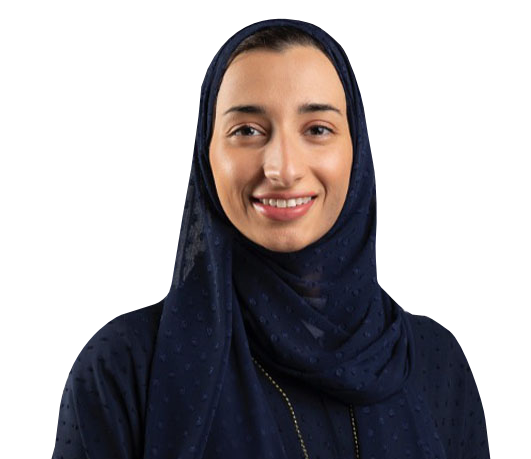

She earned her bachelor’s degree in petroleum engineering from the University of New South Wales in 2018 through funding from the Saudi Aramco College Degree Program for Non-Employees before starting her career with Saudi Aramco.

The oil and gas industry is driven by market forces of supply and demand, and as is evident the world’s demand for energy will only continue to increase.

Reem Al-Sadoun

Al-Sadoun told Arab News that she has had an affinity for mathematics and the sciences for as long as she can remember, which led to her studies and career in the field of science, technology, engineering and mathematics.
“Since joining Saudi Aramco three years ago, I have been an active volunteer with the Society of Petroleum Engineers — Kingdom of Saudi Arabia section, currently the largest SPE section in the world.”
When the time came to choose her major, Al-Sadoun made her decision based on the fact that energy is all around us and its byproducts drive global economies.
To her, women making strides in various industries under Crown Prince Mohammed bin Salman’s Vision 2030 comes as no surprise.
Al-Sadoun told Arab News: “Vision 2030 reforms increased women’s representation and created myriad opportunities that I believe will continue to grow female participation in the sciences, which in turn will lead to massive social and economic gains for the Saudi economy as a whole.”
She said that as women represented half of the population, empowering them meant the empowerment of the nation. The Kingdom had pushed for equal empowerment of today’s youth, generation after generation, and continued to direct the workforce toward contributing to the country’s wealth.
“The oil and gas industry is driven by market forces of supply and demand, and as is evident the world’s demand for energy will only continue to increase,” she said.

“This demand can be met by petroleum engineers. However, the role of a petroleum engineer is also changing, which presents even more opportunities for future women engineers. Historically we have been concerned with the extraction and production of hydrocarbons; recently this role has also expanded to the development of methods to capture and store carbon dioxide to reduce atmospheric emissions of greenhouse gases,” Al-Sadoun said.
When asked about her ambition for the younger generation, Al-Sadoun said she hopes that all young women hesitant about exploring a career in the sciences will go ahead and make their dreams happen. She added that they should influence the female population around the world “to be the change we wish to see.”
“In addition to the tremendous support I received from my country, I am grateful to have the infinite support of my family and friends. And the opportunities and accolades presented to me by my job at Saudi Aramco and by my fellow female petroleum engineers, which makes me value the career path I’ve chosen and the life it has created for me,” Al-Sadoun said.


Saudi Film Festival to return in April with focus on Korean cinema

Since its launch in 2008, the Saudi Film Festival has played a central role in nurturing local and Gulf cinema. (Supplied)
Updated 15 February 2026
Follow

Saudi Film Festival to return in April with focus on Korean cinema

  • Ahmed Al-Mulla, founder and director of the Saudi Film Festival, said in a statement: “We’re excited to welcome filmmakers to our annual gathering. Our doors are open to all creators, and filmmakers remain at the heart of everything we do

DHAHRAN: The Saudi Film Festival, organized by the Cinema Association in partnership with the King Abdulaziz Center for World Culture and supported by the Saudi Film Commission, has announced that it will launch at Ithra in Dhahran between April 23-29.

This year’s festival explores the theme of “Cinema of the Journey,” presenting a selection of Arab and international films, both short and feature-length, that center on journeys and movement as essential storytelling elements. 

Since its launch in 2008, the Saudi Film Festival has played a central role in nurturing local and Gulf cinema. (Supplied)

The program includes road movies, travel narratives and films where physical or emotional journeys drive the narrative.

The theme encourages Saudi filmmakers to explore this subject through their own perspectives. It positions cinema itself as an act of continuous transition, where identity, place, and time converge to shape the human experience.

FASTFACTS

• This year’s Saudi Film Festival will explore the theme of ‘Cinema of the Journey,’ presenting a selection of Arab and international films that center on journeys and movement as essential storytelling elements.

• The program includes road movies, travel narratives and films where physical or emotional journeys drive the narrative.

Following last year’s focus on Japanese cinema, the festival will present a special “Spotlight on Korean Cinema” this year.

Ahmed Al-Mulla, founder and director of the Saudi Film Festival, said in a statement: “We’re excited to welcome filmmakers to our annual gathering. Our doors are open to all creators, and filmmakers remain at the heart of everything we do. This year’s festival creates an atmosphere filled with inspiration, idea exchange, and shared learning. It’s a celebration of cinematic creativity for everyone.”

Tariq Al-Khawaji, deputy director of the festival, added: “At Ithra, we’re proud of our longstanding partnership with the Cinema Association. It has enabled the festival’s growth and thematic diversity year after year, which we see clearly in how we empower filmmakers and create opportunities to engage with global cinema. 

“The festival continues to grow across all areas, from preparations and participation to industry expectations locally and regionally. That makes attention to every detail essential.”

Since its launch in 2008, the Saudi Film Festival has played a central role in nurturing local and Gulf cinema. After intermittent early editions, it has now established itself as an annual platform for narrative and documentary competitions, industry programs and project markets.

By bringing together emerging and established filmmakers in Dhahran each year, the festival strengthens Saudi Arabia’s growing presence on the global film stage.