

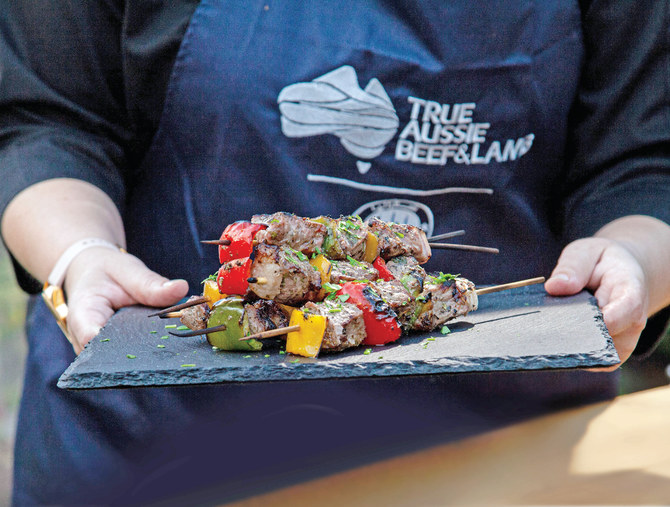
Australian meat for grilling: A cut above the rest

The central feature of a barbeque — the grilled meat — is Australian lamb or beef.
Short Url
Updated 02 March 2022
Follow

Australian meat for grilling: A cut above the rest

Grilling is the most widely shared culinary feature throughout the Middle East region, both among citizens and expatriates. With the weather making it pleasant for outdoor activities, barbeque get-togethers are a common sight in the public recreational areas. In homes, the balcony becomes the main place for family and friends to come together to socialize and share delicious food, with everyone passing around platters of grilled meats and bowls of dips and salads.

Indeed, the pandemic has resulted in an increase in grilling, given the preference for cooking outdoors, where gatherings are deemed to be safer and allow for greater social distancing. A recent survey showed 51 percent of people will continue to cook outdoors, even after the pandemic ends and, interestingly, 43 percent of generation-Z respondents intend to cook outdoors more in the future.

As in the Middle East, grilling is a huge tradition in Australian culture, especially on weekends. The Australians are well-known for their grilling techniques, and most households have some sort of a barbecue, often referred to as a “barbie.” Perhaps what many people do not know is that in most families, both in Australia and in this region, the central feature of a barbeque — the grilled meat — is Australian lamb or beef.

According to Meat and Livestock Australia, a producer-owned company, which provides marketing and research and development services for the Australian cattle, sheep and goat industries, there are specific reasons why Australian meat is a preferred choice in this region, both in homes and restaurants, for all types of barbecue dishes. Whether it is beef kebabs, lamb koftas, lamb chops, burgers, or sausages, grill fanatics prefer the taste of Australian lamb and beef because the meat is much more tender, flavorful, and cooks more evenly.

“The primary reason for the exceptional taste of the meat is that Australia is the best place in the world to raise livestock. Australian cattle and sheep graze on pure, lush grasslands with the animals having access to an abundance of clean water, green grass and fresh air throughout their lives, resulting in lamb and beef that is lean, juicy and delicious,” MLA said in a statement.

“With meat playing a crucial role in the region for family meals, consistency in taste and quality play a vital role too. Quality standards of Australian meat were tested by more than 1 million people in over 11 countries, reflecting the extent to which the country would go to ensure highest eating quality.”

Chef Tarek Ibrahim, the Arab world’s first MasterChef, loves grilling in the outdoors and recommends Australian meat for the perfect grilling experience. “Why I prefer to grill Australian meat over the rest is because I enjoy experimenting with new dishes, and with the variety of cuts available, there are always numerous meal options on the table!”


Novartis celebrates double recognition for clinical research excellence in Saudi Arabia

Updated 23 February 2026
Follow

Novartis celebrates double recognition for clinical research excellence in Saudi Arabia

Last month marked a great beginning to 2026 for Novartis in Saudi Arabia, with the company receiving two major recognitions that underscore its leadership in clinical research and its contribution to the Kingdom’s evolving healthcare ecosystem.

At the “Clinical Trials Transformation Conference: Unraveling the Future” held in Riyadh, Novartis was awarded first place in the Clinical Research Contribution Award. Presented by King Faisal Specialist Hospital and Research Center, this award reflects Novartis’ dedication to advancing high quality clinical research in Saudi Arabia and supporting local scientific capabilities.

Adding to this milestone, the Saudi Food and Drug Authority, in its 2025 clinical trials statistics, recognized Novartis as the top contributing multinational company to clinical trials in the Kingdom. This recognition is a testament to Novartis’ sustained investment in research and development and its commitment to bringing innovative treatments to patients in Saudi Arabia.

Together, these dual recognitions demonstrate how a strong clinical research ecosystem is transforming Saudi Arabia into a global healthcare innovation hub, directly supporting the ambitious goals of Saudi Vision 2030. By integrating innovative clinical trials with advanced research, Novartis contributes to ensuring that the Kingdom’s growing leadership in global healthcare innovation benefits patients locally, regionally and worldwide.

Amir Abdulaziz, country president, Novartis Saudi Arabia, said: “Starting the year with these two recognitions is a proud moment for all of us at Novartis Saudi Arabia and an inspiring reflection of our long-term partnership with the Kingdom. They highlight the strength of our collaboration with regulators, healthcare institutions and professionals, and our shared commitment to advancing clinical research that truly makes a difference for patients. In line with Vision 2030, we remain focused on reimagining medicine, investing in local talent and helping position Saudi Arabia as a leading global destination for healthcare innovation.”

Novartis has a long-standing presence in the Kingdom and is committed to supporting Vision 2030 by improving health outcomes, advancing innovation, contributing to economic diversification, and investing in people and communities. In 2025, Novartis medicines reached millions of patients across the Kingdom, providing access to innovative treatments in different therapeutics. By addressing unmet medical needs and bringing cutting-edge therapies to Saudi patients, Novartis helps improve the quality of life and long-term health outcomes.

People are at the core of Novartis’ impact in Saudi Arabia. In alignment with Vision 2030’s focus on employment, Saudization and women’s participation in the workforce, Novartis continues to attract, develop and retain local talent, foster an inclusive and diverse workplace, and support capability-building and leadership development. These efforts not only advance healthcare but also contribute to the growth of a vibrant life sciences sector and the broader economic transformation of the Kingdom.