

Egypt issues wheat tender as Ukraine war threatens supply

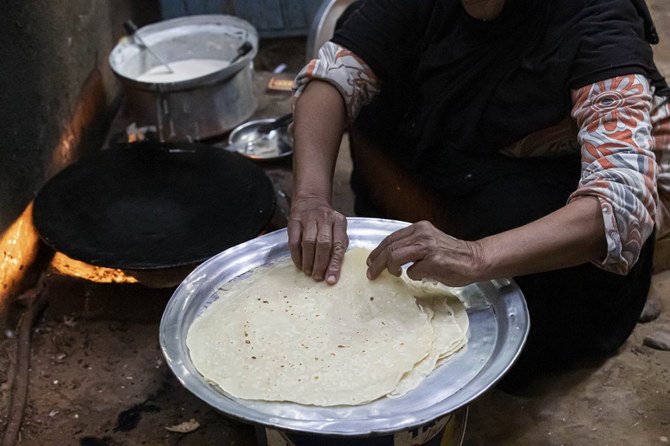
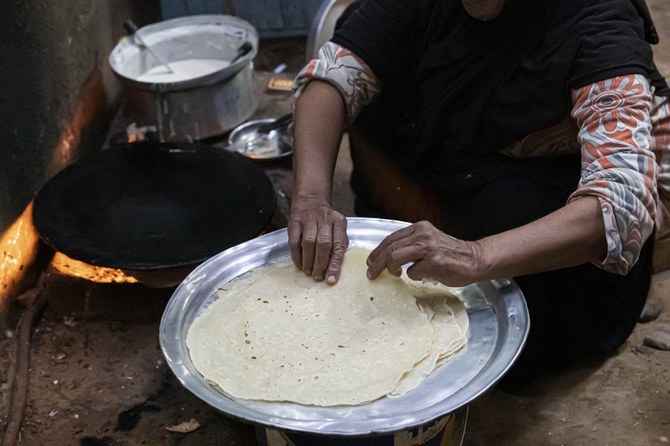
An Egyptian woman prepares bread for the family in her home at Zerzara village on the west bank of the Nile river, off of Egypt's southern city of Aswan. (File/AFP)
Short Url
Updated 27 February 2022
Follow

Egypt issues wheat tender as Ukraine war threatens supply

  • Egypt is working on a plan to import wheat from areas outside Russia and Ukraine following the outbreak of war
  • Russia and Ukraine are the two largest wheat exporters to Egypt

CAIRO: Egypt has launched an international wheat tender to import wheat from April 13 to 26, just 48 hours after canceling a tender that received only a single offer.

The Egyptian Supply Commodities Authority set a Feb. 28 deadline for offers for the new tender.

It canceled an international wheat tender on Thursday after receiving a single offer to import 60,000 tons of French wheat. A tender must receive more than one offer to become valid.

The country is working on a plan to import wheat from areas outside Russia and Ukraine following the outbreak of war, said Nader Saad, a government spokesman, adding that Egypt has a 5 million ton strategic stockpile of wheat.

Saad said that Egypt has been preparing wheat imports since November, before the start of the planting season.

The country’s existing stockpile will supply the country with wheat for nine months, he added. “Egypt is working on a plan to import wheat from other sources instead of Russia and Ukraine, as Egypt has 14 countries approved for the supply of wheat, some of which are outside Europe,” Saad said.

Data from the Central Agency for Public Mobilization and Statistics in Egypt showed that Egypt imported 6.1 million tons of wheat during 2021, excluding December.

Russia and Ukraine are the two largest wheat exporters to Egypt. Last year, Russia sent 4.2 million tons of wheat, worth $1.2 billion, representing 69.4 percent of total Egyptian wheat imports.

Ukraine sent 651,400 tons, worth $649.4 million, and accounting for 10.7 percent of total imports, followed by Romania with 387,200 tons and Australia with 190,200 tons.

Egypt on Sunday called for an emergency Arab League meeting at delegate level to discuss developments in Ukraine, according to a statement from the Egyptian foreign ministry.

Arab states have taken diverging stances on the Russian invasion, with Syria supporting it, Lebanon condemning it, the United Arab Emirates declining to take sides and Egypt expressing broad concern and hopes for a quick resolution.

Iraq majority bloc backs Nouri al-Maliki as next PM: statement

Updated 8 sec ago
Follow

Iraq majority bloc backs Nouri al-Maliki as next PM: statement

  • The Coordination Framework said that it “decided, by majority vote, to nominate” Al-Maliki for the position
  • The statement spoke of Al-Maliki’s “political and administrative experience and his record in running the state“

BAGHDAD: Iraq’s main Shiite alliance, which holds a parliamentary majority, endorsed on Saturday former prime minister and powerbroker Nouri Al-Maliki as the country’s next premier.
The Coordination Framework, an alliance of Shiite factions with varying links to Iran, said in a statement that it “decided, by majority vote, to nominate” Al-Maliki for the position “as the candidate of the largest parliamentary bloc.”
The statement spoke of Al-Maliki’s “political and administrative experience and his record in running the state.”
A shrewd politician, Al-Maliki, 75, has long been a central figure in Iraq’s politics and its only two-term prime minister (2006-2014) since the US invasion of 2003, which ended decades of rule by the autocratic Sunni president Saddam Hussein.
Since the invasion and by convention in Iraq, a Shiite Muslim holds the powerful post of prime minister, a Sunni is parliament speaker, and the largely ceremonial presidency goes to a Kurd. After Iraq’s November general election, the Coordination Framework, which includes Al-Maliki, formed the majority bloc.
Soon after, it held heated talks to choose the next prime minister, along with other discussions with Sunni and Kurdish parties regarding other posts.
Iraq’s parliament chose a speaker last month and should convene next to elect a new president, who will then appoint a prime minister to replace the incumbent Mohammed Shia Al-Sudani.
Al-Maliki, leader of the State of Law Coalition, remains influential in Iraqi politics despite his controversial past, including widespread accusations of corruption, stoking sectarian tensions, and failing to stop the Daesh group.