

Qiddiya awards $750m contract to build Kingdom’s first, region’s largest water theme park

1 / 2
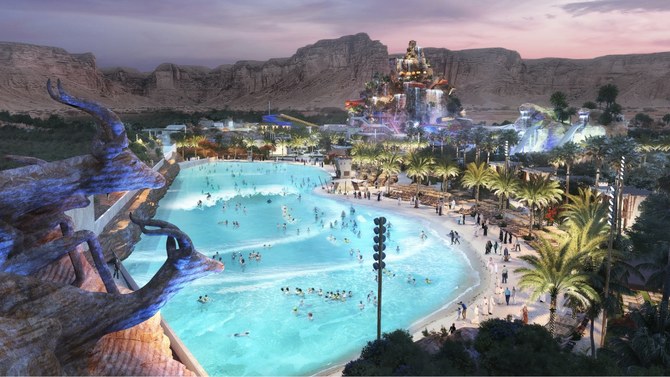
Some rides have been designed to use 75 percent less water compared to the more conventional rides found in other water parks. Supplied
2 / 2
The contract was awarded to ALEC Saudi Arabia Engineering and Contracting and El Seif Engineering Contracting, in a joint venture between the two companies. Supplied
Short Url
Updated 25 February 2022
Follow

Qiddiya awards $750m contract to build Kingdom’s first, region’s largest water theme park

  • The park will feature 22 rides and attractions including 9 world firsts

RIYADH: The Qiddiya Investment Co. on Wednesday announced the award of a SR2.8 billion ($750 million) contract to build Saudi Arabia’s first and the region’s largest water theme park. 

The contract was awarded to ALEC Saudi Arabia Engineering and Contracting and El Seif Engineering Contracting, in a joint venture between the two companies. 

The Qiddiya Water Theme Park will be one of the key entertainment attractions at Qiddiya, the future capital of entertainment, sports and culture.

The agreement was signed between Qiddiya’s Managing Director Abdullah bin Nasser Aldawood, ALEC’s CEO Kez Taylor and El Seif’s CEO Ahmed Al-Bassam at a ceremony held at the Qiddiya Experience Center, followed by a ground-breaking ceremony to mark the start of construction.

 The park will cover 252,000 square meters of land and will be home to 22 rides and attractions — including nine that will be world firsts.

Visitors will also be able to enjoy nine special zones — the Entry Gate, Camel Rock, Dub Grotto, Wave Wadi, the Den, Viper Canyon, Arabian Peak, the Herding Grounds and Surf Lagoon — inspired by the native animals that inhabit the area around Qiddiya. 

 Commenting on the deal, Aldawood said: “The Qiddiya Water Theme Park will be a year-round immersive family entertainment destination. The park will offer our guests a chance to experience that in a welcoming and fun environment for everyone.”

Some rides have been designed to use 75 percent less water compared to the more conventional rides found in other water parks. In addition, rainwater that falls on the site will be captured, treated and reused for irrigating the destination.

The park will also integrate technologies to reduce water pressure in certain rides which will in turn reduce water evaporation by half. In addition, every pool in the complex will be based on a “run-out” concept so that at the end of an exciting slide individuals will glide safely across a shallower pool that uses less water unlike traditional deeper pools used in other water parks.


Saudi Arabia witnesses a boom in pre-owned luxury accessories market 

Updated 4 sec ago
Follow

Saudi Arabia witnesses a boom in pre-owned luxury accessories market 

RIYADH: The luxury accessories market in Saudi Arabia has witnessed a shift in purchasing behavior in recent years.  

A segment of consumers is turning to stores that offer pre-owned original pieces from global brands at lower prices, sometimes up to 50 percent less than the official retail price.  

This trend is driven by rising prices at main stores and authorized dealers, as well as long waiting periods for certain items, according to market insiders who spoke to Al-Eqtisadiah. 

This shift is evident on the ground in markets like Taybah in Riyadh, which now hosts a number of stores specializing in selling pre-owned international brands.  

This has boosted consumer confidence and facilitated access to new or classic original pieces without going through the traditional buying experience from an authorized dealer. 

80% of customers are women 

According to merchants in the market, women constitute approximately 80 percent of total buyers, compared to 20 percent for men. Estimates indicate that about 75 percent of purchases are for personal acquisition, as opposed to commercial or investment purposes. 

Store owners confirmed that demand is no longer seasonal but has transformed into a stable purchasing pattern. Hussein, a seller at “Nawadir Al-Safwa” store, explained that demand focuses on well-known international brands, notably Cartier bracelets and necklaces.  

He pointed out that the majority of purchases are for personal use, with varying savings rates that may reach up to 50 percent on some pre-owned jewelry. 

For his part, Riyad Mohammed, owner of “Al-Mojawharat Al-Alamiya” store, stated that sales vary depending on the availability of pieces and can reach up to 40 pieces per week during some periods.  

He noted that women constitute the largest proportion of buyers, while demand from men is lower and often focused on watches. 

Cheaper prices and shorter wait times  

At the “Nawadir Al-Nokhba” store, those in charge confirmed that the most expensive piece sold was valued at SR450,000 ($119,975), which was a piece of jewelry from a global brand.  

They also mentioned the existence of rare pieces whose prices may reach up to SR1 million, especially sets and limited models.

Meanwhile, Mohammed Shablan, owner of the “Qamar Al-Andalus” store, explained that some pre-owned pieces may sell for a price close to that of the authorized dealer, especially for watches with waiting lists, even if the price saving is only around 10 percent to 20 percent. 

Consumers between acceptance and rejection 

In a survey of female consumers’ opinions, Noura Mohammed said she turned to buying pre-owned brands after saving about 40 percent on the piece’s price compared to the dealer, confirming that the piece was in excellent condition. 

Ghada Abdullah explained that her first experience achieved savings of about 30 percent and later changed her purchasing behavior.  

On the other hand, Alaa Bandar expressed reservations about buying pre-owned brands, preferring to buy from authorized dealers to guarantee the complete buying experience and peace of mind despite the price difference. 

Rigorous inspection of pieces  

Store owners confirmed that pieces undergo rigorous inspection to verify their authenticity before being offered for sale, including matching serial numbers and providing the warranty and box in many cases.  

The customer also has the right to a refund if the piece is proven inauthentic, which has boosted consumer confidence in the pre-owned market. 

Salah Salem Al-Amari, with over 35 years of experience in the gold and jewelry sector, said that pre-owned brands have become popular commodities with rising prices and have grown especially through social media platforms. 

For his part, Mohammed Alyan Al-Hashidi, a member of the Gold and Jewelry Committee in the Chamber of Commerce, stated that Saudi markets are among the cheapest globally in gold prices due to low taxes, giving the local market a competitive advantage in selling both new and pre-owned jewelry.