

Oil slips on Ukraine summit plan, prospect of Iran nuclear deal

(Shutterstock)
Short Url
Updated 21 February 2022
Follow

Oil slips on Ukraine summit plan, prospect of Iran nuclear deal

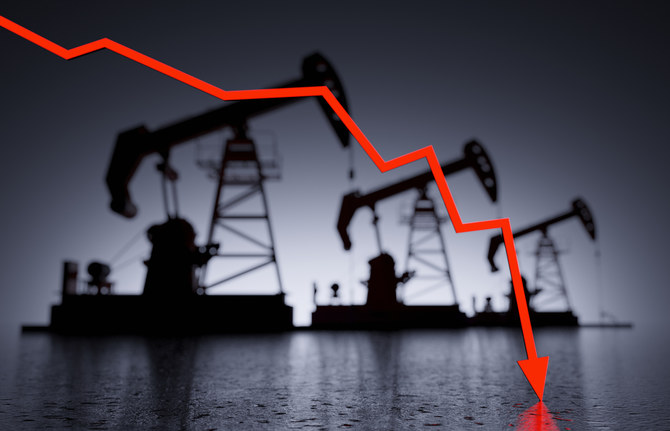
MELBOURNE: Oil prices fell on Monday on a plan for US President Joe Biden and Russia’s Vladimir Putin to hold a summit on the Ukraine crisis and on prospects of a nuclear deal between Iran and world powers in the next week or two.

The office of French President Emmanuel Macron said in a statement on Monday he had pitched to both leaders a summit over “security and strategic stability in Europe.” The White House said Biden had accepted the meeting “in principle” but only “if an invasion hasn’t happened.”

Brent crude futures fell 73 cents or 0.8 percent to $92.81 at 0224 GMT after having jumped more $1 than to $95.00 in early trade, its highest level since Wednesday.

US West Texas Intermediate (WTI) crude futures similarly fell 52 cents or 0.6 percent to $90.55 a barrel after having hit a high of $92.93.

Oil markets have been jittery over the past month on worries a Russian invasion of its neighbor could disrupt crude supplies, but price gains have been limited by the possibility of more than 1 million barrels a day of Iranian crude returning to the market.
A senior European Union official said on Friday a deal to revive Iran’s 2015 nuclear agreement was “very very close.”

Analysts said the market remained tight, and any addition of oil would help, but prices would remain volatile in the near term as Iranian crude would only likely return later this year.

“There’s just so many pressures geopolitically it’s difficult to know what the answer is (on market movements) — with Ukraine and Iran,” said National Australia Bank commodity analyst Baden Moore.

European Commission President Ursula von der Leyen said Russia would be cut off from international financial markets and denied access to major exports needed to modernize its economy if it invaded Ukraine.

“If a Russian invasion takes place as the US and UK have warned in recent days, Brent futures could spike above $US100/bbl, even if an Iranian deal is reached,” Commonwealth Bank analyst Vivek Dhar said in a note. 


Pakistan, Saudi Arabia reaffirm push for joint energy and mining projects

Updated 30 January 2026
Follow

Pakistan, Saudi Arabia reaffirm push for joint energy and mining projects

  • In recent years, Saudi Arabia has positioned itself as a leader in the global minerals and energy sectors
  • Both sides reaffirm commitment to enhance partnership and promote mutually beneficial investments

ISLAMABAD: Pakistan and Saudi Arabia have agreed to enhance cooperation in energy and mineral sectors, the Pakistani information ministry said on Friday, as the two sides seek to deepen economic ties and promote joint investment.

The development comes weeks after Pakistan’s Petroleum Minister Ali Pervaiz Malik met Saudi Arabia’s Minister of Industry and Mineral Resources Bandar Ibrahim Alkhorayef at the Future Minerals Forum in Riyadh that saw participation from 13 public and private Pakistani firms.

Pakistan petroleum ministry said Alkhorayef had pointed out “vast opportunities” for cooperation between Pakistan and Saudi Arabia in the minerals sector, adding that the Kingdom would support the development of Pakistan’s mining industry through its knowledge and technical expertise.

On Friday, Malik held a meeting with Nawaf bin Said Al-Malki, Saudi ambassador to Pakistan, to discuss areas of mutual cooperation and further strengthen bilateral relations between the two brotherly countries, according to the information ministry.

“Both sides reviewed ongoing collaboration and explored new avenues for cooperation, particularly in the energy and minerals sectors,” it said in a statement. “They reaffirmed their commitment to enhancing economic partnership and promoting mutually beneficial investment opportunities.”

In recent years, Saudi Arabia has positioned itself as a leader in the global minerals and energy sectors and accelerated investments in green technologies, sustainable mining practices and international collaborations that are shaping the future of the mines and mineral industry.

Last year, Saudi Arabia’s Manara Minerals, a Public Investment Fund and Maaden joint venture, also expressed intent to acquire a 15 percent stake in Pakistan’s Reko Diq gold and copper mine. The $7 billion project, located in Balochistan, is being developed by Canadian mining giant Barrick Gold in partnership with Pakistan’s federal and provincial governments.

Malik expressed confidence that longstanding brotherly relations between Pakistan and Saudi Arabia would translate into tangible outcomes, fostering investment, technology exchange, and sustainable development initiatives for mutual benefit.

Ambassador Al-Malki appreciated Pakistan’s active participation in the Future Minerals Forum, which offered significant opportunities for regional collaboration, according to the statement.

“Both sides agreed to maintain close coordination to further strengthen economic and strategic cooperation in the coming period,” the information ministry added.