

AlUla aims to draw 250,000 visitors in 2023, CEO says

Short Url
Updated 20 February 2022
Follow

AlUla aims to draw 250,000 visitors in 2023, CEO says

  • Plans afoot to draw 50% of energy requirements for the city from sustainable sources

ALULA: The historical city of AlUla is being groomed to receive 250,000 tourists and visitors in 2023, according to the CEO of the Royal Commission For AlUla, or RCU.

Located in northwestern Saudi Arabia, AlUla has been designated by the UNESCO World Heritage site.

During an exclusive interview with Arab News, Amr AlMadani said the commission has already tested the potential of AlUla with the launch of the Winter at Tantoura Festival.
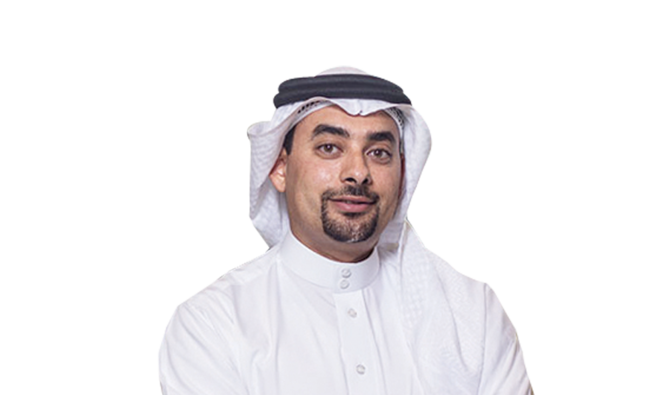


Amr AlMadani

Following its success, the CEO said AlUla will be open for tourists the whole year long and that will help boost the number of tourists.

Developed by RCU, AlUla managed to expand its airport in several phases, which enabled it to receive up to 400,000 visitors annually.

“The airport now can very well serve our needs for the next 10 years,” AlMadani explained. 

HIGHLIGHTS

• Developed by RCU, AlUla managed to expand its airport in several phases, which enabled it to receive up to 400,000 visitors annually.

• RCU launched a scholarship program supporting 600 -700 students to reach up to 1,000 students at its last phase.

• The commission is developing two sustainable power stations.

Another upgrade of the airport will begin later, as the RCU has an ultimate 2035 target of 2 million visitors.

But the CEO said they need to see evidence of growth before committing further investments in the airport.

RCU aims to place AlUla as a viable destination for businesses by reducing their operating cost, and introducing quality of life outside the busy lifestyle of the cities.

Inspired by Saudi Crown Prince Mohammed bin Salman’s vision to keep the development of people ahead of the development of assets, RCU launched a scholarship program supporting 600-700 students to reach up to 1,000 students in its last phase.

“We started first by the most essential sectors that we need (including) tourism, hospitality, archeology, and agriculture,” he said.

RCU sees sustainability as a major element in the development plan for AlUla driven by the Saudi green initiatives launched in October 2021.

The RCU chief said the commission hoped to draw 50 percent of the energy required for AlUla from sustainable sources by 2035.

To achieve the target, RCU is developing two sustainable power stations, bids for which will be invited in about 18 months from now. One station will be located in the north of AlUla and the other in the south.


Saudi Arabia exports milk, dairy products worth $1bn in 9 months 

Updated 15 sec ago
Follow

Saudi Arabia exports milk, dairy products worth $1bn in 9 months 

RIYADH: Saudi Arabia’s exports of milk and dairy products reached approximately SR3.9 billion ($1.03 billion) during the first nine months of 2025, according to data released by the General Authority for Statistics and reviewed by Al-Eqtisadiah. 

The agricultural and industrial market for the dairy sector in the Kingdom is estimated at SR22 billion in 2024, according to Saudi Minister of Industry and Mineral Resources, Bandar Al-Khorayef, who spoke at the Saudi Dairy Forum in Al-Kharj. He noted at the time that Saudi Arabia has achieved 129 percent self-sufficiency in dairy products. 

Saudi Arabia’s exports of milk and dairy products in 2024 reached approximately SR4.8 billion, while exports in 2023 amounted to approximately SR4.2 billion, bringing the total export volume for the last three years up to September 2025 to more than SR13 billion. 

The licensed annual production volume of dairy products and infant formula is estimated at more than 29 million bottles, equivalent to 685 million kg and more than 818 million liters. 

Data indicated that the UAE was the largest importer of Saudi products during the three years up to last September, with imports totaling approximately SR4 billion, followed by Kuwait at SR2.6 billion, and Oman at SR1.3 billion as well as Bahrain at SR1.1 billion, Iraq at approximately SR1 billion, Jordan at SR997 million, and Yemen at SR837 million. 

The Zakat, Tax and Customs Authority told Al-Eqtisadiah newspaper that the volume of Saudi exports of dairy products and infant formula during the first half of 2025 reached 296.5 million kg. 

How many dairy and infant formula factories are there in Saudi Arabia? 

The Ministry of Industry and Mineral Resources told Al-Eqtisadiah newspaper that the number of dairy and infant formula production plants in Saudi Arabia reached 218 by the end of the first half of 2025. 

Riyadh and Makkah each have 65 plants, while the Eastern Province has 33, and Madinah has 14. Qassim has 11 plants, Al-Jawf and Tabuk 3 each, Hail and Asir 2 each, and Jazan and Najran 1 each. 

Al-Kharj accounts for more than 70 percent of Saudi Arabia’s dairy production. The protocol signed between Saudi Arabia and China last May approved the export of 13 dairy products, including infant formula. 

Up to 95% of Saudi Arabia’s milk production is certified with the “Saudi GAP” mark 

The Ministry of Environment, Water and Agriculture previously confirmed that 95 percent of Saudi Arabia’s milk production is certified with the “Saudi GAP” quality mark. This step highlights producers’ commitment to applying the highest quality and food safety standards and ensuring that local products conform to national and international standards. 

The Ministry added that the quantity of raw milk produced in specialized dairy farms, according to statistics, reached 2.7 billion liters in 2024. Riyadh led production with 1.6 billion liters, followed by the Eastern Province with 1.1 billion liters. The number of dairy cows in these farms reached 233,000 heads. 

By adopting the certified “Saudi GAP” quality mark, the ministry aims to enhance the reliability of food safety standards and deepen consumer confidence in local products. “Saudi GAP” is one of the ministry’s initiatives aimed at establishing the concept of sustainable agricultural practices and increasing the volume and quality of plant and animal production, thereby supporting the competitiveness of local products and contributing to achieving the goals of Vision 2030.